China Lands Reusable Rocket Booster in Historic First
China just became the third nation ever to catch a returning rocket booster at sea, joining SpaceX and Blue Origin in the reusable space race. The dramatic vertical landing marks a turning point for space exploration costs worldwide.
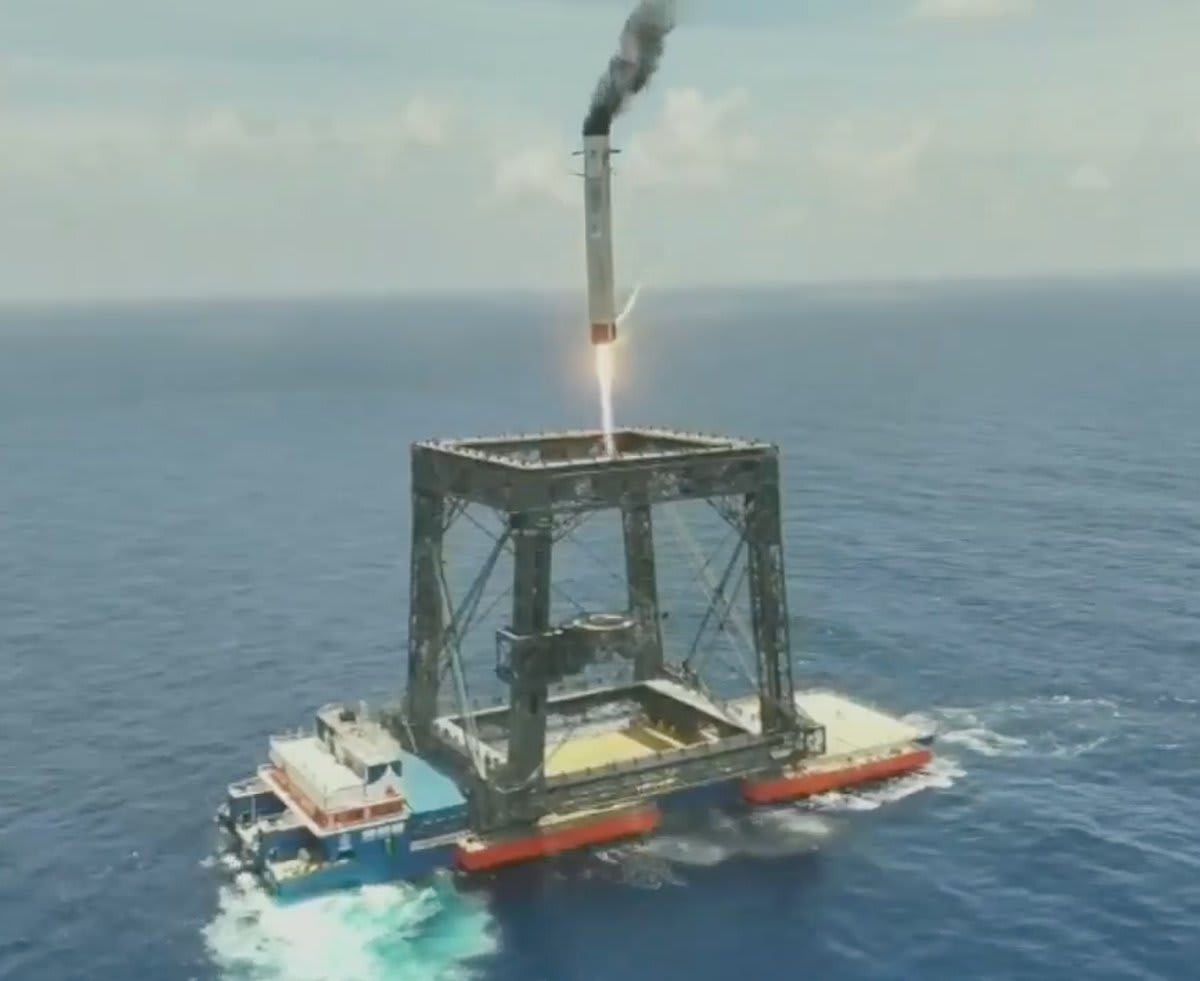
China made space history on Friday when its Long March 10B rocket booster descended through the sky and landed safely on an offshore platform in the South China Sea. The achievement makes China only the third entity in the world to successfully recover an orbital-class reusable booster, following SpaceX's Falcon 9 and Blue Origin's New Glenn.
The rocket lifted off at 12:15 pm local time from the Wenchang Commercial Space Launch Site in Hainan province. Six minutes after separation, the first stage made its controlled descent onto the platform using an innovative net and cable system, while the upper stage continued delivering its payload into orbit.
The landing looked like something from a science fiction movie. Video of the booster's vertical descent, engines blazing as it settled onto the platform, quickly went viral on social media platforms worldwide.
This success comes after China faced setbacks last December when earlier recovery attempts failed. The China Aerospace Science and Technology Corporation hailed the mission as a "complete success" and described it as China entering the "rocket recovery era."
The Long March 10B uses a five-meter-diameter first stage powered by YF-100K engines. Engineers designed it with a wire and net recovery system instead of traditional landing legs, reducing weight and potentially lowering costs even further.
The Ripple Effect
Reusable rockets represent more than just a technical achievement. They promise to dramatically reduce the cost of reaching space, making satellite launches, scientific missions, and space exploration accessible to more nations and organizations.
The Long March 10B is a cargo-focused variant derived from the Long March 10 series, which China is developing to support its crewed lunar program. The rocket's successful debut means more ambitious missions are now within reach at a fraction of traditional costs.
China Aerospace Science and Technology Corporation is already analyzing the recovered hardware to prepare for future flights. Additional Long March 10 series missions are scheduled for the coming months as China prepares for lunar exploration and expanded low-Earth orbit operations.
The achievement accelerates global competition in the commercial space sector. As more nations and companies master reusable rocket technology, launch costs will continue falling, opening new possibilities for scientific discovery, Earth observation, and communication networks that benefit people worldwide.
Space experts cited by Chinese media called the landing a breakthrough moment. The ability to reuse expensive rocket boosters multiple times transforms space access from a one-time expense into a sustainable, repeatable process.
Based on reporting by Google: SpaceX launch success
This story was written by BrightWire based on verified news reports.
Spread the positivity!
Share this good news with someone who needs it