NASA Rover Finds Ancient River Delta Buried Deep on Mars
NASA's Perseverance rover discovered an ancient river delta hidden 35 meters below Mars' surface, revealing water flowed on the red planet far earlier than scientists thought. The find could dramatically boost our chances of discovering signs of ancient Martian life.
Scientists just found evidence that Mars had flowing rivers and lakes hundreds of millions of years earlier than we realized, opening up vast new possibilities in the search for alien life.
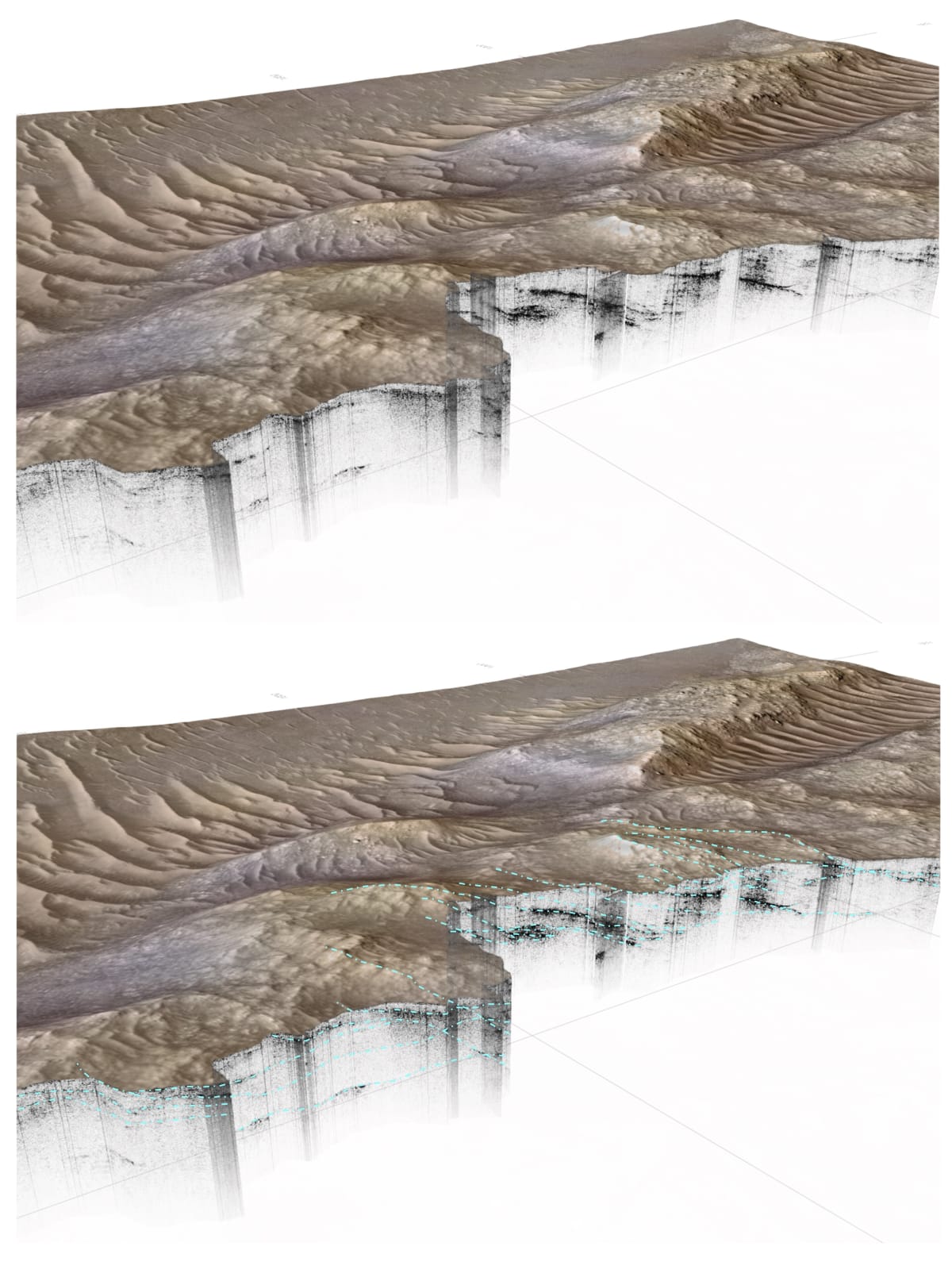
NASA's Perseverance rover made the groundbreaking discovery while exploring Jezero Crater, using ground-penetrating radar to peer nearly twice as deep as any previous study. What it found was stunning: an entire river delta system buried more than 35 meters beneath the dusty red surface.
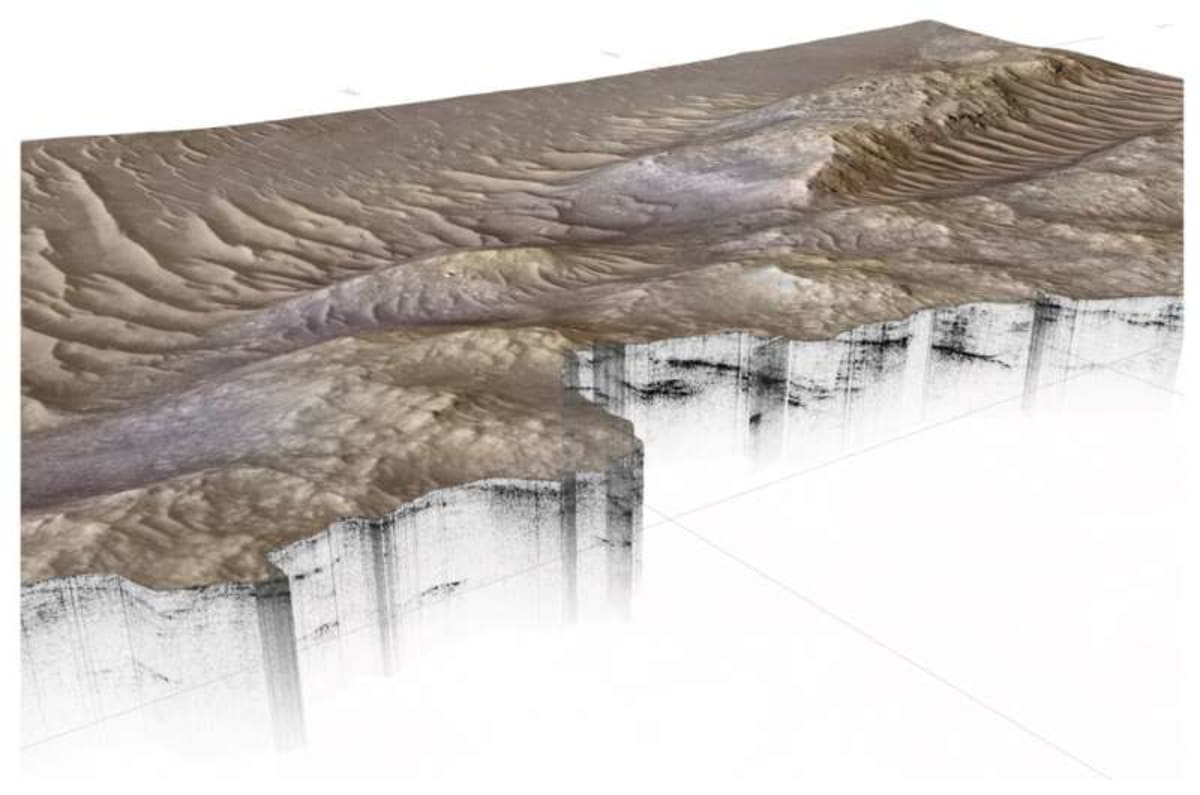
The rover used an instrument called RIMFAX to map the ancient layers below. A team led by Emily Cardarelli at UCLA combined the radar data with satellite images to build a complete 3D picture of what lies beneath.
What they saw were distinctive sloping layers of sediment called clinoforms, the telltale signature of river deltas. These structures form exactly the way deltas form on Earth: when a river flows into a standing body of water like a lake and deposits sand and mud over time.
The discovery is particularly exciting because this buried delta is much older than the visible Western Delta on the crater floor. Scientists estimate it formed between 3.7 and 4.2 billion years ago, making it hundreds of millions of years more ancient than previously known water systems in the same spot.
Why This Inspires
This finding fundamentally extends the timeline for when Mars might have supported life. The research team noted that their discovery reveals "an earlier subsurface deltaic environment," which means the period when Mars could have been habitable stretches much further back in time than we thought.
On Earth, river deltas and lakebeds are precisely the kinds of stable water environments where life thrives and where ancient fossils get preserved. Finding the same geological features on Mars, especially ones that are even older, means Perseverance is searching in exactly the right place.
The crater itself was chosen carefully. It lies near the Martian equator and is packed with carbonates, minerals that on Earth typically form in shallow seas or lakebeds where conditions are stable enough for life.
Since landing in February 2021, Perseverance has been collecting rock samples from Jezero Crater with the ultimate goal of bringing them back to Earth for detailed analysis. Now scientists know those samples might contain evidence of life from an even earlier chapter of Martian history.
The research, published in Science Advances, is based on data from 78 traverses across the area between September 2023 and February 2024. Every pass revealed more detail about the hidden landscape below, painting a picture of an ancient Mars that was wetter and potentially more hospitable to life than anyone imagined.
Mars keeps surprising us with evidence that it was once a world of flowing rivers and standing lakes, not so different from early Earth.
More Images
Based on reporting by Google News - Science
This story was written by BrightWire based on verified news reports.
Spread the positivity!
Share this good news with someone who needs it

%2Fhttps%3A%2F%2Ftf-cmsv2-smithsonianmag-media.s3.amazonaws.com%2Ffiler_public%2F1a%2F72%2F1a72d8cc-970c-48cf-83f6-b16e605ff5c0%2Flow-res_f26-plastic-cookies-hr.jpg)