NASA Rover Finds Pure Sulfur on Mars for First Time
NASA's Curiosity rover discovered bright yellow rocks of pure elemental sulfur on Mars, a mineral never before found in this form on the Red Planet. The unexpected find could reveal new secrets about how Mars evolved billions of years ago.
Scientists just uncovered something on Mars they never expected to find: rocks made of pure, gleaming sulfur, sitting in plain sight on the planet's dusty surface.
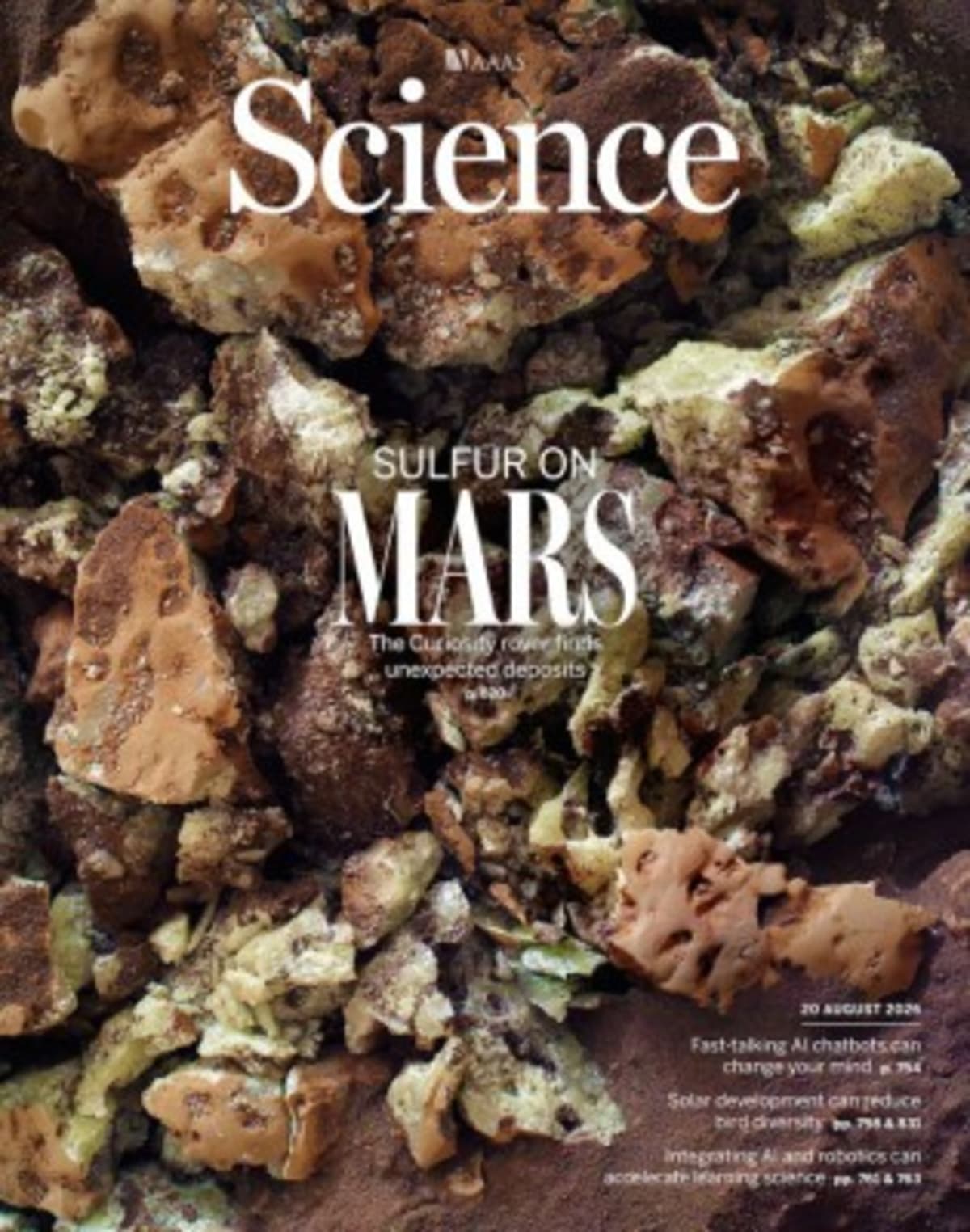
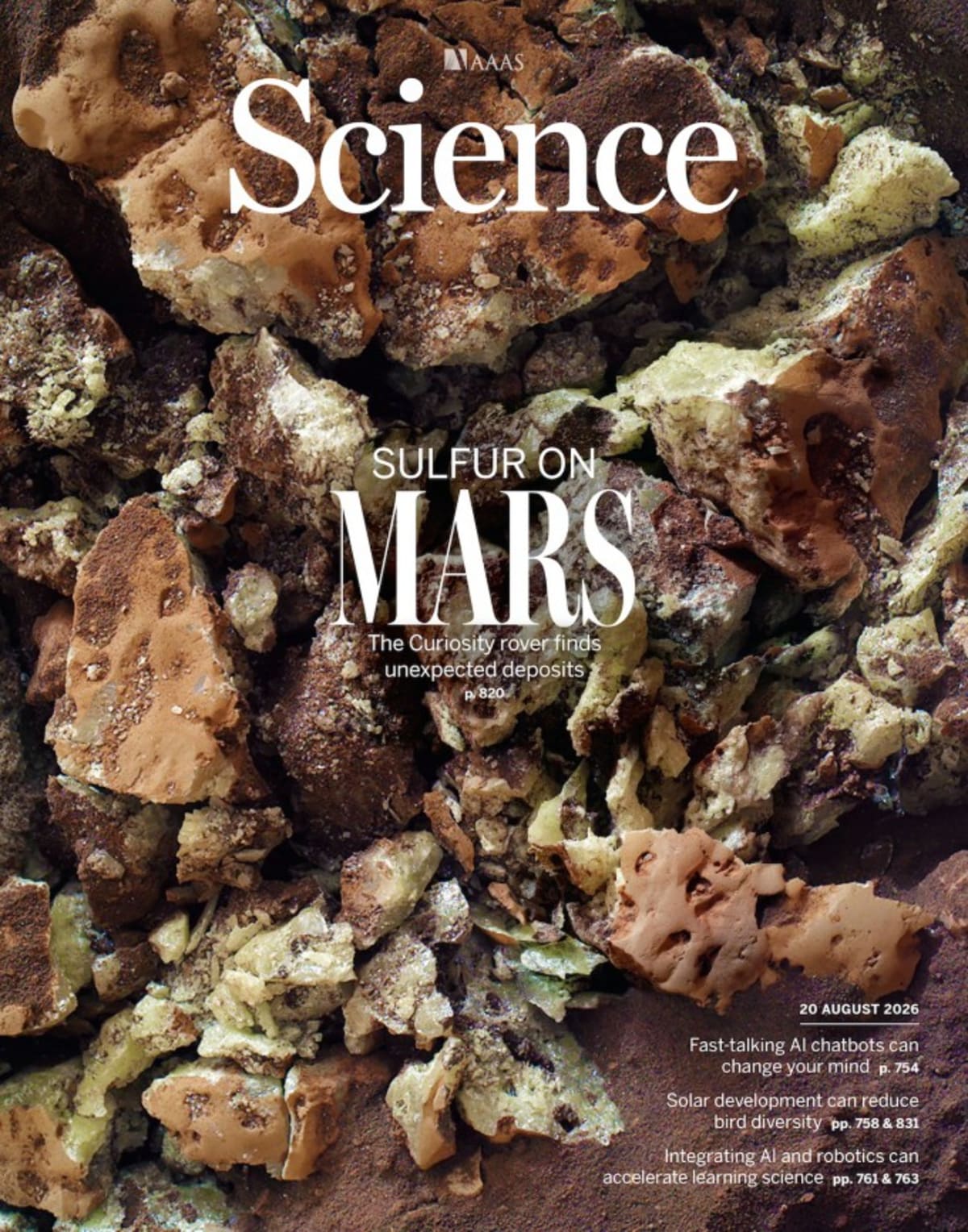
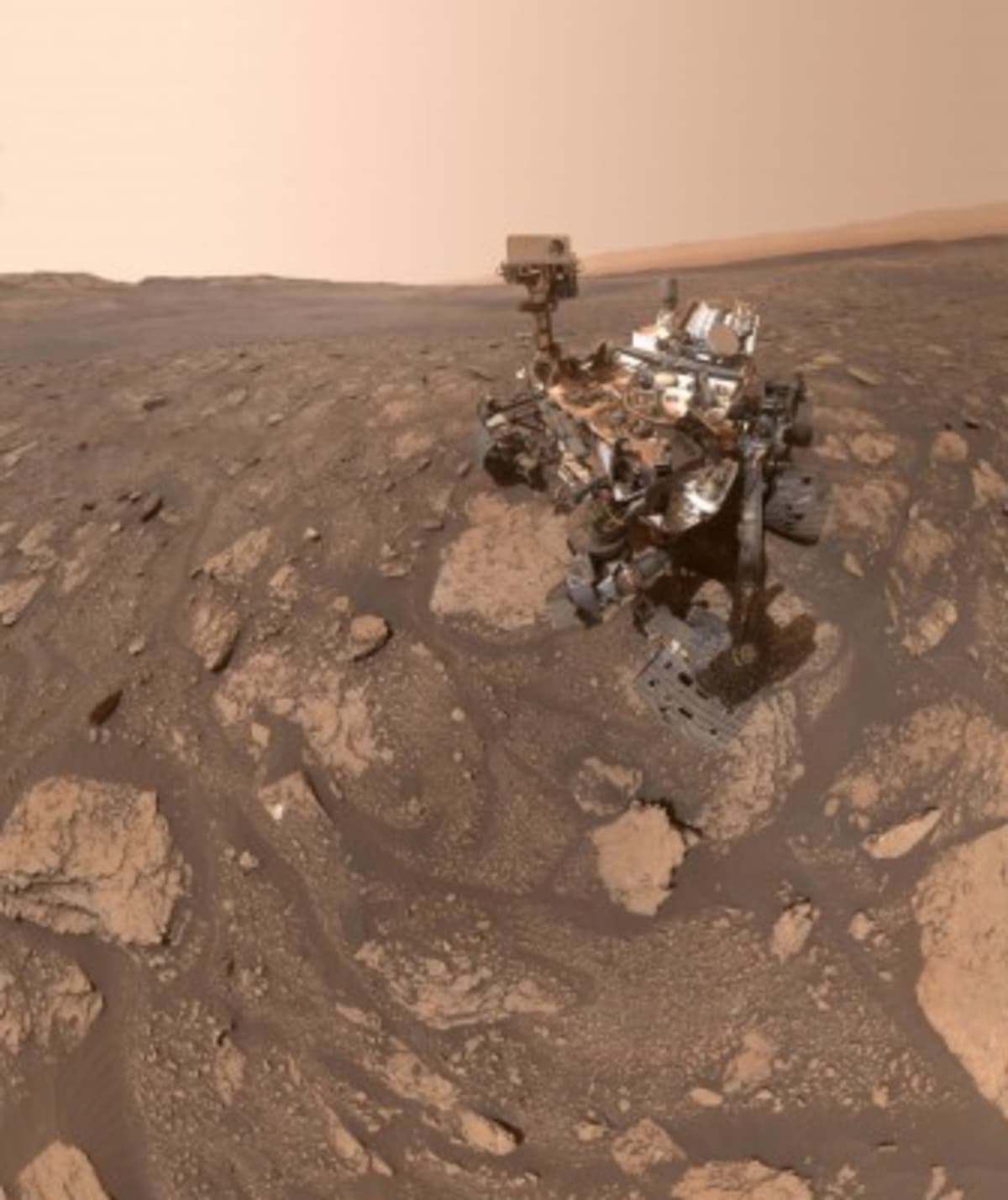
NASA's Curiosity rover rolled through a region called Gediz Vallis in Gale Crater when it crushed some bright rocks beneath its wheels. The broken pieces revealed pale yellow interiors with a glassy shine, the telltale signature of elemental sulfur.
This marks the first time anyone has identified pure sulfur on Mars. Scientists have found sulfur compounds before, like sulfates and sulfides, but never the element in its neutral, pure form.
A team led by Scott Van Bommel at Washington University in St. Louis analyzed the discovery using Curiosity's Alpha Particle X-ray Spectrometer. The rocks weren't sedimentary deposits or mineral compounds as expected. They were almost entirely pure sulfur.
The sulfur rocks cover an area of about 2,100 square meters. Their porous structure and lack of surrounding rock fragments suggest they formed right where they sit, rather than washing in from somewhere else.
The scientists believe the sulfur erupted from beneath the Martian surface between 2.8 and 3.1 billion years ago. It then got buried under layers of sediment, preserving it for eons until erosion exposed it again.
Here's what makes this discovery particularly puzzling: Gale Crater shows almost no signs of the volcanic or hydrothermal activity typically needed to create pure sulfur deposits. The researchers think sulfur-rich vapors from ancient magma got trapped in Mars's frozen underground cryosphere. As the landscape eroded and pressure dropped, these vapors escaped and left behind pure sulfur crystals.
Why This Inspires
This discovery reminds us that even after exploring Mars for over a decade, the planet still holds surprises. Every rock Curiosity examines adds another piece to the puzzle of how Mars transformed from a potentially habitable world to the desert planet we see today.
The sulfur deposits offer a window into Mars's geological past that scientists didn't know existed. Understanding how these unusual formations survived for billions of years could help researchers figure out what other secrets lie hidden beneath the Martian surface.
The find proves that patience and persistence in scientific exploration pay off, even when you're investigating a planet 140 million miles away.
More Images

Based on reporting by Google: NASA discovery
This story was written by BrightWire based on verified news reports.
Spread the positivity!
Share this good news with someone who needs it