Webb Telescope Finds Hidden Stars in Ancient Galaxies
The James Webb Space Telescope just revealed that early galaxies contain far more small stars than anyone expected, potentially rewriting what we know about the universe's first billion years. These hidden stellar neighborhoods could mean more planets existed in the early cosmos than scientists ever imagined.
Scientists peering into the universe's distant past just discovered something extraordinary: ancient galaxies are packed with countless small stars that had been hiding in plain sight for billions of years.
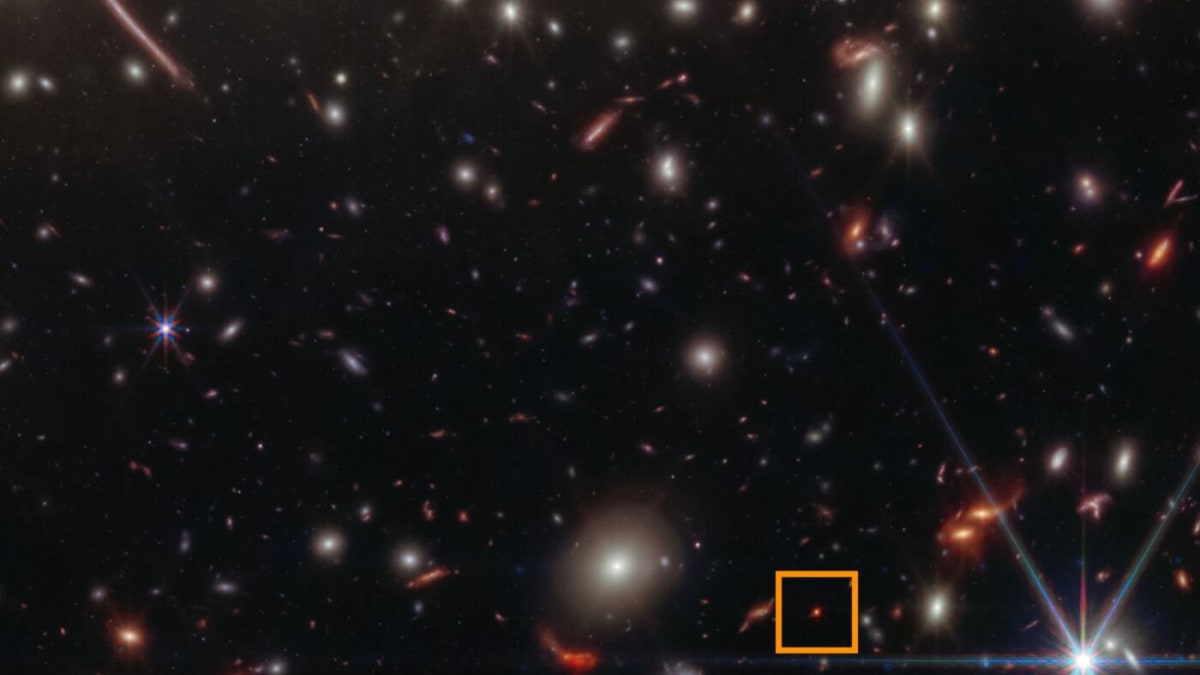
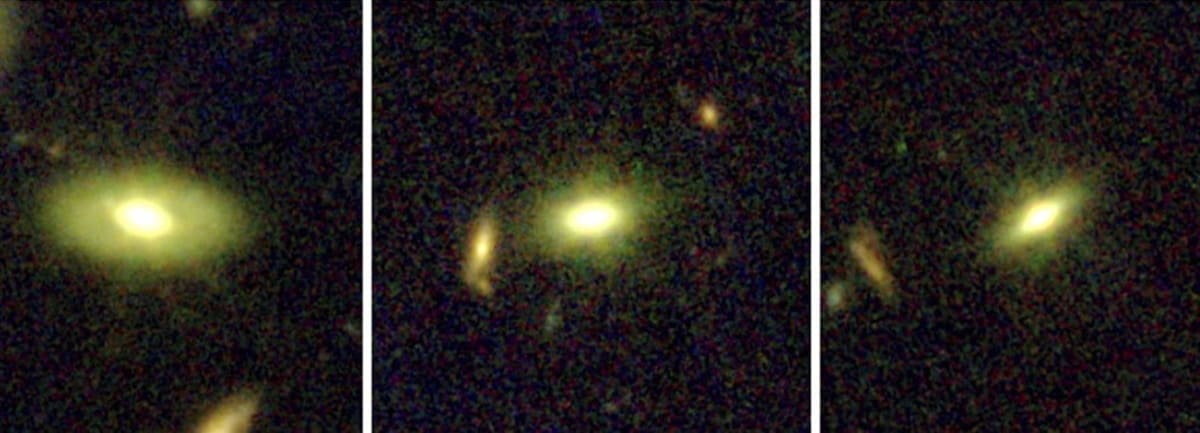
An international team led by astronomers at Leiden University in the Netherlands used the James Webb Space Telescope to study nine massive galaxies from the early universe. What they found challenges everything researchers thought they knew about how galaxies formed after the Big Bang.
The telescope's powerful instruments revealed populations of smaller, fainter stars that previous technology simply couldn't detect. These tiny stars increased the estimated mass of galaxies younger than 1.5 billion years old by four times what astronomers had calculated.
"If a galaxy were a city, the brightest stars would be the skyscrapers you can immediately see from far away," explained lead researcher Chloe Cheng. "Our models show that behind the brightest stars there is a much larger population of small stars, like houses among the skyscrapers."
For decades, astronomers could only see the brightest stars in distant galaxies. They assumed the ratio of small to large stars everywhere matched what we see nearby. The Webb telescope just proved that assumption wrong.
These ancient massive galaxies contain far more small stars than our own Milky Way does today. The researchers combined Webb's data with observations from the Very Large Telescope in Chile to break down light into detailed spectra, revealing the subtle signatures of these hidden stellar populations.
The Ripple Effect
This discovery reaches far beyond just counting stars. Small stars frequently host planets orbiting around them, which means the early universe likely harbored many more worlds than scientists previously believed possible.
The findings also demonstrate how rapidly the universe developed after the Big Bang. Webb continues revealing that the ancient cosmos was more massive and complex than researchers ever considered possible just a few years ago.
"This result shows that much more mass than we thought is hidden in small stars," said study lead Professor Mariska Kriek. "It has implications for many areas of astronomy."
The team plans to look even deeper into cosmic history next, studying some of the universe's very earliest stars to see what other surprises await. Each new discovery with the Webb telescope rewrites another chapter in our understanding of how everything began.
Based on reporting by Google: James Webb telescope
This story was written by BrightWire based on verified news reports.
Spread the positivity!
Share this good news with someone who needs it