Webb Telescope Finds Mystery Star 100 Billion Times Brighter
NASA's James Webb Space Telescope discovered an impossible object shining in the early universe with energy that no ordinary star could produce. Scientists think it might be a black hole wrapped in a giant envelope of hydrogen, revealing a never-before-seen stage in how massive black holes grow.
Scientists just spotted something in the early universe that shouldn't exist: a glowing red object pumping out 100 billion times more energy than any known star.
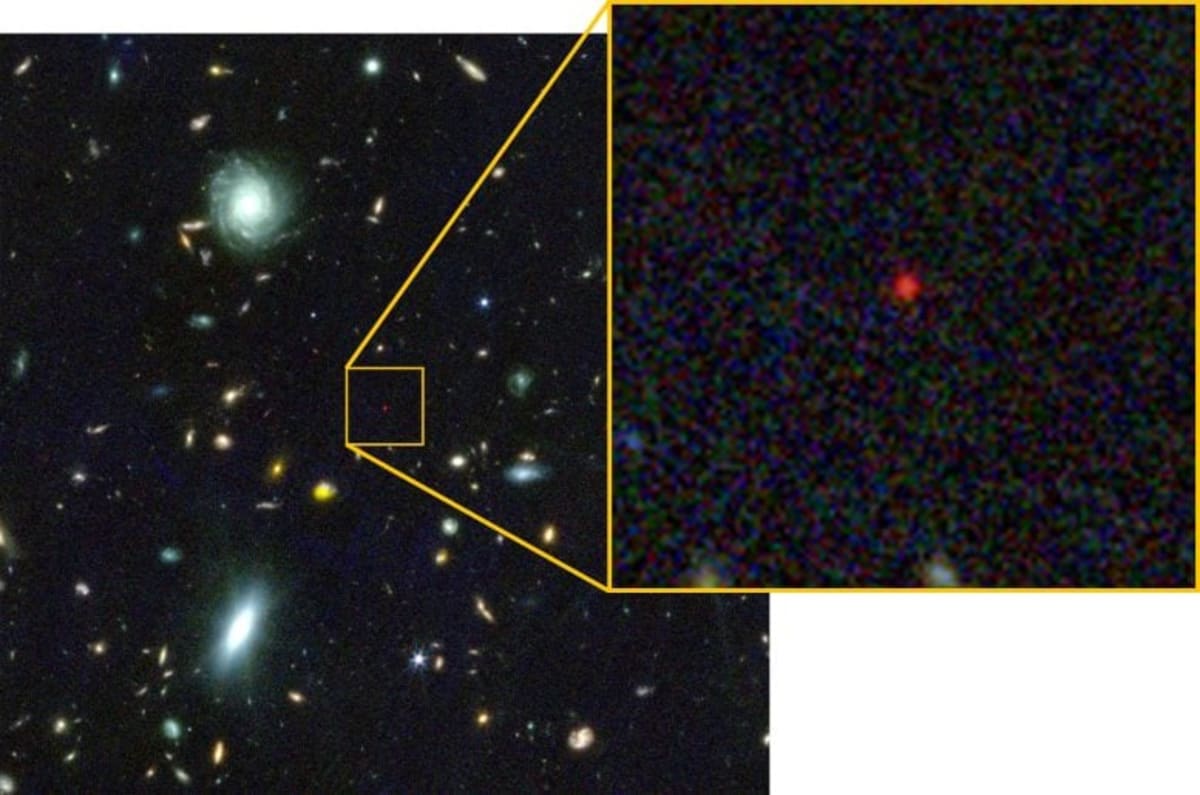
NASA's James Webb Space Telescope found the mysterious source, nicknamed MoM-BH*-1, shining bright when the universe was only a few hundred million years old. It looks like a star and might be surrounded by gas the size of our entire solar system, but ordinary nuclear fusion can't explain how it produces so much light.
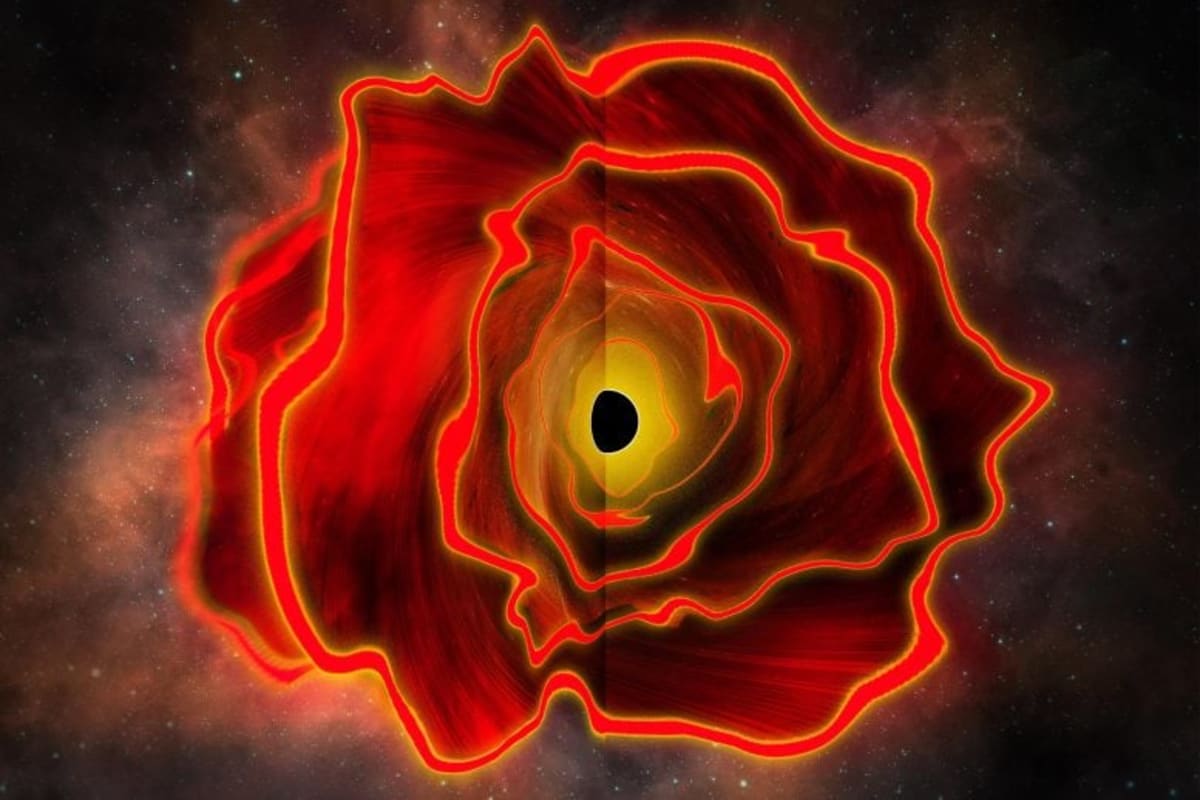
The leading theory sounds like science fiction. Researchers believe they're seeing a "black hole star," a black hole 100,000 times the mass of our sun wrapped in an enormous blanket of hydrogen gas that glows like a stellar atmosphere.
"Our picture of this object is evolving very rapidly," says lead author Rohan Naidu, a NASA Hubble Fellow at MIT. "It's huge."
The discovery happened almost by accident while Naidu's team was hunting for extremely distant galaxies through a program they playfully named "Mirage or Miracle." They weren't expecting to find an entirely new type of cosmic object.
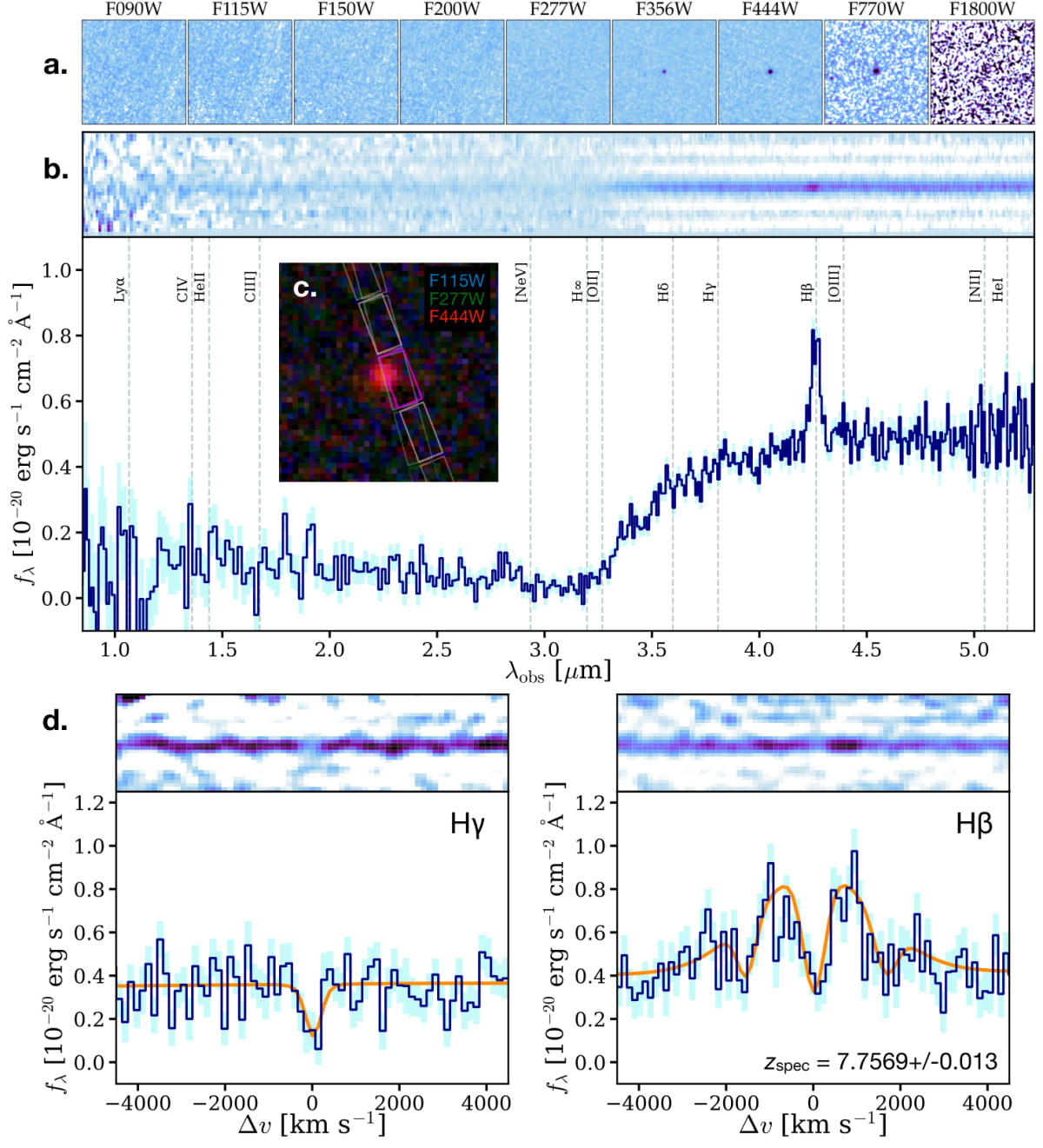
What makes MoM-BH*-1 so unusual is its extreme redness and a dramatic drop in light at certain wavelengths called a Balmer break. The break was the deepest ever observed in any object, ruling out ordinary stars as the source.
The object also contains almost entirely hydrogen and helium, with barely any heavier elements. That chemical simplicity points to something formed in the universe's earliest days, before stars had manufactured the diverse elements we see today.
Why This Inspires
This discovery could solve one of Webb's biggest mysteries: the abundance of "little red dots" that appear everywhere in images of the early universe but vanish by modern times. Scientists have debated for months what these tiny, bright objects actually are.
MoM-BH*-1 might offer the clearest answer yet. Unlike typical little red dots where surrounding galaxy light complicates the picture, this object appears dominated by its strange central source, giving researchers an unobstructed view of what's happening inside.
The finding could reveal how supermassive black holes grew so large so quickly in the early universe. If black holes could temporarily wrap themselves in glowing envelopes of gas, they might have gone through rapid growth spurts that current theories can't explain.
The research, published in Nature, opens an exciting new chapter in understanding the universe's first billion years. Every time Webb peers deeper into space, it finds phenomena that challenge everything astronomers thought they knew about cosmic history.
The universe still has surprises waiting for us.
More Images
Based on reporting by Google: James Webb telescope
This story was written by BrightWire based on verified news reports.
Spread the positivity!
Share this good news with someone who needs it