Webb Telescope Spots Mystery Object 100 Billion Times Brighter
The James Webb Space Telescope found something extraordinary in deep space that shines as bright as 100 billion suns but looks nothing like astronomers expected. Scientists think they've discovered a black hole wrapped in a cocoon of hydrogen from when the universe was just a baby.
Astronomers just spotted something in deep space that breaks all the usual rules, and it's rewriting what we know about the early universe.
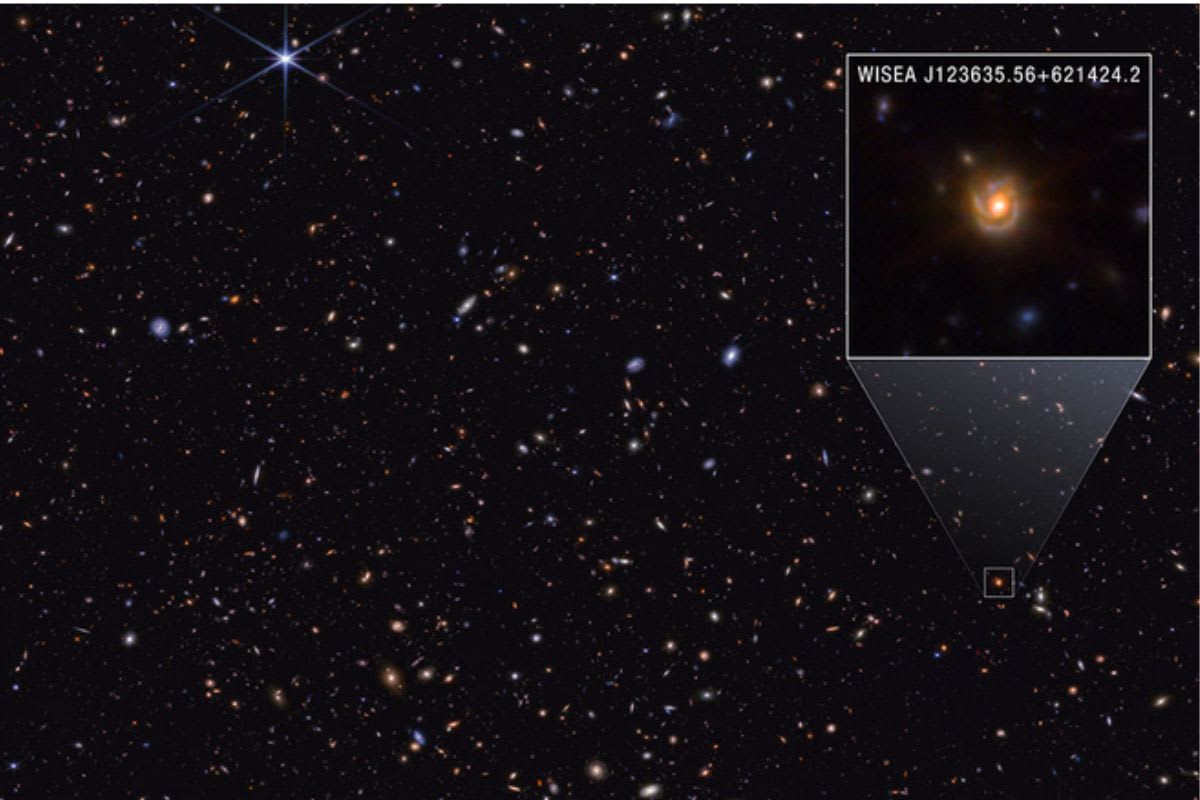
The James Webb Space Telescope found a tiny red point of light called MoM-BH*-1 that appears deceptively simple but packs an incredible punch. The light left this object when the universe was only 660 million years old, making it one of the earliest cosmic structures ever observed.
Here's what makes it special: this pinpoint source shines with roughly 100 billion times the power of our sun. That's far too bright to be an ordinary star, even a massive one.
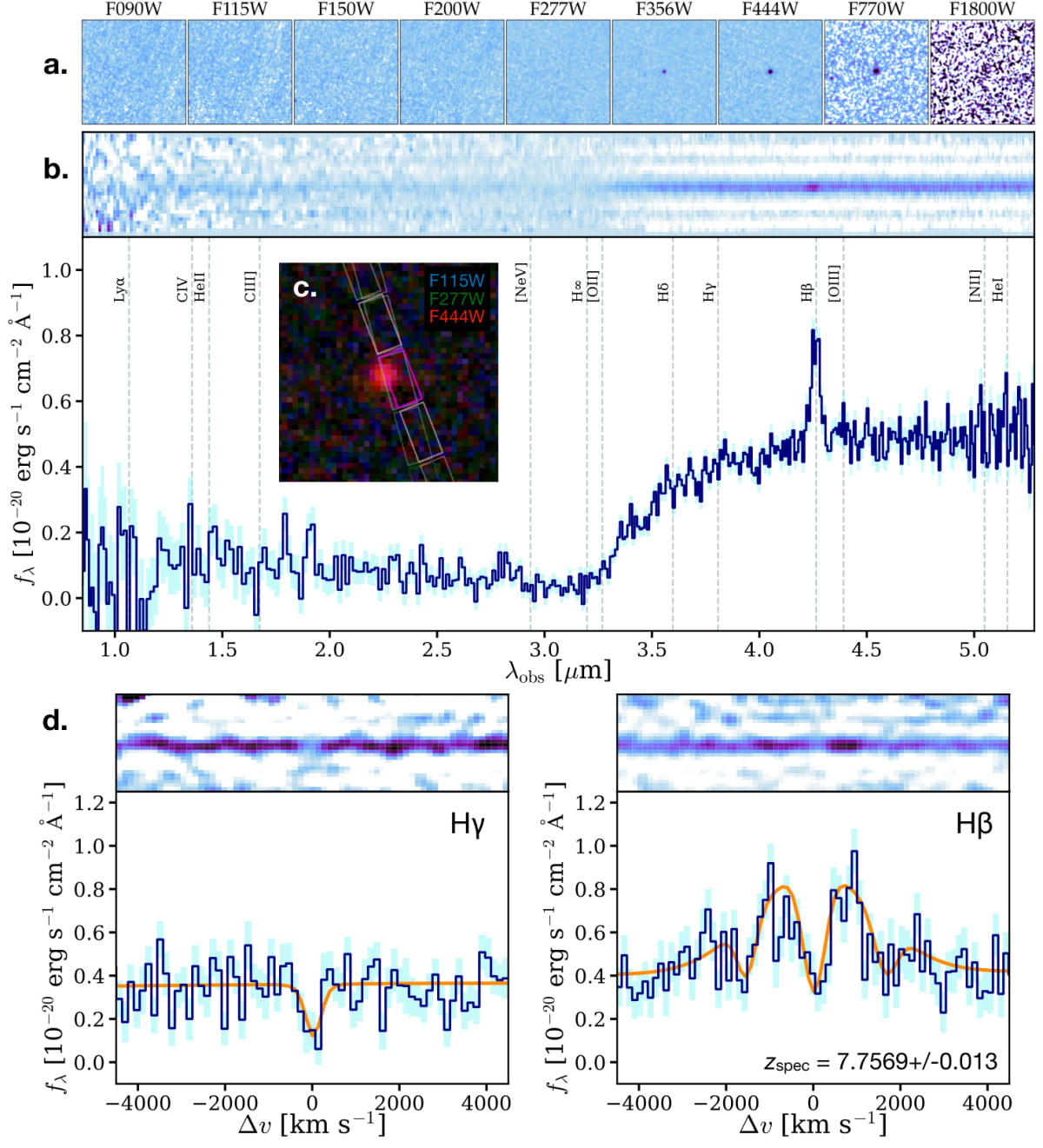
When scientists pointed Webb's instruments at the object for over six hours total, they saw something they'd never seen before. The spectrum showed an enormous signature from hydrogen that measured 7.7 on a scale where normal stars top out around 3.
The light also revealed hydrogen moving at incredible speeds, roughly 3,000 kilometers per second. Deep absorption lines and possible oxygen signals added more pieces to the puzzle.
After running the numbers, researchers published their answer in Nature in August. They believe MoM-BH*-1 is actually a black hole wrapped in an extraordinarily dense envelope of hydrogen, roughly the size of our solar system.
The black hole itself stays dark and invisible. But as gas spirals toward it, the material heats up and converts gravitational energy into brilliant radiation before escaping through the hydrogen cocoon.
That surrounding gas does something unusual. Instead of dust creating the reddish color astronomers usually see around active black holes, this object uses pure hydrogen to reshape the light.
The hydrogen reaches densities of about 100 billion particles per cubic centimeter and stays almost completely dust-free. It absorbs, scatters, and re-emits the central energy in ways that create the strange spectrum Webb detected.
Why This Inspires
This discovery opens a window into how black holes and early structures formed when the universe was still in its infancy. Finding such a powerful object so early in cosmic history challenges existing models and pushes scientists to think differently about how the universe evolved.
The fact that we can now see and study objects from just 660 million years after the Big Bang shows how far our technology has come. Webb is delivering on its promise to reveal the universe's earliest chapters.
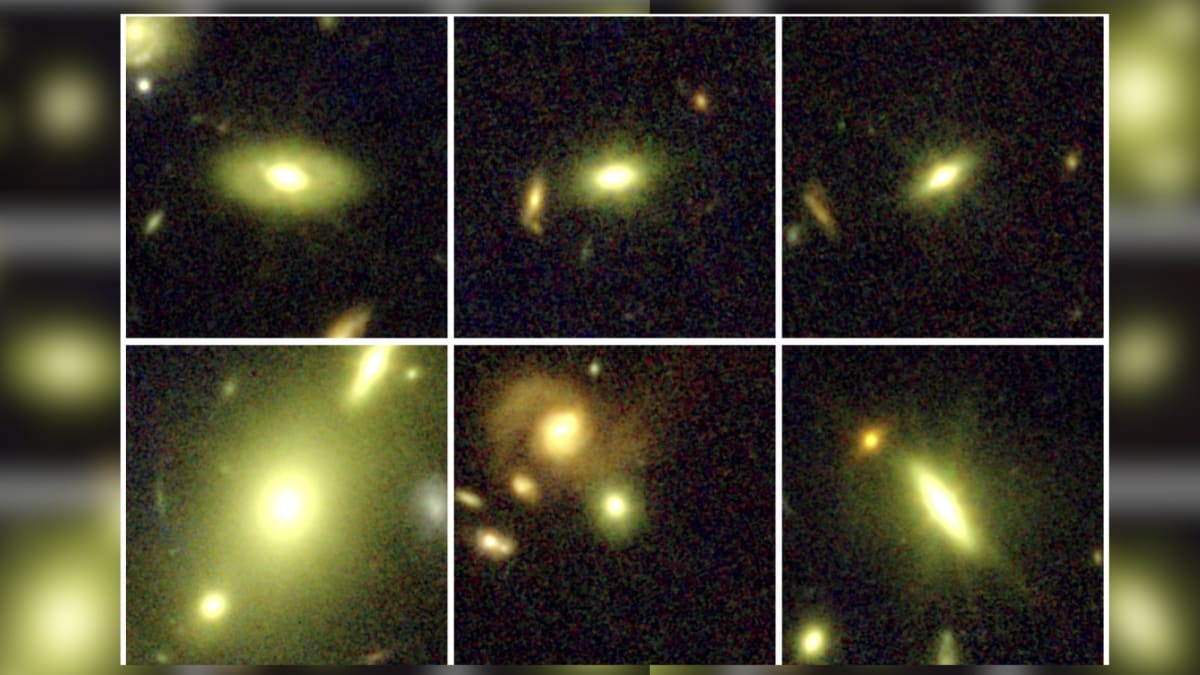
Other recent observations of similar "Little Red Dots" suggest MoM-BH*-1 might not be alone. Multiple young black holes wrapped in dense ionized cocoons could be hiding in the early universe, waiting to be found.
Each new discovery like this one brings us closer to understanding our cosmic origins and the forces that shaped everything we see today.
More Images



Based on reporting by Google: James Webb telescope
This story was written by BrightWire based on verified news reports.
Spread the positivity!
Share this good news with someone who needs it