NASA Satellite Discovers Planet 40,000 Light-Years Away
A NASA spacecraft just found a Jupiter-like planet using Einstein's theory of relativity, opening the door to discovering worlds it was never designed to detect. The breakthrough came from looking at old data in a completely new way.
Scientists just proved that sometimes the best discoveries are hiding in plain sight.
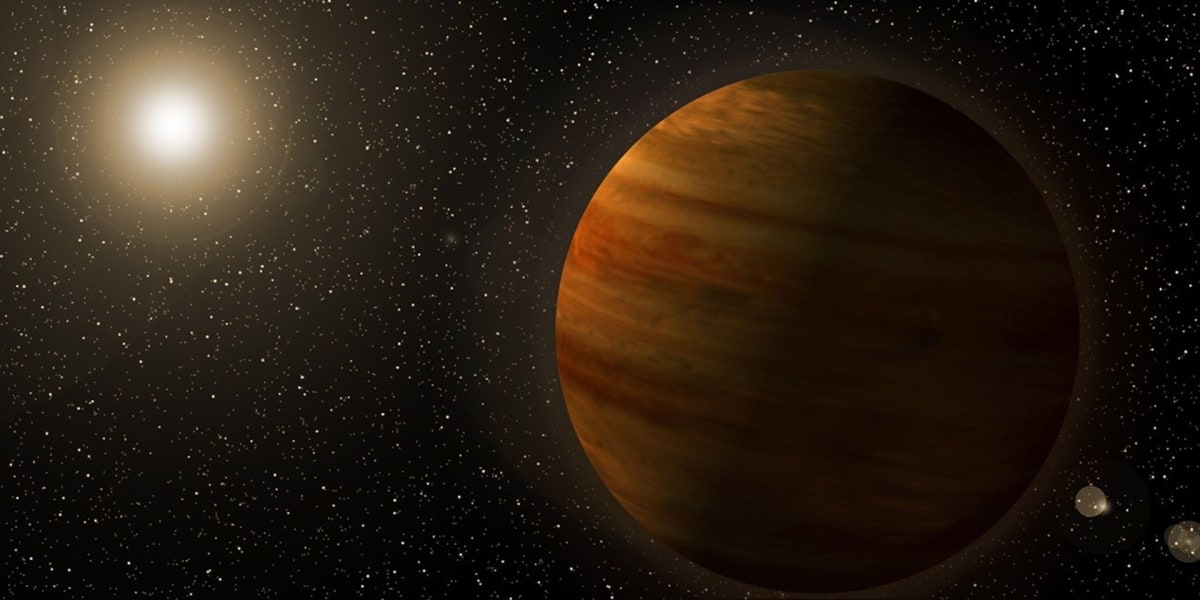
NASA's planet-hunting spacecraft TESS stumbled upon a Jupiter-like world orbiting a distant star, and the find shocked everyone because TESS wasn't built to detect planets like this. The spacecraft used gravitational microlensing for the first time, a technique that relies on Einstein's theory of relativity to spot worlds by how they bend light from even more distant stars.
The newly discovered planet, named Gaia23bra b, orbits its star at roughly the same distance Jupiter orbits our Sun. But here's the kicker: the entire system sits 40,000 light-years away from Earth, far beyond TESS's usual detection range of 150 light-years.
"When TESS launched, no one expected it to ever be capable of finding this kind of planet," said Diana Dragomir, professor at the University of New Mexico. The discovery came from archived data that researchers decided to examine with fresh eyes after Europe's Gaia spacecraft spotted something interesting.
TESS has already discovered more than 800 planets, but it typically finds worlds hugging close to their stars. The spacecraft watches for tiny dips in starlight when planets cross in front of their suns. This new detection method works completely differently.
Gravitational microlensing happens when one star passes in front of another from our viewpoint. The closer star's gravity bends spacetime like a magnifying glass, temporarily brightening the background star's light. When a planet orbits that closer star, it creates a second brightness spike that reveals its presence.
Scientists caught both signatures in TESS's data: one from the star and another from its planet. That double lens effect was the smoking gun.
Why This Inspires
This discovery proves that collaboration between different instruments unlocks possibilities neither could achieve alone. Gaia's wide view of the sky told scientists where to look, while TESS provided the detailed observations Gaia couldn't capture on its own.
The breakthrough also means TESS's treasure trove of archived data likely contains more hidden planets waiting to be found. Researchers are now combing through years of observations with new search methods, looking for worlds they never thought to seek before.
Lead author Mallory Harris jokes that we might discover the first true Earth twin through microlensing, then wave goodbye as it passes out of view forever. These lensing events happen once and never repeat, making each detection precious and unrepeatable.
But the technique opens doors to finding smaller planets in habitable zones and beyond, worlds that transit methods miss entirely. By combining approaches, scientists can now detect a much wider variety of planets across vastly different distances and environments.
Sometimes the most powerful tools are the ones we already have, just viewed through a different lens.
Based on reporting by Google: NASA discovery
This story was written by BrightWire based on verified news reports.
Spread the positivity!
Share this good news with someone who needs it