NASA Shifts Lunar Tech from Gateway to Moon Base
NASA's lunar program is getting a creative reboot. Technologies originally built for an orbiting Gateway station are now being repurposed to help build humanity's first permanent base on the Moon.
When NASA shifted its focus from a lunar orbiting station to a permanent Moon base, aerospace companies didn't throw away years of research. Instead, they're finding clever ways to give their Gateway technologies a new home on the lunar surface.
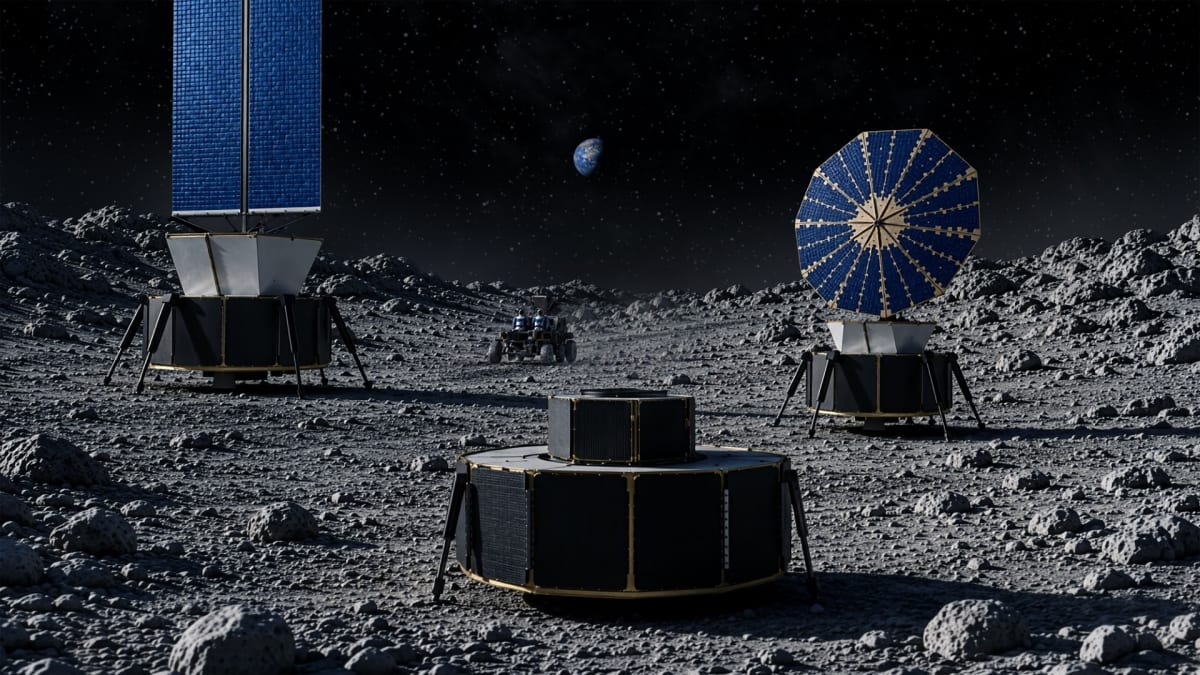
Northrop Grumman announced it will transform hardware from its Gateway habitat module into three robotic lander missions. These missions will test critical systems that help equipment survive the brutal two-week lunar night, when temperatures plunge to minus 280 degrees Fahrenheit.
The company plans to demonstrate power systems, communications equipment, and protective technologies through missions called Lunar Infrastructure Demo, or LID. Think of them as test runs for the essential utilities a Moon base will need, like making sure your house has working electricity and heat before you move in.
The first mission will launch by 2029 as part of NASA's Commercial Lunar Payload Services program. One lander will carry a vertical solar array, another will feature a circular power system similar to those used on existing spacecraft, and a third will test additional technologies.
Meanwhile, Canada is adapting too. The Canadian Space Agency originally developed Canadarm3, a sophisticated robotic arm system, for the Gateway station. Now they're redesigning that technology for lunar surface operations and potentially for commercial space stations in Earth orbit.
MDA Space, the company building Canadarm3 under a $717 million contract, continues developing the robotic systems while working with Canadian officials to finalize how they'll be used. The technology could eventually help with logistics and construction on the Moon.
The Bright Side
This pivot shows how space exploration can be surprisingly efficient. Rather than scrapping expensive, cutting-edge technology when plans change, engineers are finding new applications that might actually be more ambitious than the original goals.
The shift from an orbiting Gateway to a surface base means humanity is accelerating toward a permanent lunar presence. The technologies being tested will help astronauts live and work through the harsh lunar night, paving the way for continuous operations at the Moon's south pole.
Both companies emphasized that their ready-to-fly technologies will help NASA move faster toward establishing lasting infrastructure on another world. What started as parts for a space station might become the foundation for humanity's first home beyond Earth.
More Images



Based on reporting by SpaceNews
This story was written by BrightWire based on verified news reports.
Spread the positivity!
Share this good news with someone who needs it