NASA Spacecraft Changed an Asteroid's Path Around the Sun
For the first time ever, humans have measurably altered how a celestial body orbits the Sun. NASA's DART mission proved we can protect Earth from dangerous asteroids.
Humanity just gained the power to nudge asteroids off their paths through space, and that might one day save our planet.
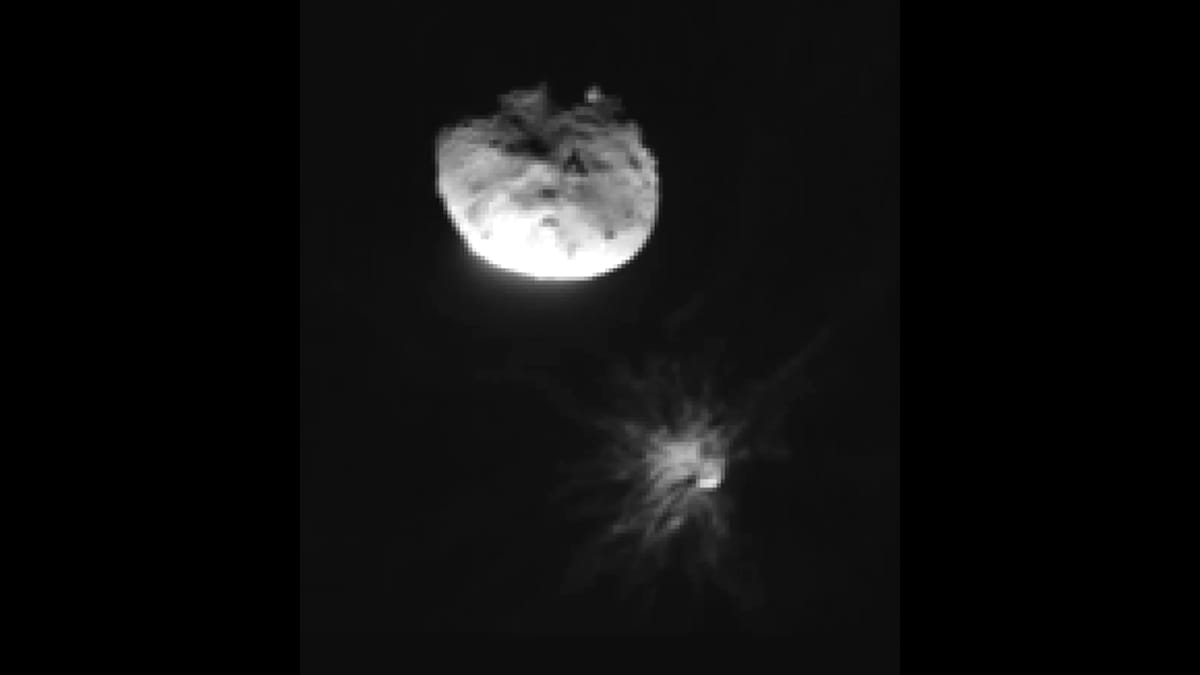
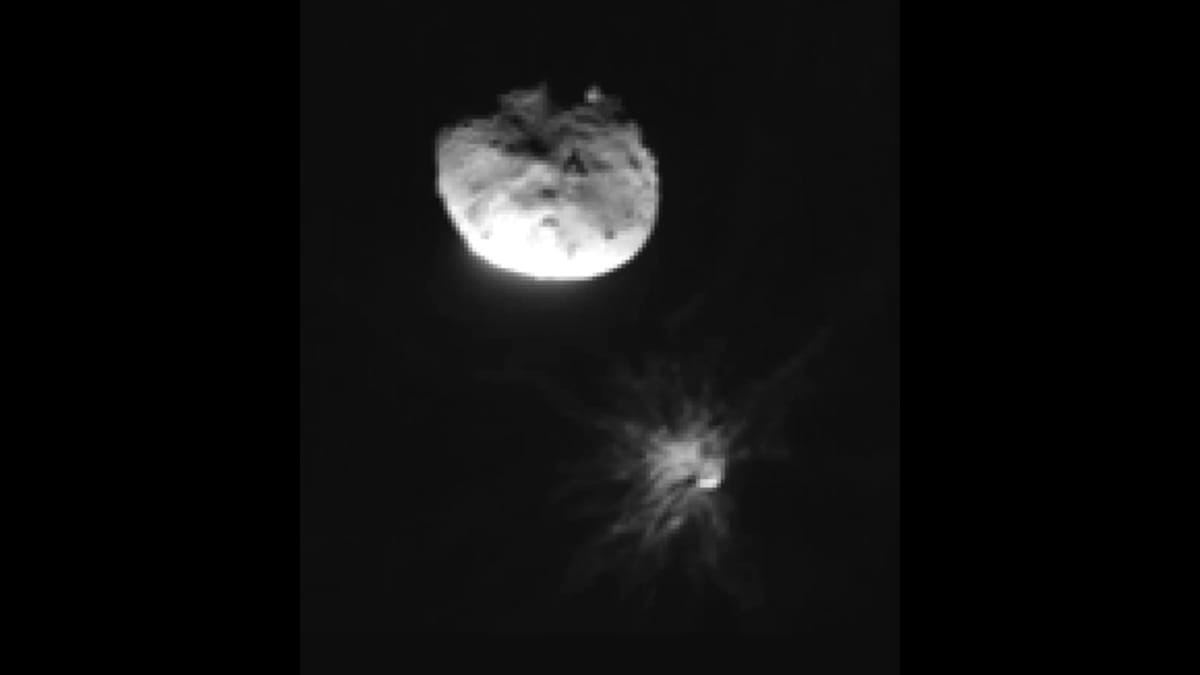
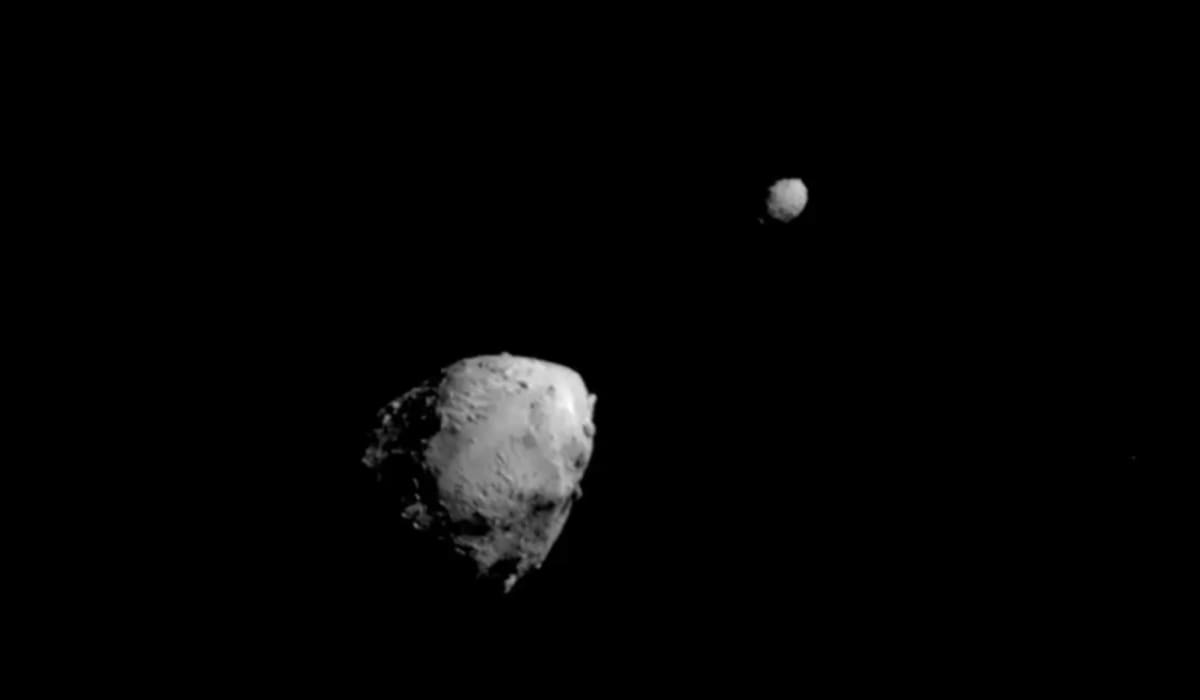
When NASA crashed its DART spacecraft into the asteroid Dimorphos in September 2022, scientists knew it would change how the small space rock orbited its larger companion, Didymos. New research published Friday reveals something even more remarkable: the impact shifted both asteroids' orbit around the Sun by 0.15 seconds.
That marks the first time a human-made object has measurably changed the path of a celestial body around our star. While 0.15 seconds sounds tiny, it proves a concept that could protect Earth from future asteroid threats.
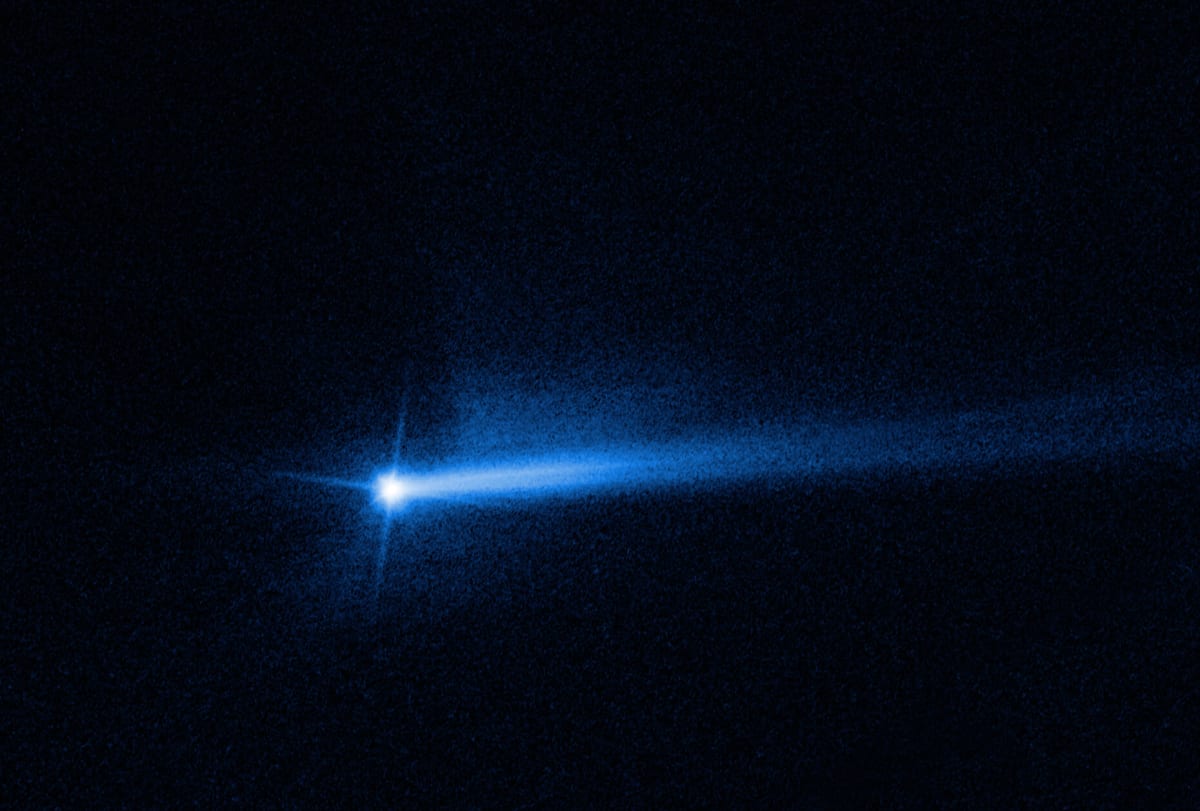
The impact packed twice the punch scientists expected. When DART struck the 560-foot-wide Dimorphos, it blasted a massive cloud of rocky debris into space. That debris carried its own momentum away from the asteroid, giving Dimorphos an extra thrust that doubled the spacecraft's impact force.
The collision shortened Dimorphos's 12-hour orbit around its larger partner by 33 minutes. But all that ejected material also changed the speed of both asteroids traveling around the Sun by just over an inch per hour.
"Over time, such a small change in an asteroid's motion can make the difference between a hazardous object hitting or missing our planet," said lead researcher Rahil Makadia from the University of Illinois.
Neither asteroid posed any threat to Earth, and the mission couldn't have put them on a collision course. But the results show that if we detect a dangerous asteroid early enough, we could send a spacecraft to bump it off course.
To measure such tiny changes, researchers tracked stellar occultations, which happen when an asteroid passes in front of a star and briefly blocks its light. Volunteer astronomers around the world recorded 22 of these events between October 2022 and March 2025, often traveling to remote locations with no guarantee of success.
The Bright Side
NASA is already building on this success with the Near-Earth Object Surveyor mission. This next-generation space telescope will search specifically for hard-to-spot asteroids, including dark ones that don't reflect much visible light. The key to planetary defense is spotting threats early.
The volunteer astronomers' dedication made this discovery possible. Their work proves that protecting our planet doesn't just require advanced technology but also people willing to chase moments of darkness across the globe.
We now have a proven way to protect Earth from space rocks, and that's a genuinely cosmic win.
More Images
Based on reporting by NASA
This story was written by BrightWire based on verified news reports.
Spread the positivity!
Share this good news with someone who needs it