NASA Spots Largest Ever Volcanic Eruption on Jupiter's Moon
NASA's Juno spacecraft just witnessed the most powerful volcanic eruption ever recorded in our solar system, a breathtaking display on Jupiter's moon Io that released up to 260 terawatts of energy. The simultaneous eruptions covered 40,400 square miles and revealed a hidden network of magma chambers beneath the moon's fiery surface.
The most violent volcanic event ever seen in our solar system just lit up Jupiter's moon Io, and NASA's Juno spacecraft had front-row seats to the spectacular show.
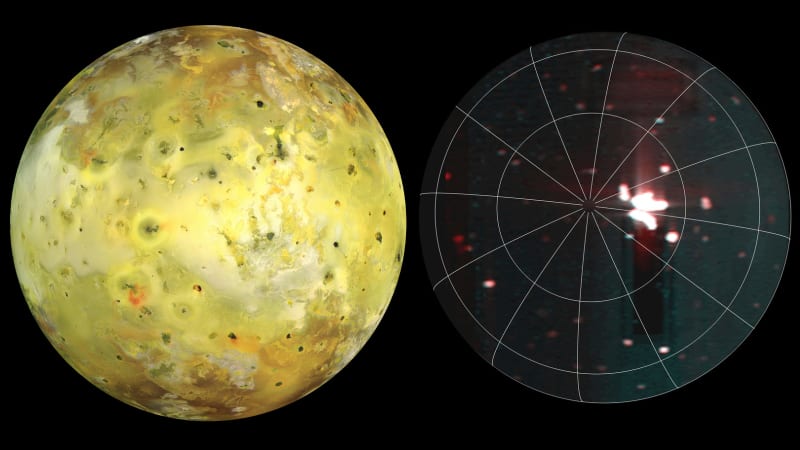
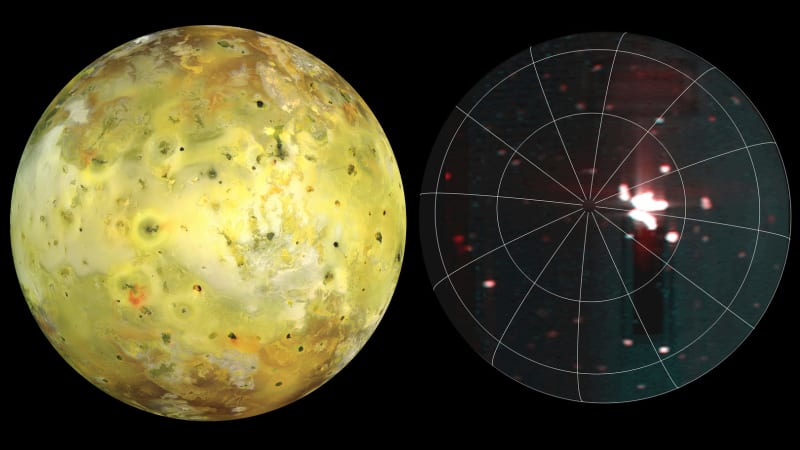
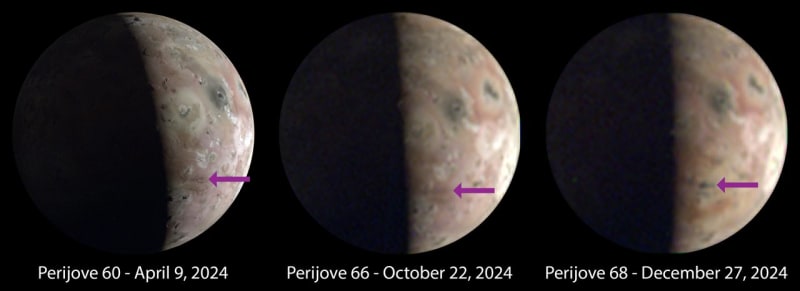
On December 27, 2024, multiple volcanoes on Io erupted simultaneously, covering an enormous 40,400 square miles. The eruptions released between 140 and 260 terawatts of energy, shattering the previous record of 80 terawatts set by the Surt volcano in 2001.
To put that in perspective, the famous Mount St. Helens eruption in 1980 released just 52 terawatts of power. This cosmic fireworks display was five times more powerful.
What makes this discovery even more exciting is what it reveals about Io itself. The fact that multiple volcanoes erupted in perfect synchrony suggests something remarkable hiding beneath the surface.
"This perfect synchrony suggests that it was a single enormous eruptive event, propagating through the sub-surface for hundreds of kilometers," said Alessandro Mura of the Italian National Institute for Astrophysics. His team believes Io's interior resembles a sponge filled with interconnected pockets of magma.
Juno happened to be flying just 46,200 miles above Io's charred surface when the eruption occurred, capturing it with the spacecraft's infrared instrument. The volcanoes involved became more than a thousand times brighter than their typical levels.
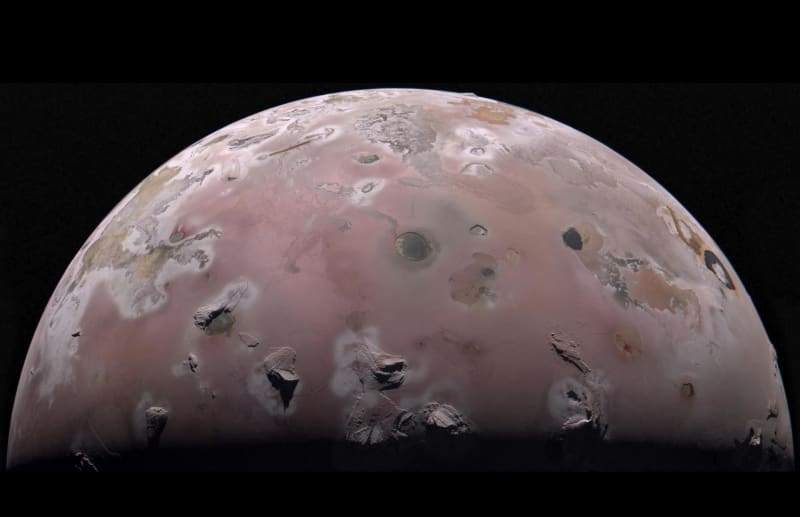
Io hosts about 400 active volcanoes across its 2,263-mile diameter. Jupiter's powerful gravitational forces constantly squeeze and flex the moon's interior like a stress ball, generating enough heat to keep its mantle molten and fueling near-constant volcanic activity.
Why This Inspires
This discovery shows how much we still have to learn about our solar system, even from moons we've been studying for decades. Every close flyby of Io reveals new secrets about how volcanic systems work, not just on distant moons but potentially on Earth too.
The fact that not all volcanoes in the region erupted suggests multiple separate magma networks exist beneath Io's surface. Understanding these connections could help scientists predict volcanic activity throughout the universe.
As Juno continues its extended mission with more close encounters of Jupiter's moons, scientists will watch for new lava flows and ash deposits from this spectacular eruption. Each observation brings us closer to understanding the violent beauty of our cosmic neighborhood.
The universe just reminded us that the most powerful forces in nature are still out there waiting to amaze us.
More Images
Based on reporting by Space.com
This story was written by BrightWire based on verified news reports.
Spread the positivity!
Share this good news with someone who needs it