NASA Telescope Maps Water Ice Across Star Nursery
NASA's SPHEREx telescope has mapped water ice throughout one of our galaxy's busiest star-forming regions, revealing how dust shields the building blocks of life from radiation. The findings support theories about how water forms in space and brings scientists closer to understanding the origins of life itself.
A NASA telescope launched last year has captured stunning evidence of water ice scattered throughout one of the Milky Way's most active stellar nurseries, bringing scientists closer to understanding how the ingredients for life spread across the universe.
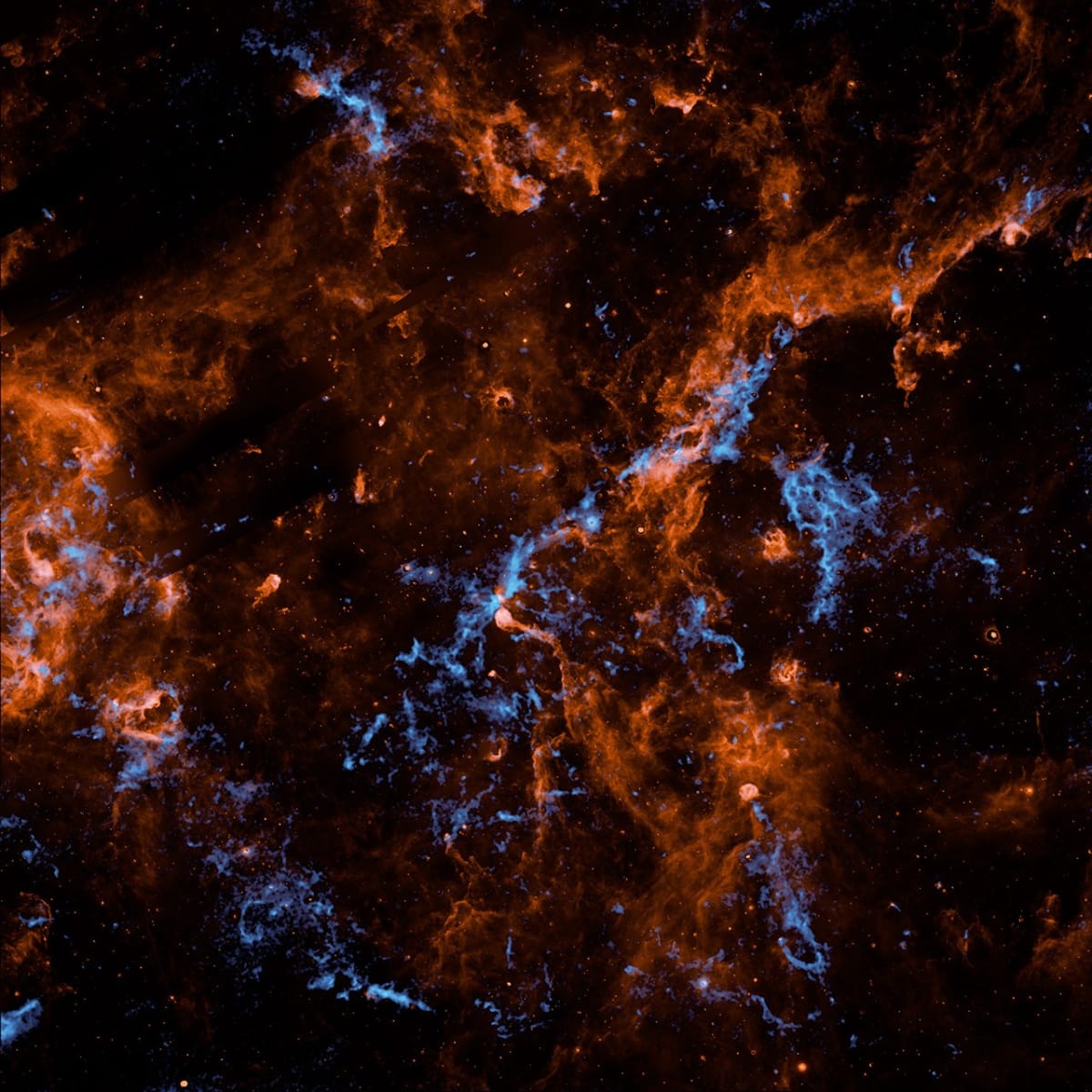
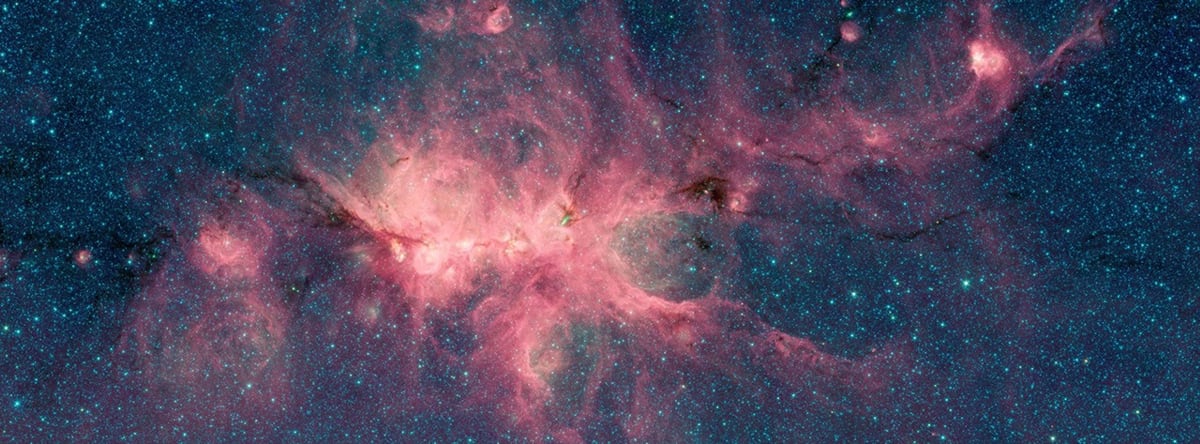
The SPHEREx observatory mapped chemical signatures of water ice across Cygnus X, a turbulent region where new stars are constantly being born. The bright blue patches in the images show water molecules clinging to tiny dust particles no larger than specks in candle smoke.
The April 2026 study published in The Astrophysical Journal revealed something remarkable. The densest concentrations of ice appear exactly where dust is thickest, creating protective lanes that shield water molecules from the intense ultraviolet radiation blasting from newborn stars.
This discovery supports a long-held hypothesis about how water forms in the hostile environment of space. Without the shelter of dust particles, the radiation from young stars would destroy water molecules before they could accumulate into the vast quantities needed to seed planets and potentially support life.
SPHEREx stands apart from other space telescopes because it was specifically designed to hunt for water and other molecules across the entire sky. While NASA's James Webb Space Telescope and the retired Spitzer observatory have detected water in specific locations, SPHEREx can see the big picture.
The telescope launched in March 2025 with a unique superpower: it observes the sky in 102 different colors of infrared light. Each wavelength reveals different information about galaxies, stars, and the regions where planets form.
By late 2025, SPHEREx had already completed its first full map of the universe, charting hundreds of millions of galaxies in three dimensions. The mission will create four complete sky maps before its work is done.
Why This Inspires
Understanding where water comes from in space isn't just an academic exercise. Water is essential to life as we know it, and tracing its cosmic journey helps answer one of humanity's biggest questions: how did the building blocks of life get here?
The fact that water molecules can survive and accumulate in such violent stellar environments shows just how resilient these life-giving compounds are. Protected by humble dust particles, water persists in regions where temperatures and radiation would seem to make it impossible.
Even more exciting, all of SPHEREx's data is freely available to scientists and the public worldwide. Researchers at 13 institutions across the United States, South Korea, and Taiwan are already analyzing the information, and anyone with curiosity and an internet connection can explore the same cosmic maps.
The telescope will continue surveying the sky for years to come, each observation potentially revealing new insights about how galaxies evolved, how stars form, and how the molecules necessary for life spread throughout the cosmos.
More Images


Based on reporting by NASA
This story was written by BrightWire based on verified news reports.
Spread the positivity!
Share this good news with someone who needs it