NASA Telescope to Find 100,000 New Planets by 2032
NASA's newest space telescope will discover more planets in five years than humanity has found in all of history combined. The Roman Space Telescope, launching in 2027, will also create the first real census of mysterious rogue planets drifting through space without stars.
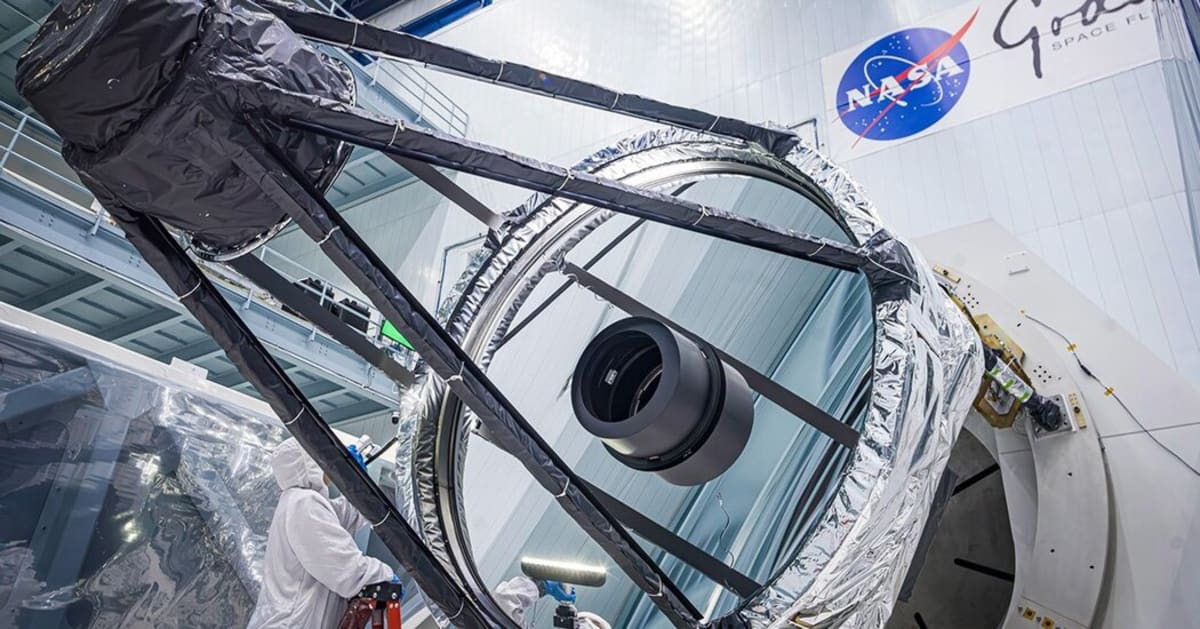
NASA just finished building a telescope that will revolutionize our understanding of planets beyond our solar system, and it's ready to launch as early as fall 2026.
The Nancy Grace Roman Space Telescope will find more than 100,000 new planets during its first five years in orbit. That's nearly 40 times more confirmed planets than we've discovered in human history.
The telescope uses two different planet-hunting techniques that work together like a cosmic one-two punch. The first method watches for tiny dips in starlight when planets pass in front of their host stars, the same technique that helped NASA's Kepler mission find about 2,800 planets in the 2010s. Roman will cover a much wider area of sky and see deeper into the crowded center of our galaxy, which explains the massive jump in numbers.
But the second technique is where things get truly exciting. Roman will use gravitational microlensing, a phenomenon Albert Einstein predicted in the 1930s, to find planets that no other method can detect. When any object with mass passes in front of a distant star, its gravity acts like a magnifying glass and briefly brightens the star's light.
This method works even if a planet never crosses in front of its star from our viewpoint. More importantly, it works for planets that don't have stars at all.
Why This Inspires
Rogue planets are worlds that drift alone through the darkness of space, untethered to any star. They sound like science fiction, but they're real, and they might be everywhere.
Scientists estimate that Roman will find roughly 400 Earth-mass rogue planets during its mission. That's eight times more than previous predictions suggested, based on new evidence that these lonely worlds are far more common than anyone thought.
The telescope will also discover about 1,000 regular planets orbiting stars in wide orbits similar to Jupiter, Saturn, and Neptune in our own solar system. Current planet-hunting methods miss these distant worlds because they take too long to complete an orbit.
Research from Osaka University scientist Naoki Koshimoto suggests Roman's view from space will let it spot rogue planets with even smaller masses than ground-based telescopes can detect. The combination of Roman's wide field of view and sharp infrared vision means we'll finally understand not just that these wandering worlds exist, but how many there are and what they're like.
The telescope will also catalog hundreds of millions of stars and billions of galaxies along the way. Construction wrapped up in December 2025, and the spacecraft is on track for launch by May 2027 at the latest.
We're about to learn we live in a universe far more crowded with worlds than we ever imagined.
More Images



Based on reporting by Google News - Science
This story was written by BrightWire based on verified news reports.
Spread the positivity!
Share this good news with someone who needs it