NASA Telescopes Capture Most Detailed Saturn View Ever
Two of NASA's most powerful space telescopes just teamed up to reveal Saturn like we've never seen it before. The images show the ringed planet's atmosphere in stunning 3D detail.
NASA's Hubble and James Webb Space Telescopes just captured the most comprehensive view of Saturn in history, revealing the ringed planet's secrets in breathtaking detail.
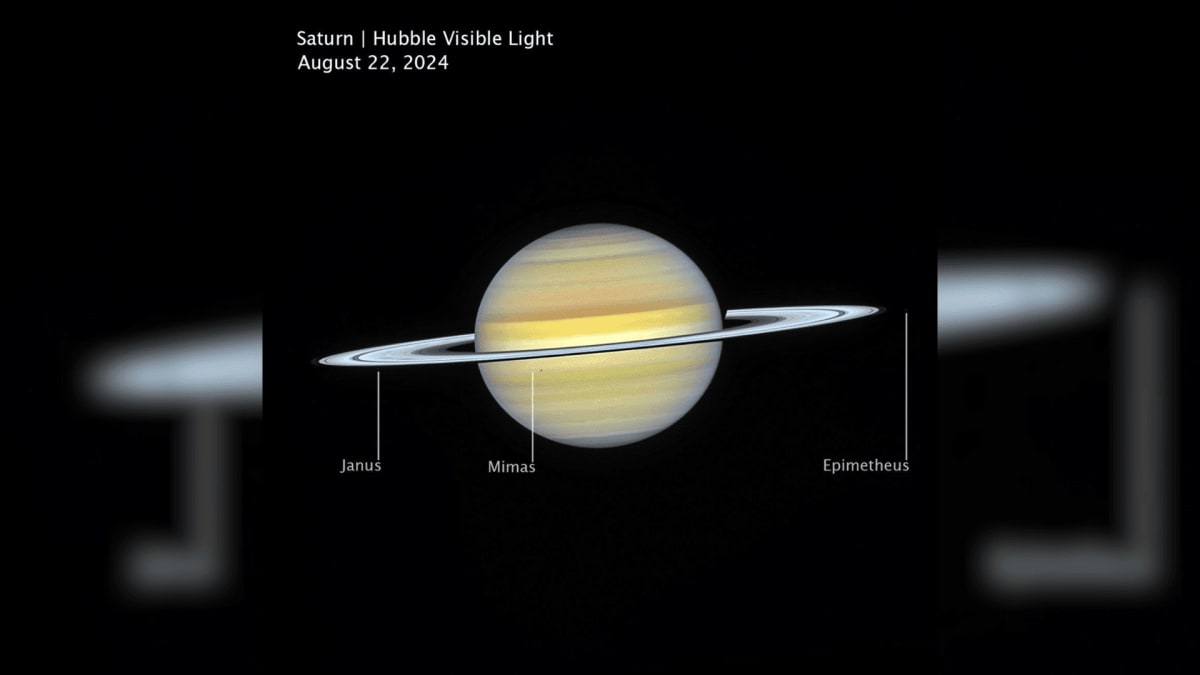
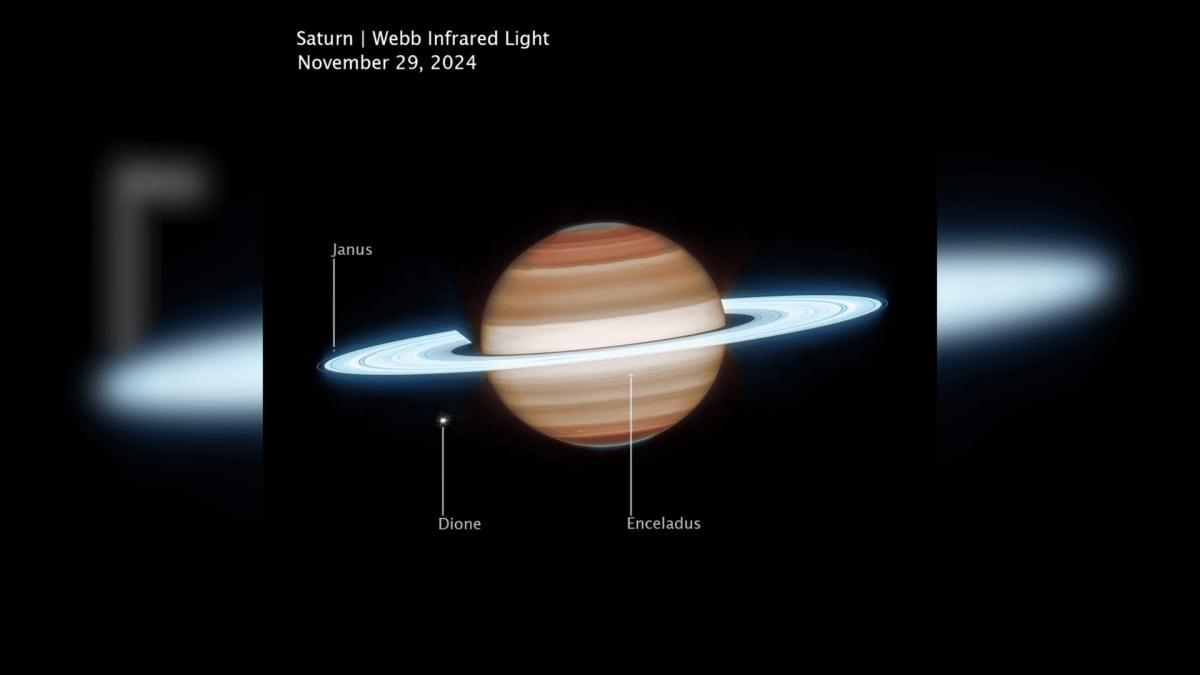
The two observatories worked together to photograph Saturn using different wavelengths of light, creating a layered understanding of the planet's complex atmosphere. Think of it like using both regular and infrared cameras to see a complete picture that neither could capture alone.
Hubble's view shows subtle color changes across Saturn's surface, while Webb's infrared vision peers deeper to reveal clouds and chemicals at different depths in the atmosphere. Together, they're helping scientists understand how Saturn's weather works as a three-dimensional system.
The new images reveal a jet stream called the "ribbon wave" racing across Saturn's northern mid-latitudes, shaped by powerful atmospheric waves. There's also a small spot left over from the massive "Great Springtime Storm" that raged from 2010 to 2012.
Both telescopes faintly captured the pointed edges of Saturn's famous hexagon-shaped jet stream at its north pole. The images also show Saturn's rings from their sunlit side, appearing especially bright in Webb's infrared view because they're made of highly reflective water ice.
Why This Inspires
Saturn becomes a natural laboratory for studying extreme weather and fluid dynamics under conditions we can't replicate on Earth. NASA calls the planet's powerful winds and waves beneath the visible clouds a unique opportunity to understand how atmospheres work.
The telescopes took their images 14 weeks apart, showing Saturn transitioning from northern summer toward its spring equinox. As the planet moves into southern spring and summer by the 2030s, both Hubble and Webb will get even better views of the southern hemisphere, promising more discoveries ahead.
This collaboration proves that sometimes the best science happens when we combine different perspectives, using each tool's unique strengths to see what neither could reveal alone.
More Images
Based on reporting by Google: James Webb telescope
This story was written by BrightWire based on verified news reports.
Spread the positivity!
Share this good news with someone who needs it