SMILE Satellite Launches to Study Earth's Space Shield
A groundbreaking space mission just launched to unlock the mysteries of how Earth protects itself from solar storms. Scientists will now get an unprecedented view of our planet's invisible magnetic defense system.
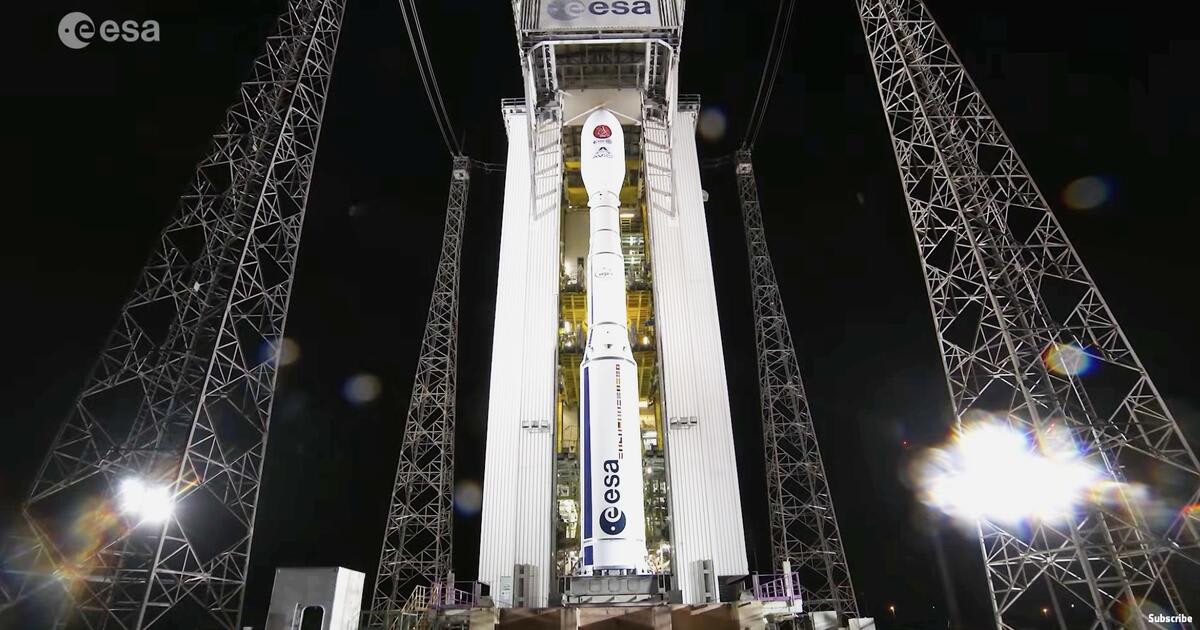
A sleek rocket pierced the night sky over French Guiana on May 18, carrying humanity's best tool yet for understanding the invisible shield protecting Earth from the sun's fury.
The SMILE satellite, a collaboration between the European Space Agency and the Chinese Academy of Sciences, successfully launched at 9:52 p.m. MT. Over the next 42 days, it will journey to its orbital home where it will begin studying something remarkable: how our planet's magnetic field deflects dangerous solar wind.
Think of Earth's magnetosphere as an invisible force field constantly battling streams of charged particles from the sun. We rarely think about it, but this shield is why we can live, breathe, and thrive on this planet. SMILE will help us understand exactly how this protection works.
The mission carries four specialized instruments designed to observe the complex dance between solar wind and Earth's magnetic defenses. But the satellite won't work alone.
Researchers at the University of Calgary designed a network of ground-based cameras spread across an entire continent. These all-sky imagers will photograph the aurora and other atmospheric light shows while SMILE watches from above. Together, they'll create the most complete picture yet of how Earth and the sun interact.
This dual perspective matters because space weather affects more than just pretty northern lights. Solar storms can disrupt satellites, power grids, and communication systems. Understanding our natural defenses helps us protect the technology modern life depends on.
The Ripple Effect
The SMILE mission represents something bigger than one satellite studying one planet. It shows what happens when international teams combine their expertise toward a common goal.
European engineering, Chinese technology, and Canadian ground networks working in harmony. Scientists from different continents sharing data to unlock cosmic mysteries. This is collaboration at its finest, proving that when we focus on discovery rather than division, amazing things lift off.
The research could also help us better predict space weather events, giving utilities and satellite operators more time to protect critical infrastructure. What starts as pure science often ends up safeguarding the systems billions of people rely on daily.
In 42 days, SMILE will reach its destination and begin its watch, a silent guardian helping us understand our guardian.
Based on reporting by Google: space mission success
This story was written by BrightWire based on verified news reports.
Spread the positivity!
Share this good news with someone who needs it