NASA Tracks Every Glacier on Earth Using Satellite Data
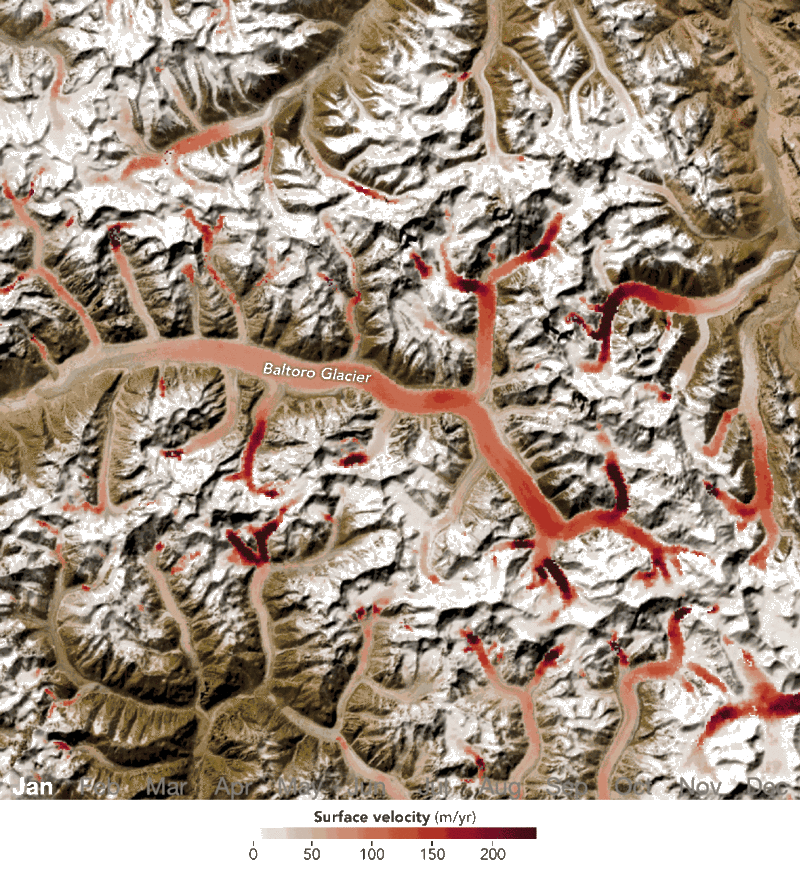
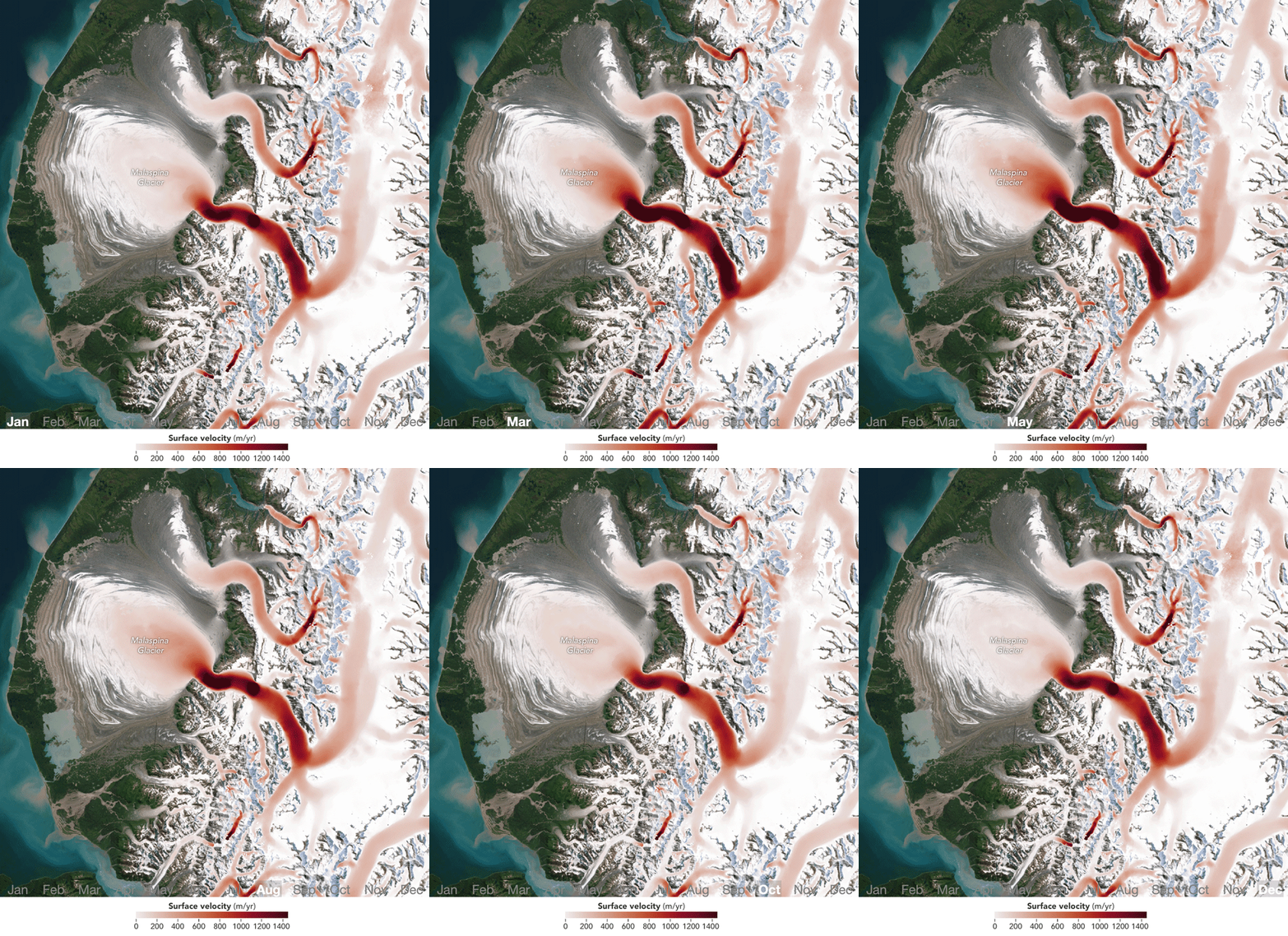
For the first time ever, scientists have mapped how all of Earth's glaciers speed up and slow down throughout the year. This breakthrough reveals crucial patterns about how our planet's ice responds to warming temperatures.
Scientists just completed the most comprehensive snapshot of glacier movement ever captured, tracking the seasonal pulse of every major glacier on the planet.
Published in November 2025, the groundbreaking study analyzed over 36 million satellite images to understand how glaciers worldwide respond to seasonal changes. The research team combined decades of NASA Landsat data with radar imagery to create a complete picture of ice movement across every continent.
Alex Gardner, a scientist at NASA's Jet Propulsion Laboratory, explains what makes this research special. Previous studies focused on individual glaciers or specific regions, making it nearly impossible to understand global patterns. This study changed everything by applying one consistent method to track glaciers everywhere.
The technology behind this achievement relies on Landsat satellites, which have been photographing Earth since the 1970s. These satellites return to the exact same position and look straight down, making it possible to detect even subtle movements in ice. The team used high resolution imagery to track specific surface features as they moved between images, essentially watching glaciers flow in slow motion.
Radar and optical imagery worked as perfect partners in this research. Radar can see through clouds and darkness but struggles when ice is melting. Optical imagery needs clear skies and sunlight but excels at tracking wet, melting surfaces. Together, they captured a complete timeline of glacier behavior throughout every season.
The findings revealed a critical pattern. Seasonal changes in glacier flow become pronounced when annual temperatures rise above freezing, and the effect intensifies with every additional degree of warming. This global perspective helps scientists understand which factors truly matter for glacier behavior worldwide.
The Bright Side
This comprehensive dataset gives researchers an unprecedented tool for understanding ice dynamics. By observing nearly every glacier on Earth simultaneously, scientists identified universal patterns that govern how glaciers respond to temperature changes. These insights help predict future changes more accurately than ever before.
The research shows that local factors matter tremendously. The bedrock beneath a glacier and the shape of surrounding valleys all influence how ice responds to warming. Understanding these global differences means scientists can now make better predictions about specific regions rather than relying on generalized assumptions.
The dataset continues growing as new satellites launch and existing ones gather more data. Landsat 9, launched recently, joins its predecessors in this ongoing mission to monitor Earth's frozen guardians.
This global ice surveillance system represents a triumph of international collaboration and technological persistence, turning decades of satellite observations into actionable knowledge about our changing planet.
More Images


Based on reporting by NASA
This story was written by BrightWire based on verified news reports.
Spread the positivity!
Share this good news with someone who needs it