NASA Vest Cuts Deep Space Radiation Exposure in Half
A protective vest tested on NASA's Artemis I mission successfully reduced radiation exposure by 50%, bringing astronauts one step closer to safer deep space travel. The breakthrough could protect future lunar and Mars explorers from dangerous cosmic rays.
Astronauts heading to the Moon and Mars just got a powerful new shield against one of space travel's biggest threats.
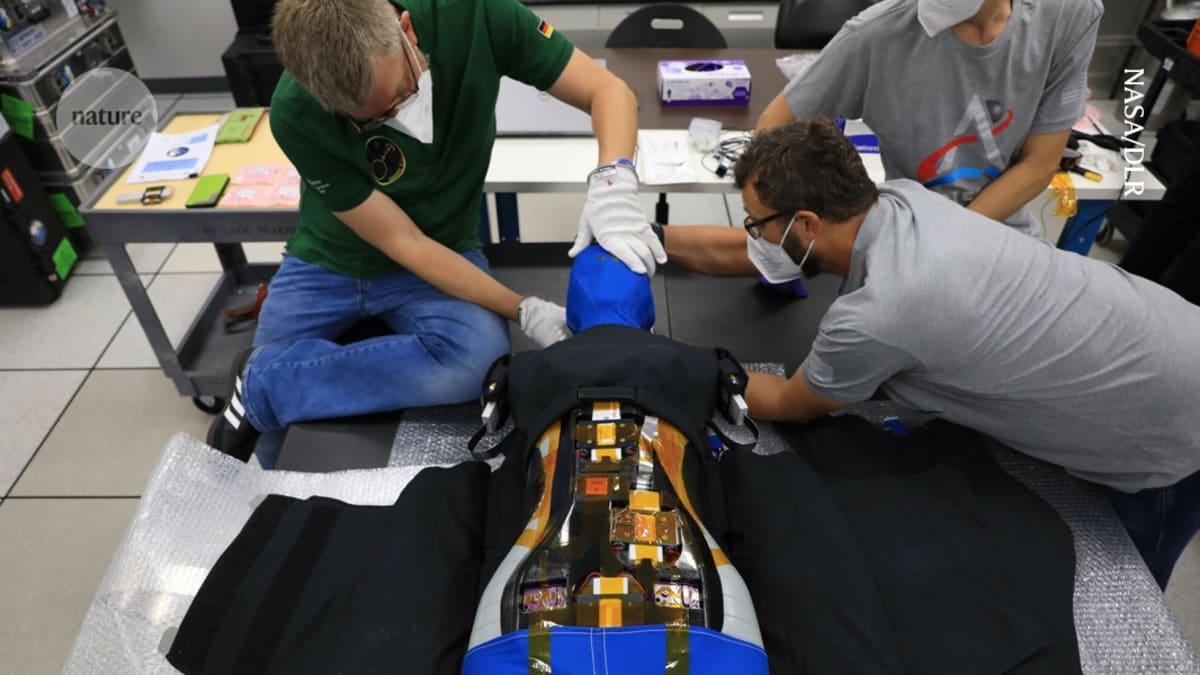
A protective vest tested during NASA's 2022 Artemis I mission cut radiation exposure in half, according to new research published in Science Advances. The vest flew aboard the uncrewed spacecraft on a mannequin named Zohar, collecting data throughout the lunar journey.
Deep space radiation poses serious health risks to astronauts. Unlike the protective bubble of Earth's magnetic field, travelers beyond low Earth orbit face constant bombardment from cosmic rays and solar particles that can damage DNA and increase cancer risk.
The vest works by shielding the most radiation-sensitive organs, including bone marrow and vital tissues in the chest and abdomen. Researchers from NASA and the German Aerospace Center designed it to be lightweight enough for practical use while still providing meaningful protection.
During the mission, sensors on Zohar and a second mannequin without the vest measured radiation levels throughout the flight. The vested mannequin experienced roughly 50% less exposure to harmful radiation in protected areas compared to its unprotected counterpart.
This breakthrough comes at a critical time. NASA plans to send astronauts back to the Moon through the Artemis program, with the first crewed mission potentially launching within the next few years. Future Mars missions could keep astronauts in deep space for months or even years.
The Ripple Effect
The vest's success extends beyond protecting individual astronauts. It opens doors for longer, more ambitious space missions that were previously considered too risky from a radiation standpoint.
Future deep space missions to Mars, asteroids, or beyond become more feasible when astronauts have proven protection. The technology could also inform radiation shielding for spacecraft design and habitat construction on the Moon or Mars.
Scientists note the vest doesn't eliminate all radiation risk, but reducing exposure by half represents a major step forward. Combined with other protective measures like spacecraft shielding and mission timing to avoid solar storms, astronauts could safely explore farther than ever before.
The research team continues refining the design based on Artemis I data, working to optimize protection while maintaining comfort and mobility for astronauts during their missions.
The stars are getting a little closer, and the journey just got a whole lot safer.
More Images


Based on reporting by Nature News
This story was written by BrightWire based on verified news reports.
Spread the positivity!
Share this good news with someone who needs it