NASA's Curiosity Rover Lights Up Mars After Dark
For the first time in years, NASA's Curiosity rover turned on LED lights to photograph a Martian drill site at night, revealing hidden rock textures scientists couldn't see in daylight. The experiment worked so well it could change how future Mars missions study the Red Planet.
NASA's Curiosity rover just showed us Mars in a way we've almost never seen it: lit up at night like a worksite under floodlights.
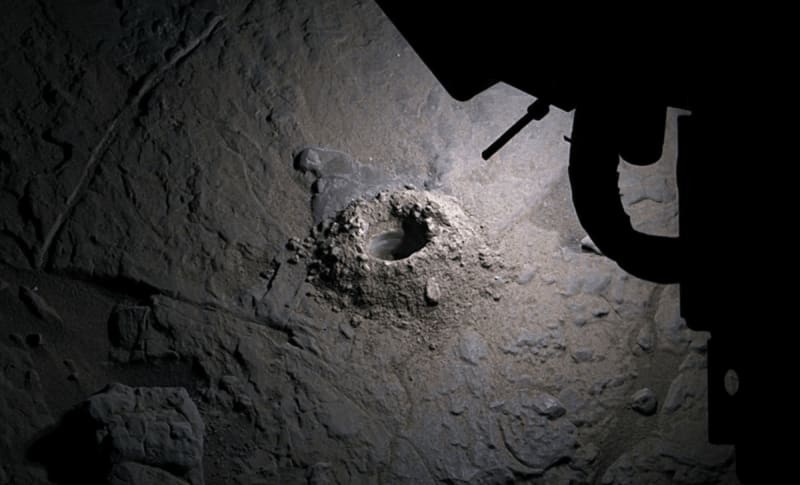
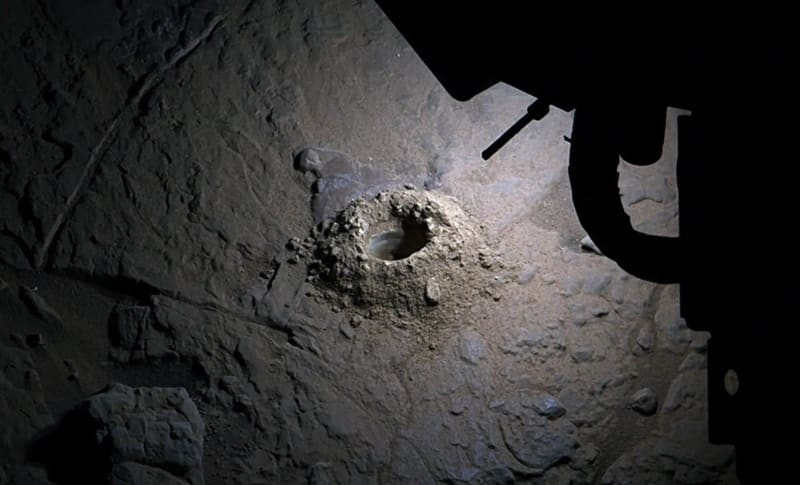
On December 6, 2025, the rover switched on LED lights built into its robotic arm to illuminate a drill hole called Nevado Sajama. The nighttime photo revealed smooth rock walls and fine surface details that daytime sunlight normally washes out or hides in shadow.
For most of Curiosity's 13 years on Mars, nighttime has meant downtime. Taking pictures in the dark typically doesn't offer much scientific value when you're studying rocks and soil. But this experiment proved there's a lot to learn when you control the light source yourself.
The drill hole sits in a region filled with bizarre formations called boxwork, which look like giant spiderwebs from orbit. Scientists believe these patterns formed when mineral-rich water flowed through cracks in ancient Martian rock, leaving behind clues about the planet's watery past.
What made this particular drill site special was its unusually smooth walls. Recent changes to Curiosity's drilling technique often leave holes too rough or dusty for detailed analysis. Nevado Sajama gave the team a rare chance to peer inside fresh rock using artificial light and see layering that tells the story of how Mars formed.
The LEDs aren't meant to light up landscapes. They're precision tools designed for close-up work, like examining shadows or peering into tiny cavities. But using them at night eliminates solar glare and creates consistent lighting angles that make it easier to spot grain size, texture, and color variations.
The Ripple Effect
This creative reuse of 13-year-old hardware shows how NASA keeps finding new ways to squeeze science out of aging rovers. The Jet Propulsion Laboratory team didn't build Curiosity expecting it to last this long or work this way, but flexibility has become the mission's superpower.
Every successful experiment like this one expands the playbook for future Mars rovers. When engineers design the next generation of planetary explorers, they'll remember that sometimes the best discoveries come from trying something unexpected with tools you already have.
The nighttime photos proved that even on a planet we've studied for decades, there are still new perspectives waiting in the dark. All it takes is someone willing to flip the lights on and look closer.
More Images


Based on reporting by Google News - Science
This story was written by BrightWire based on verified news reports.
Spread the positivity!
Share this good news with someone who needs it