NASA's New Telescope to Discover Tens of Thousands of Planets
NASA just unveiled a powerful new space telescope that will map the universe and hunt for distant worlds at an unprecedented scale. The Roman telescope could discover tens of thousands of planets and unlock mysteries about the invisible forces shaping our cosmos.
NASA has given us a new window to the universe, and the view is about to get a whole lot bigger.
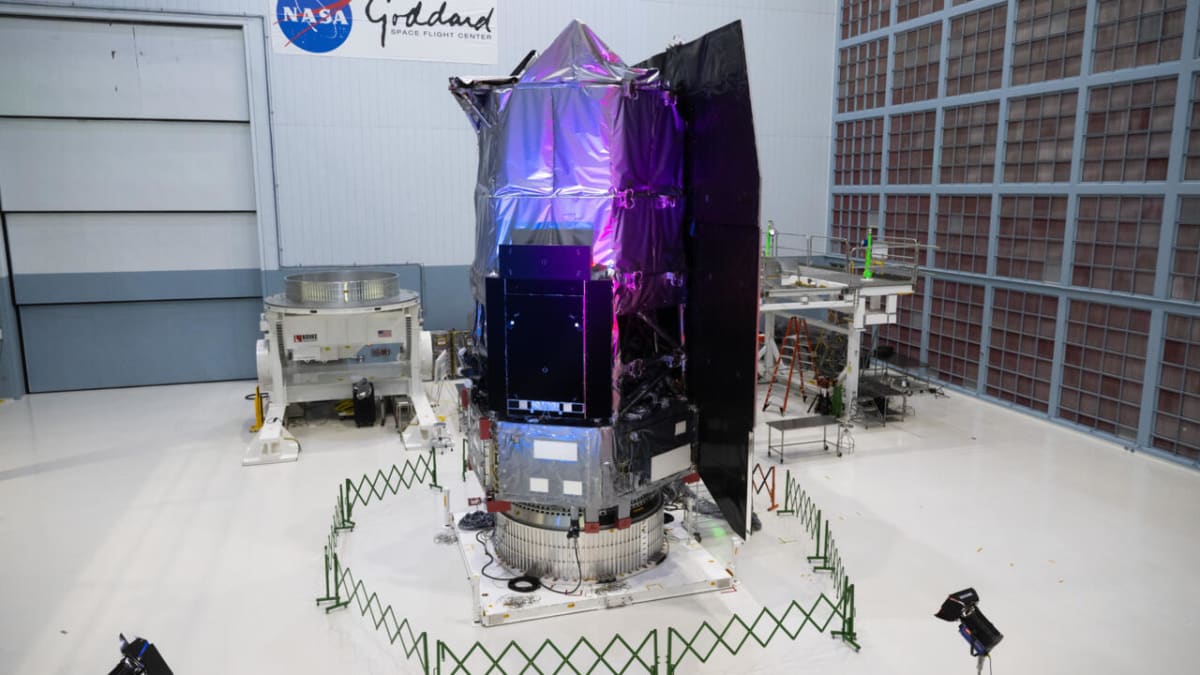
On Tuesday, the space agency unveiled the Nancy Grace Roman space telescope, a $4 billion observatory designed to scan vast regions of space and search for planets beyond our solar system. The telescope, named after the "Mother of Hubble" for her pioneering work, took over a decade to build and promises to revolutionize how we understand our cosmic neighborhood.
The numbers are staggering. Roman will discover tens of thousands of new planets, reveal billions of galaxies, thousands of supernovae, and tens of billions of stars. In just its first year, the telescope will send down more data than Hubble has collected in its entire 36-year mission.
What makes Roman special is its field of view, which is at least 100 times larger than Hubble's. That means it can sweep across enormous swaths of space from its position 1.5 million kilometers from Earth, creating what NASA Administrator Jared Isaacman calls "a new atlas of the universe."
The telescope will launch aboard a SpaceX rocket no earlier than September from Florida. Once in position, it will pump 11 terabytes of data to Earth daily, giving scientists an unprecedented census of celestial objects.
Roman isn't just counting stars. It's hunting for answers to some of the biggest mysteries in physics, including dark matter and dark energy, which together make up 95 percent of our universe but remain largely unknown.
Thanks to its infrared vision, Roman can observe light that traveled billions of years to reach us, essentially looking back in time. This capability will help scientists understand how dark matter structures itself and how fast galaxies are moving apart as dark energy drives the universe's expansion.
The Bright Side
While Roman's main mission is impressive enough, the discoveries we haven't even imagined yet might be the most exciting part. Scientists working on the project believe the telescope's most significant contribution could come from something we haven't thought to question.
"If Roman wins a Nobel Prize at some point, it's probably for something we haven't even thought about or questioned yet," said Mark Melton, a systems engineer at Goddard Space Flight Center.
The telescope will work alongside other observatories, including the James Webb Space Telescope, Europe's Euclid telescope, and Chile's Vera Rubin Observatory. Roman's wide-angle surveys will identify interesting targets that other telescopes can then study in detail, creating a powerful network of cosmic exploration.
The telescope could finally answer a question that has fascinated humanity for generations: just how many planets are out there? By discovering tens of thousands of worlds, Roman will help scientists calculate more accurate estimates of planetary abundance across the universe.
For astrophysicist Julie McEnery, who led the Roman project, the telescope represents a chance to fundamentally reshape our understanding of the cosmos. The mysteries it unravels could change everything we think we know about how the universe works.
The universe is about to become a lot less mysterious and a lot more wonder-filled.
More Images
Based on reporting by Google: James Webb telescope
This story was written by BrightWire based on verified news reports.
Spread the positivity!
Share this good news with someone who needs it