NASA's Opportunity Rover Lasted 60X Longer Than Planned
A Mars rover designed for 90 days explored the red planet for over 14 years, traveling 45 kilometers and rewriting what we know about water on Mars. The little robot that could became a testament to human ingenuity and never giving up.
A robot built to last three months on Mars just kept going for nearly 15 years, proving that sometimes the best stories are the ones nobody saw coming.
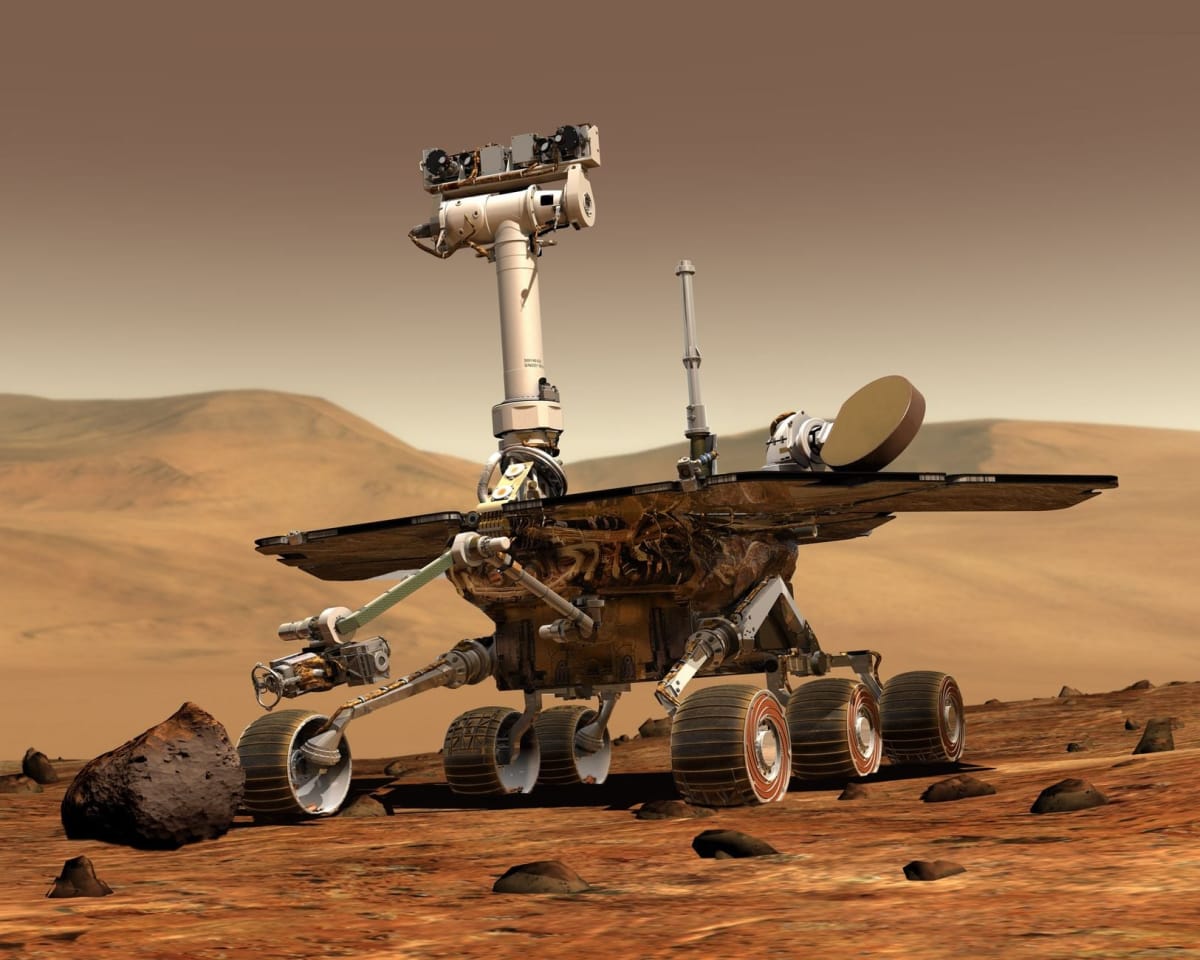
NASA's Opportunity rover touched down on Mars in January 2004 with a simple mission: survive 90 Martian days and roll at least 600 meters across the dusty surface. When it finally went silent in 2018, its odometer showed 45 kilometers and more than 5,000 days of exploration.
The rover wasn't indestructible. It survived because engineers on Earth got creative every time something broke. When the right front wheel started struggling, they simply drove the rover backwards to reduce strain. When all six wheels got stuck in soft sand at a spot they named Purgatory Dune, the team spent weeks practicing escape routes in simulated Mars dirt back on Earth before carefully freeing their robot explorer.
Dust constantly settled on Opportunity's solar panels, slowly choking its power supply. But Mars itself became an unlikely ally when unexpected wind gusts periodically swept the panels clean, giving the rover new life again and again. In 2007, a massive dust storm nearly ended the mission, but Opportunity hunkered down and waited for clearer skies with just enough battery to survive.
Why This Inspires
This wasn't just about a tough little robot. Opportunity's 45-kilometer journey rewrote Mars's story. The rover found tiny iron spheres nicknamed "blueberries" and ancient sedimentary rocks that proved liquid water once flowed on the red planet. Years later, at Endeavour crater, it discovered gypsum veins and clay rocks that revealed Mars once had multiple wet periods with different chemical conditions.
The mission laid the groundwork for today's rovers, Curiosity and Perseverance, which continue searching for signs that life might have existed on our neighboring world. Every discovery those rovers make builds on the path Opportunity forged across the Martian surface.
The rover's final moments came in June 2018 when another planet-wide dust storm blocked the sun above Perseverance Valley. Its last telemetry showed power levels dropping as darkness fell. While Opportunity never actually transmitted "My battery is low and it's getting dark," those words captured what the data revealed about a brave explorer facing its end.
A machine designed for 90 days taught us that water once shaped Mars, that engineering creativity can stretch any mission, and that sometimes the greatest achievements come from refusing to accept limitations.
More Images




Based on reporting by Google News - Science
This story was written by BrightWire based on verified news reports.
Spread the positivity!
Share this good news with someone who needs it