NASA's Psyche Captures Sharpest View of Mars Ice Cap
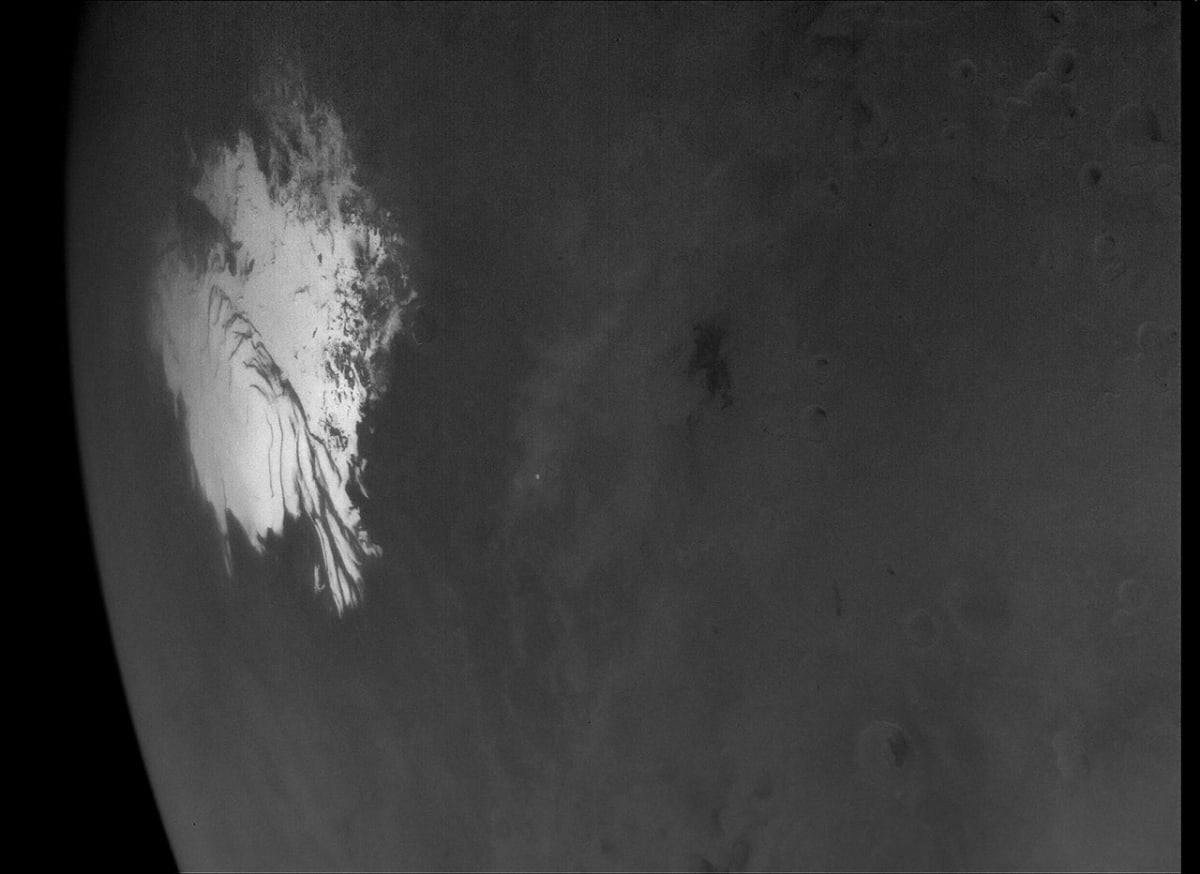
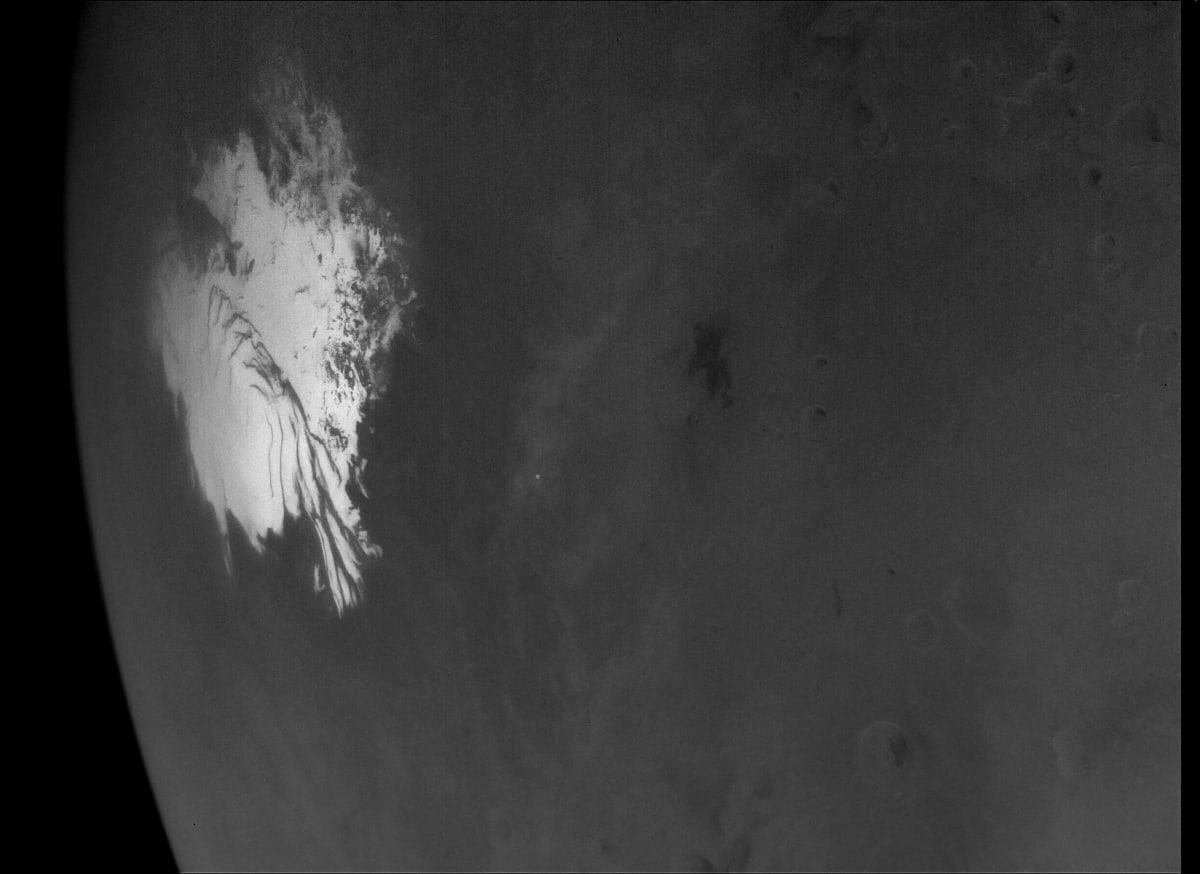
A spacecraft bound for an asteroid just snapped the clearest photo ever of Mars' icy south pole during a quick flyby. The image shows a frozen cap stretching more than 430 miles across the red planet.
NASA's Psyche spacecraft grabbed the sharpest snapshot of Mars' south pole anyone has ever seen, and it happened almost by accident.
The spacecraft wasn't even supposed to be visiting Mars. Psyche is on a mission to study a metal-rich asteroid between Mars and Jupiter, but it needed a gravity boost to get there.
On May 15, 2026, as Psyche whipped past the red planet at 1:53 p.m. PDT, its camera captured something spectacular. The south polar ice cap came into view with stunning clarity, each pixel representing just 0.7 miles of Martian surface.
The image reveals the water ice-rich cap in remarkable detail, showing a frozen landscape that extends across more than 430 miles. Scientists didn't expect such a clear view from what was essentially a quick pit stop on a longer journey.
Mars now sits in Psyche's rearview mirror as the spacecraft fires up its solar-electric propulsion system again. The probe is making a beeline for its real destination: an asteroid also named Psyche, located in the main asteroid belt.
When Psyche arrives at the asteroid in August 2029, it will begin studying what scientists believe is the exposed core of an ancient planetesimal. These planetary building blocks formed in the early days of our solar system, and this asteroid offers a rare window into what lies beneath rocky planet surfaces.
The Bright Side
This Mars flyby proves that even detours can lead to discoveries. What started as a necessary navigation maneuver turned into an opportunity to capture unprecedented images of our neighboring planet.
The photo adds to our growing library of Mars observations while Psyche continues toward its main mission. Scientists now have the clearest view yet of the Martian south pole's icy terrain, data that will help them better understand the planet's climate and water history.
The dual success shows how space missions can deliver unexpected bonuses along the way. Psyche accomplished two goals at once: gaining the speed boost it needed and giving us a gorgeous new look at Mars.
In three years, when Psyche reaches its asteroid destination, it will begin answering questions about how rocky planets like Earth formed billions of years ago.
More Images
Based on reporting by NASA
This story was written by BrightWire based on verified news reports.
Spread the positivity!
Share this good news with someone who needs it