NASA's Roman Telescope Finished Early and Under Budget
NASA just completed its next great space telescope eight months ahead of schedule and under budget, ready to scan the universe 1,000 times faster than Hubble. The Nancy Grace Roman Space Telescope launches September 2026 to capture cosmic views we've never seen before.
Engineers at NASA's Goddard Space Flight Center just wrapped up assembly of a telescope so powerful it can do in one year what would take Hubble 2,000 years to accomplish.
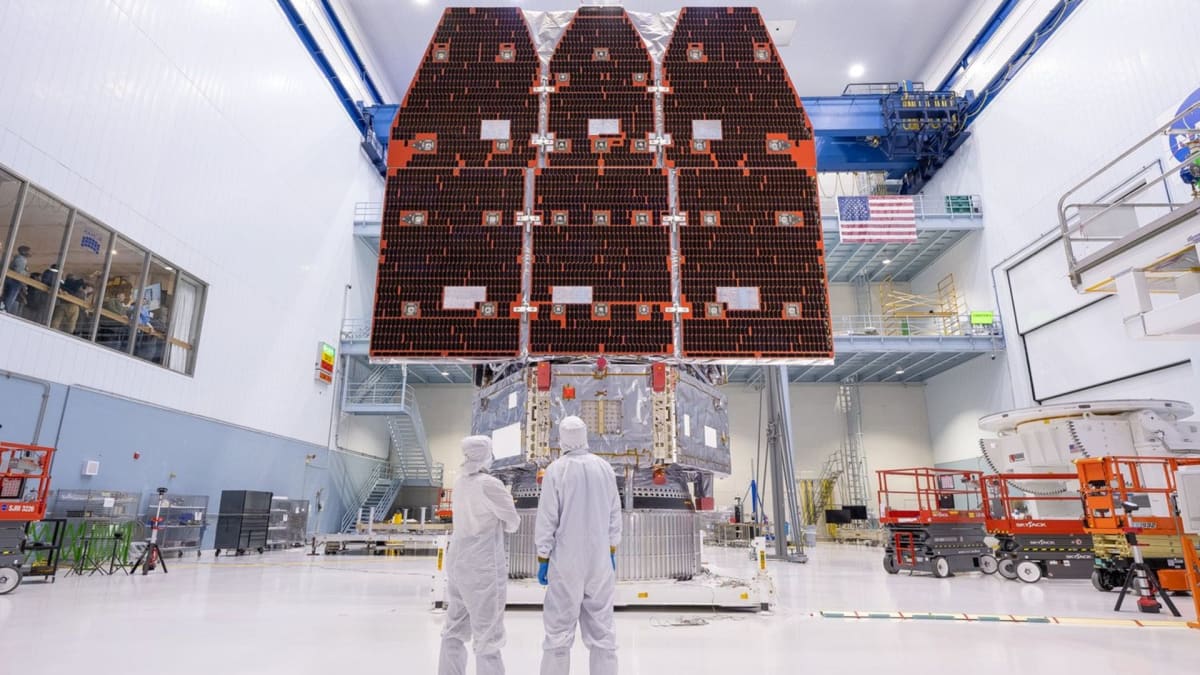
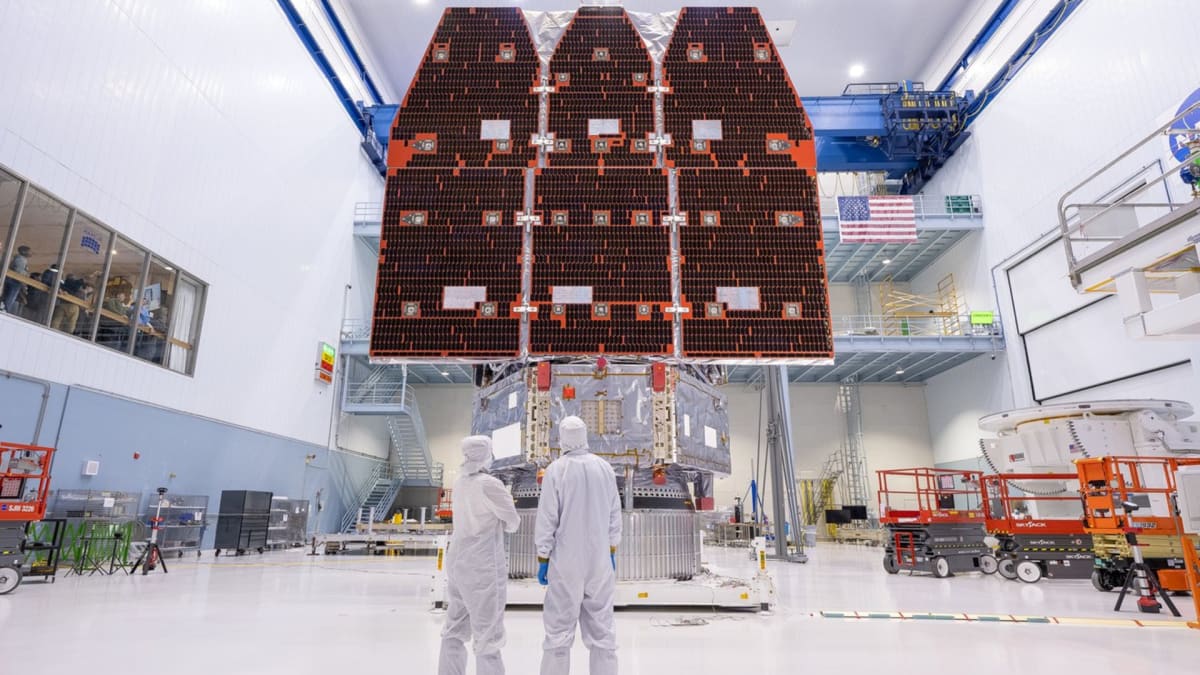
The Nancy Grace Roman Space Telescope stands complete in a Maryland clean room, its orange solar panels gleaming under sterile white lights. Named after NASA's first chief of astronomy, Roman is heading to space in September 2026, eight months earlier than planned and without blowing its budget.
Here's what makes this achievement remarkable. Roman's primary mirror measures about the same size as Hubble's at 7.9 feet wide, but it captures images showing 100 times more sky in a single shot. Its surveying speed outpaces Hubble by 1,000 times.
NASA Administrator Jared Isaacman put the numbers in perspective at Tuesday's press conference. The images Roman captures will be so large that no screen exists that can display them at full size. Over 35 years, Hubble collected 400 terabytes of data. Roman will generate 500 terabytes every year.
The telescope's superpower lies in its Wide Field Instrument, a 300 megapixel camera that views the universe in visible and near infrared light. Unlike the James Webb Space Telescope, which peers deep into the distant universe using infrared, Roman takes shallower but much wider panoramic views.
Why This Inspires
This wide field approach changes how scientists can explore space. They don't need to carefully choose tiny patches of sky and hope something interesting appears. Roman can survey vast cosmic landscapes and catch fleeting events like fast radio bursts, exploding supernovas, and colliding neutron stars as they happen.
Scientists expect Roman's greatest discoveries will be the ones they can't predict yet. "I very much hope, and in fact, expect, that the most exciting science from Roman is going to be the things that we didn't expect," said Julie McEnery, the mission's senior project scientist.
The telescope joins an impressive lineup of space observatories including Webb, Hubble, and Euclid, each bringing unique capabilities to help us understand the cosmos. But Roman's ability to rapidly scan enormous swaths of space opens doors to catching cosmic moments that might otherwise slip past unnoticed.
Coming in early and under budget makes this win even sweeter for a space program that too often faces delays and cost overruns. Roman proves that ambitious science missions can still hit their marks and exceed expectations, ready to show us corners of the universe we haven't touched yet.
More Images

Based on reporting by Space.com
This story was written by BrightWire based on verified news reports.
Spread the positivity!
Share this good news with someone who needs it