NASA's Roman Telescope to Survey a Billion Galaxies
NASA's Nancy Grace Roman Space Telescope launches this year with 100 times Hubble's field of view, ready to examine a billion galaxies and complete our census of planets beyond our solar system. The mission represents a giant leap in humanity's quest to understand our universe and search for habitable worlds.
Imagine a telescope so powerful it could survey a billion galaxies during its lifetime, each observation bringing us closer to answering whether we're alone in the universe.
That telescope is real, and it launches this year. The Nancy Grace Roman Space Telescope will be NASA's next flagship observatory, designed to capture infrared data across a field of view 100 times larger than Hubble's iconic lens.
Roman will answer some of astronomy's biggest questions about how the universe evolved and how common planets are throughout the cosmos. Scientists will use the telescope to complete the census of exoplanets that the Kepler mission started, using a technique called microlensing to detect worlds we've never seen before.
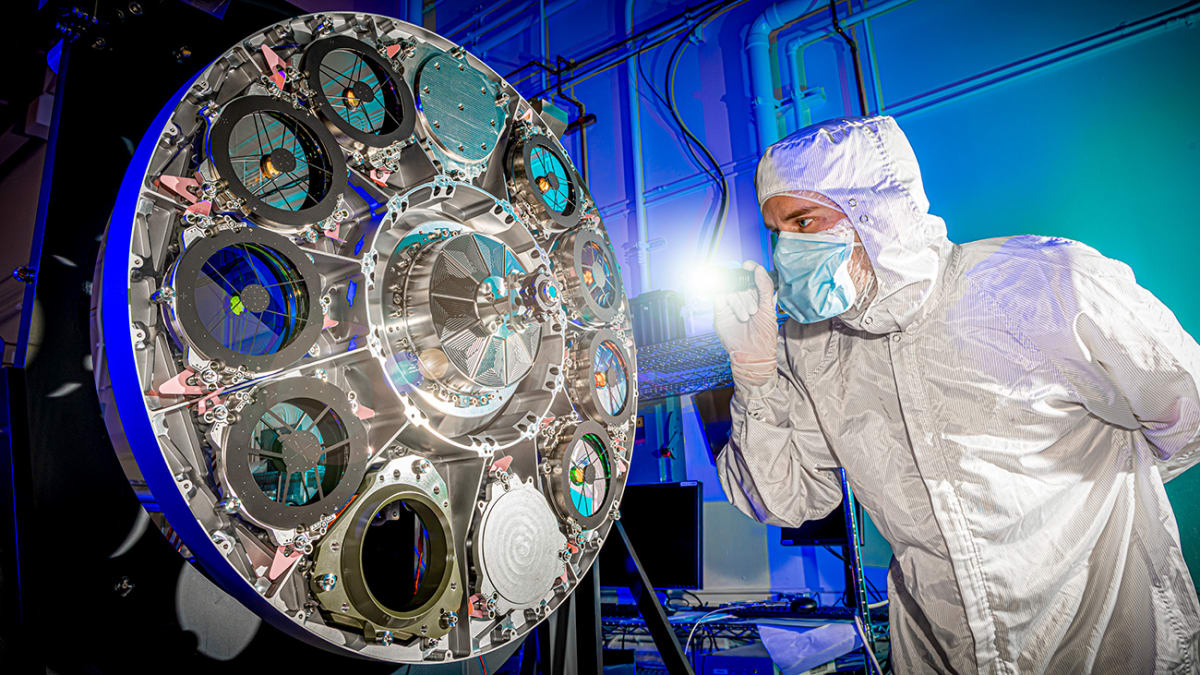
The telescope's Wide Field Instrument sits at the heart of this ambitious mission. BAE Systems designed the instrument's structure to provide the stability needed for capturing images as sharp as Hubble's, but far more efficiently across vast swaths of sky.
What makes this mission even more exciting is its accessibility. Every piece of data Roman collects will be available to scientists worldwide, creating a treasure trove of cosmic information that researchers can explore for decades.
Looking further ahead, NASA is already developing the Habitable Worlds Observatory, which will push technology even further. This future telescope will focus specifically on imaging Earth-like planets around other stars and searching for signs of life.
The Habitable Worlds Observatory will require precision 1,000 times greater than the James Webb Space Telescope. Engineers are developing actuators that can control optical systems down to the picometer level, an almost unimaginable degree of accuracy.
Why This Inspires
These missions represent humanity at its best. We're building tools to answer questions that have captivated us since we first looked up at the night sky. Every galaxy Roman surveys and every exoplanet it discovers adds another piece to the puzzle of our cosmic story.
The collaborative nature of these projects makes them even more meaningful. Thousands of scientists, engineers, and dreamers are working together to expand human knowledge, and they're ensuring that knowledge belongs to everyone.
From Hubble's first deep field image to Webb's stunning infrared views, each generation of space telescopes has transformed our understanding of the universe. Roman continues that legacy, bridging our current capabilities with future missions designed to find worlds like ours.
The search for habitable planets isn't just about finding Earth 2.0. It's about understanding our place in an enormous universe and recognizing that the same curiosity that drives us to explore also unites us as a species.
This year, when Roman launches, it will carry humanity's grandest questions into space and bring back answers that could reshape how we see ourselves and our cosmic neighborhood.
More Images


Based on reporting by SpaceNews
This story was written by BrightWire based on verified news reports.
Spread the positivity!
Share this good news with someone who needs it