New Cancer Treatment Shows Promise Across 21 Tumor Types
A groundbreaking radiopharmaceutical therapy controlled disease in over 80% of patients with advanced cancers who had run out of other options. The treatment worked across 21 different cancer types, offering new hope where few alternatives existed.
For patients with advanced cancer who've exhausted every treatment option, a new therapy is offering something they desperately need: more time and better quality of life.
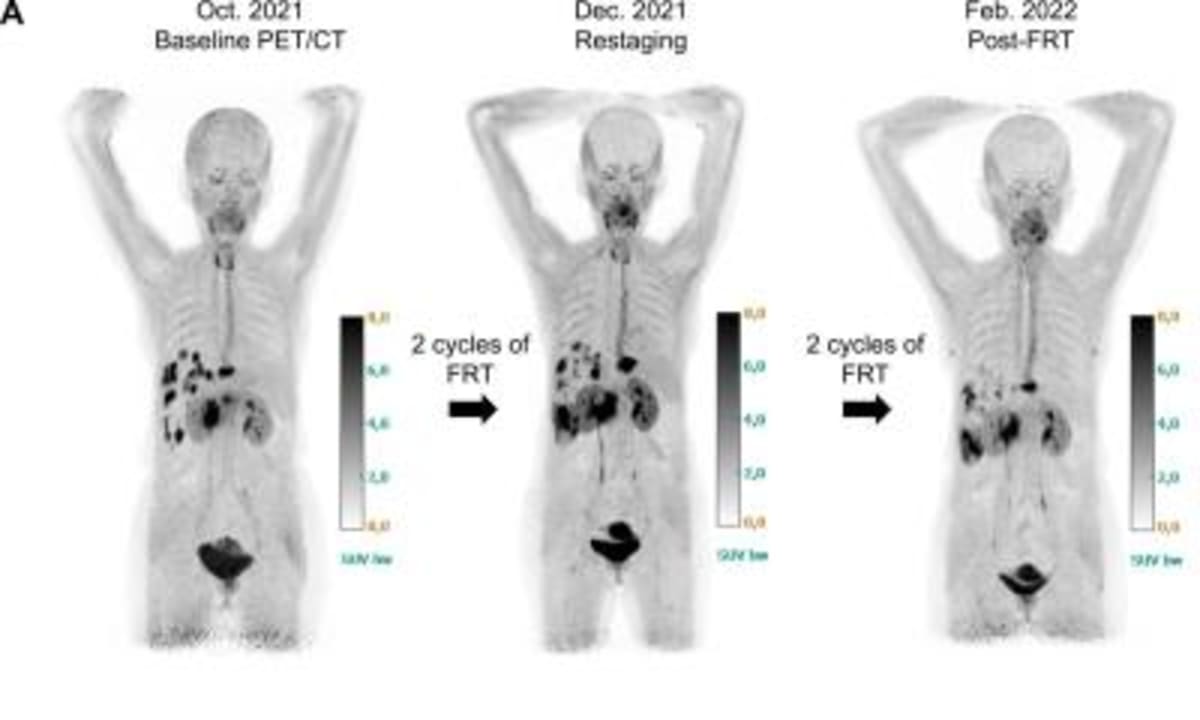
Researchers in Germany and Singapore tested a radiopharmaceutical therapy on 88 patients with end-stage cancers spanning 21 different tumor types. These weren't early-stage patients. They were people who had already tried multiple treatments without success.
The results surprised even the scientists. Two-thirds of patients saw their tumors shrink, and more than 80% achieved disease control. Three percent experienced complete remission.
The therapy targets FAP, a protein rare in healthy tissue but overexpressed in most solid tumors. This includes breast, colorectal, gastric, and ovarian cancers, plus sarcomas. By aiming at the tumor's supportive environment rather than just cancer cells, the treatment worked across many cancer types.
Patients received between one and several cycles of the therapy, which uses radioactive molecules to destroy cancer tissue from the inside. The treatment was well tolerated, with only mild side effects reported.
"Even in this challenging group, we observed tumor shrinkage or disease stabilization in many cases," said Dr. Richard Baum, who led the study at Curanosticum Wiesbaden-Frankfurt in Germany. For these patients, survival averaged seven months from treatment start.
Why This Inspires
What makes this discovery so meaningful isn't just the survival numbers. It's that patients who thought they were out of options found they had one more chance.
Until now, radiopharmaceutical therapy has only been available for specific cancers like neuroendocrine tumors and certain prostate cancers. This new approach could expand access to people with many more cancer types.
"We're no longer limited to treating just one cancer type," explained Dr. Jingjing Zhang from the National University of Singapore. "By targeting the tumor microenvironment itself, we're seeing meaningful responses across many cancers."
The therapy also maintained patients' quality of life, a critical factor when every day matters. For someone in the final stages of cancer, having more good days with family makes all the difference.
As research continues, this approach could become part of standard care for patients facing advanced disease. The door is opening to a new generation of cancer treatments that work broadly, not just narrowly.
Sometimes medical progress means giving people what matters most: hope, time, and comfort when they need it.
Based on reporting by Google News - New Treatment
This story was written by BrightWire based on verified news reports.
Spread the positivity!
Share this good news with someone who needs it