New Climate Tool Reveals How to Track Extreme Weather
Scientists created a breakthrough method that tracks extreme weather events with unprecedented accuracy, giving communities worldwide the power to better prepare for heat waves, floods, and droughts. The tool is already helping researchers understand and adapt to climate challenges across every continent.
Scientists just handed communities everywhere a powerful new weapon in the fight against extreme weather.
Researchers at the University of Graz developed a computation method that measures heat waves, floods, droughts, and storms with a level of detail never achieved before. The tool works anywhere in the world and gives planners the information they need to protect people, ecosystems, and infrastructure.
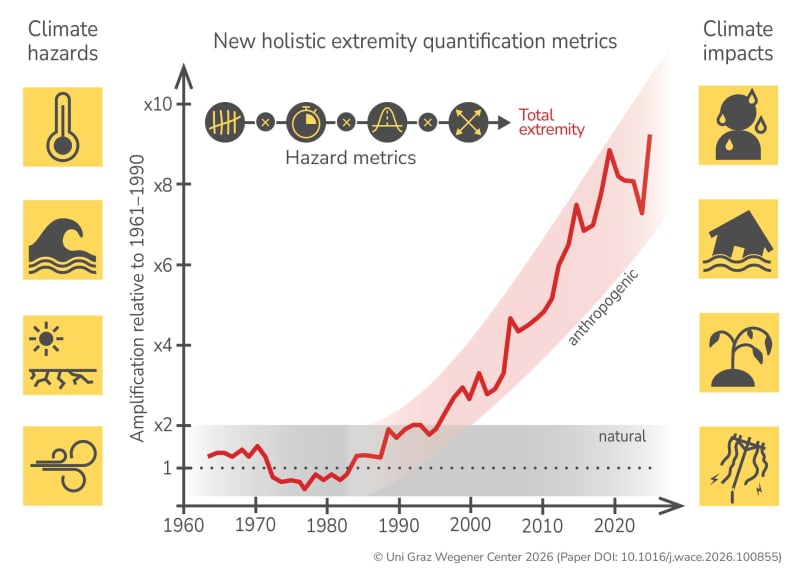
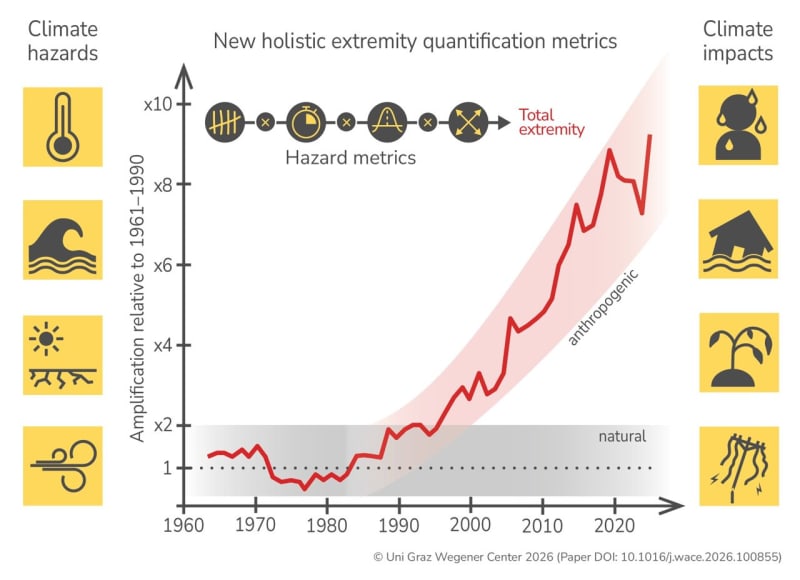
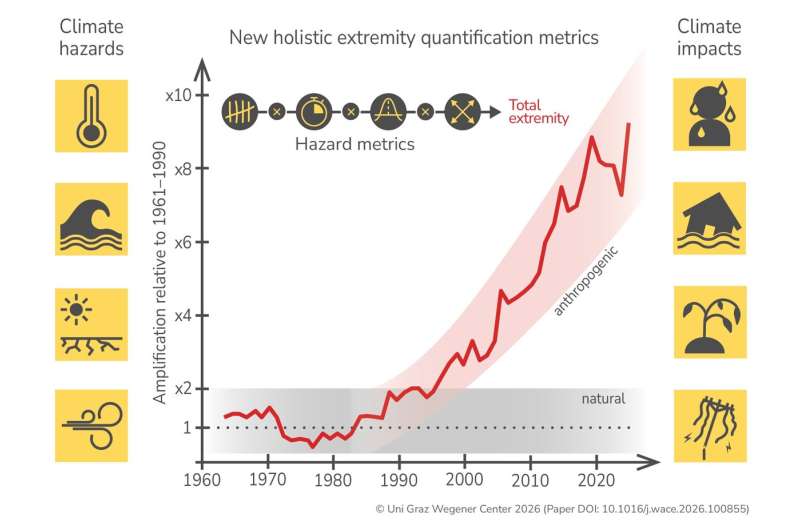
Lead researcher Gottfried Kirchengast and his team found a mathematical solution to track every important aspect of extreme events. Their method measures how often disasters happen, how long they last, how intense they get, and how far they spread.
The tool uses long-term climate data to show year-by-year changes in any region worldwide. That means cities from Finland to Spain can now get precise information about their specific climate risks and plan accordingly.
The research team tested their method on European temperature data from 1961 to 2024. They tracked extreme heat days at each location, defining "extreme" as temperatures that only occurred 1% of the time between 1961 and 1990.
The detailed tracking revealed patterns that help communities prepare better defenses. Health departments can plan for heat stress on vulnerable populations. Construction teams can design buildings for new weather realities. Agriculture and energy sectors can adapt their strategies based on solid numbers.
The Bright Side
This breakthrough turns abstract climate data into actionable protection plans. Instead of wondering how bad things might get, communities can now see exactly what they're facing and when.
The method works for any weather extreme that crosses a dangerous threshold. Communities can customize it for their specific concerns, whether that's flooding in coastal cities, drought in farming regions, or heat waves in dense urban areas.
Stephanie Haas and Jürgen Fuchsberger helped implement the method as a widely applicable computation tool. That means it's ready for immediate use by researchers, city planners, and adaptation specialists worldwide.
The tool also helps answer crucial questions about responsibility and solutions. It provides comprehensive hazard data that supports better climate impact analyses and helps guide resources where they're needed most.
Climate researcher Kirchengast emphasizes the method's versatility. If communities have access to suitable climate data, they can track the development of any extreme weather pattern that matters to them.
The breakthrough represents something rare in climate science: a tool that makes the problem clearer while simultaneously making solutions more achievable.
More Images

Based on reporting by Phys.org - Earth
This story was written by BrightWire based on verified news reports.
Spread the positivity!
Share this good news with someone who needs it