New Drug Carrier Boosts Triple Negative Breast Cancer Hope
Scientists at the University of Florida have solved a major roadblock in treating one of the most aggressive forms of breast cancer. Their breakthrough delivery system helps powerful anti-tumor drugs reach their targets and survive the journey.
A breakthrough in drug delivery could transform how doctors treat triple negative breast cancer, one of the most aggressive and hard-to-treat forms of the disease.
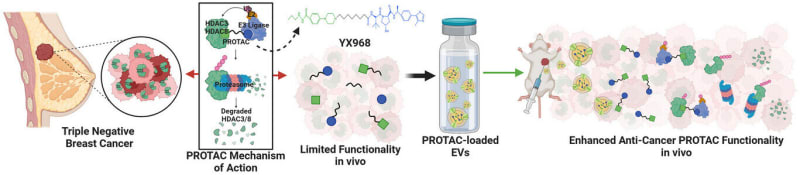
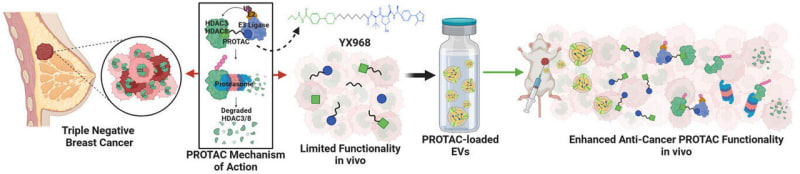
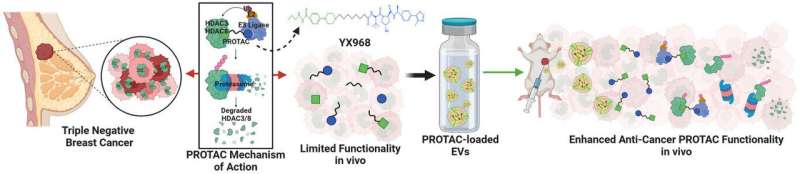
Researchers at the UF Health Cancer Institute discovered that tiny biological packages called extracellular vesicles can successfully ferry cancer-fighting drugs to tumors. The approach solved two major problems that have prevented promising treatments from working in living patients.
Triple negative breast cancer grows fast, spreads early, and resists many standard treatments. Its tumors vary wildly in makeup and sensitivity to therapy, making it notoriously difficult to treat effectively.
Scientists had high hopes for drugs called PROTACs, which trick cancer cells into destroying their own tumor-building proteins. These treatments worked beautifully in lab dishes but failed in living systems because they broke down before reaching tumors and couldn't penetrate deep enough into cancer tissue.
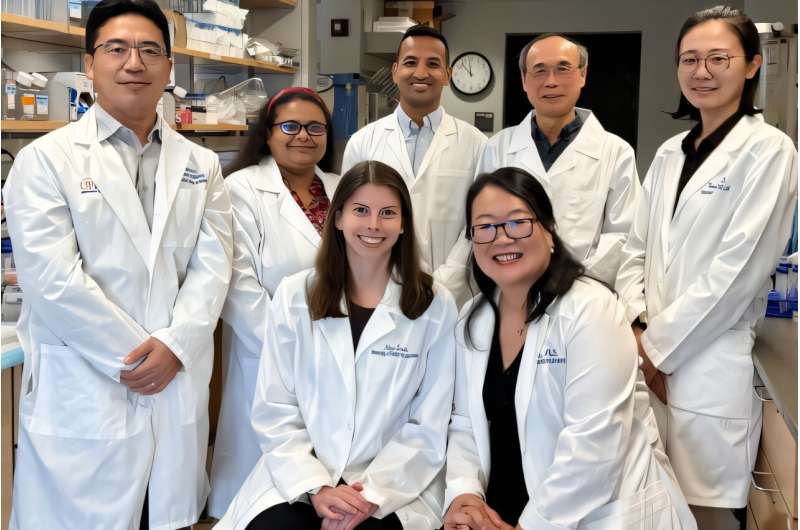
Nina Erwin, a doctoral candidate leading the research, and her team tackled both challenges at once. They loaded PROTACs into extracellular vesicles, microscopic sacs that cells naturally produce and release. Think of them as protective packages with built-in delivery instructions.
The results in mouse models were striking. Tumors shrank significantly and survival rates improved when the drug arrived via this biological carrier system.
The new loading method not only protected the drugs during their journey but also improved how well they attached to their carriers. "It gave a second life to the drugs as they were ferried to tumor sites," Erwin explained.
Why This Inspires
This discovery opens doors far beyond one type of cancer or one kind of drug. The delivery platform could work for many treatments that show promise in the lab but struggle in living bodies.
Dr. Mei He, the senior author on the study, emphasized that solving this delivery puzzle could speed up clinical use of similar drugs. Because extracellular vesicles exist naturally in most organisms, they're abundantly available and work with the body instead of against it.
The research represents something increasingly rare in medical science: true collaboration across specialties. Teams from the College of Medicine and Department of Medicinal Chemistry contributed expertise that complemented the vesicle engineering knowledge.
For patients facing triple negative breast cancer, a disease known for resisting treatment, this represents meaningful progress. The study proves that sometimes the solution isn't creating more powerful weapons but finding better ways to deliver the ones we already have.
"It's always an honor to contribute to ongoing efforts in making treatments not only more successful, but more accessible," Erwin said.
More Images
Based on reporting by Phys.org
This story was written by BrightWire based on verified news reports.
Spread the positivity!
Share this good news with someone who needs it