New Nuclear Rocket Could Reach Saturn's Moon in 220 Days
Engineers have designed a uranium-powered rocket that could carry astronauts to Saturn's moon Titan in just 220 days, transforming what seemed like science fiction into an achievable mission. The breakthrough brings humanity closer to exploring one of the solar system's most Earth-like worlds.
A spacecraft powered by nuclear heat could deliver humans to Saturn's moon Titan faster than most people spend waiting for a new season of their favorite show.
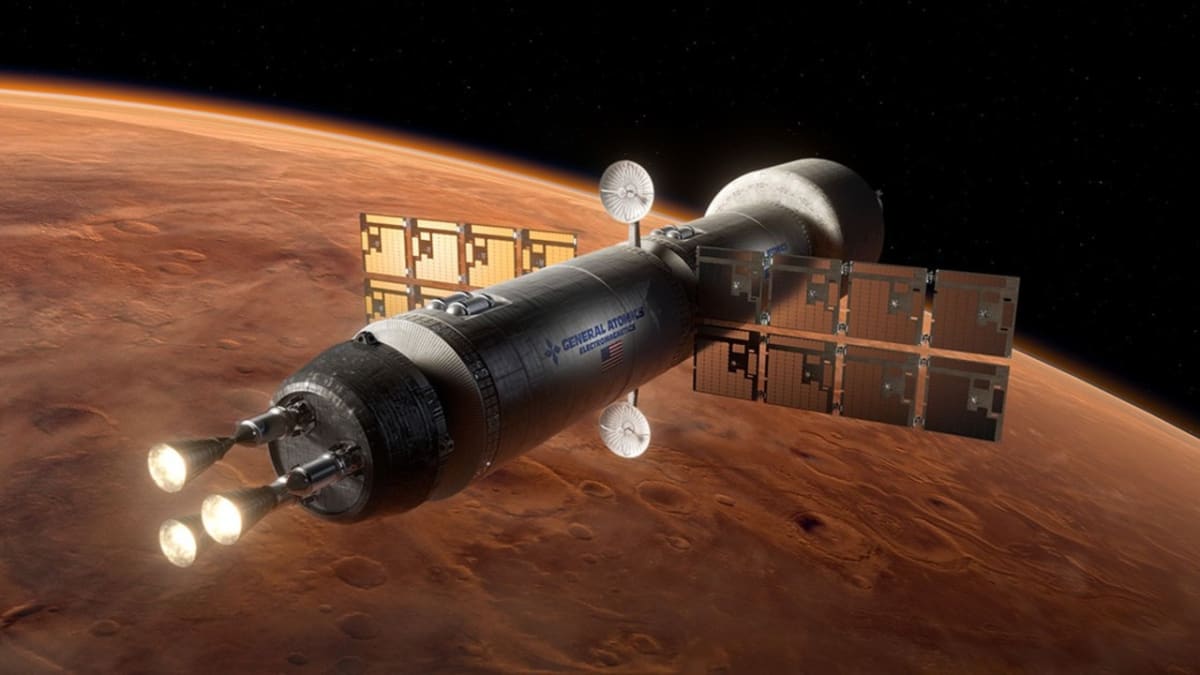
Two engineers presented calculations at this year's Lunar and Planetary Science Conference showing how a nuclear thermal rocket called Copernicus could make the 8.5 astronomical unit journey in 220 days. That's roughly the same time it takes Mars rovers to reach the red planet, except Titan sits 17 times farther from Earth.
William J. O'Hara from Blue Origin and Dr. Marcos Fernandez-Tous from the University of North Dakota examined four different nuclear propulsion systems. The Copernicus design emerged as the strongest contender, using a uranium-235 reactor to superheat 172 metric tons of liquid hydrogen for thrust.
With additional fuel tanks, the trip could shrink to just 90 days. The trade-off comes down to weight and cost, but the core technology already exists from NASA's 2013 Mars transit studies.
Titan offers something Mars never could: a thick atmosphere six times denser than Earth's. That means spacecraft can slow down using air resistance alone, without burning precious fuel for landing.
The moon's surface holds vast reserves of liquid methane and ethane that future crews could refine into rocket fuel. And while the minus 179 degree Celsius temperatures sound harsh, that dense atmosphere blocks the cosmic radiation that poses the biggest threat during the journey itself.
Why This Inspires
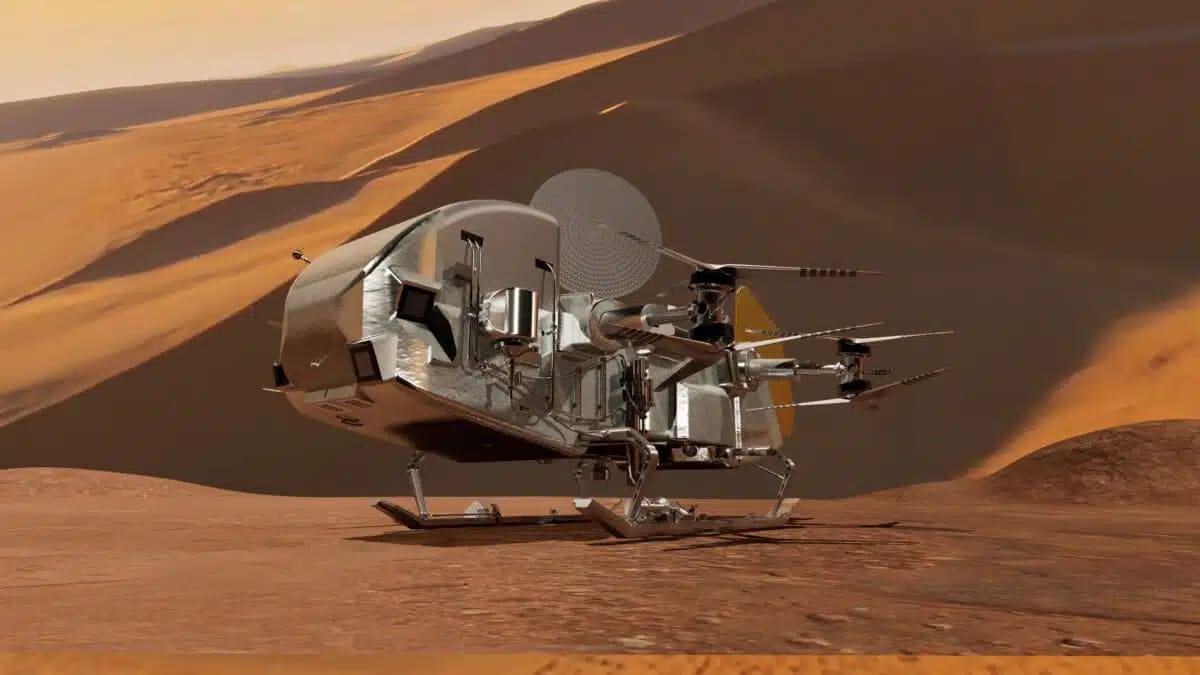
This isn't just theoretical daydreaming. NASA's Dragonfly mission, launching in 2034, will scout Titan's surface with a nuclear-powered quadcopter before any human attempt.
The robotic explorer will spend years mapping terrain, sampling chemistry, and measuring radiation levels to confirm whether the conditions match what engineers are planning for. Those readings will either validate the human mission design or highlight what needs fixing.
O'Hara co-founded Explore Titan, a nonprofit pushing to adapt Mars-rated hardware for outer solar system exploration. Their "Mars-to-Titan" strategy treats the red planet as a stepping stone rather than the final destination.
The current human spaceflight record belongs to Russian cosmonaut Valeri Poliakov, who spent 437 consecutive days aboard the Mir station in the mid-1990s. A full Titan mission including surface operations would last close to 1,000 days, requiring crews to more than double that endurance.
The engineers acknowledge serious challenges remain, particularly around radiation shielding during the long coast through deep space. No lightweight material has been tested against the high-energy particles that slice through spacecraft walls beyond Earth's protective magnetosphere.
But for the first time, the numbers show it's possible. Titan went from distant dream to engineering problem, and engineering problems have solutions.
The path to Saturn's largest moon just got 220 days shorter.
More Images



Based on reporting by Google News - Science
This story was written by BrightWire based on verified news reports.
Spread the positivity!
Share this good news with someone who needs it