New Ocean Maps Could Save Half of Declining Seabirds
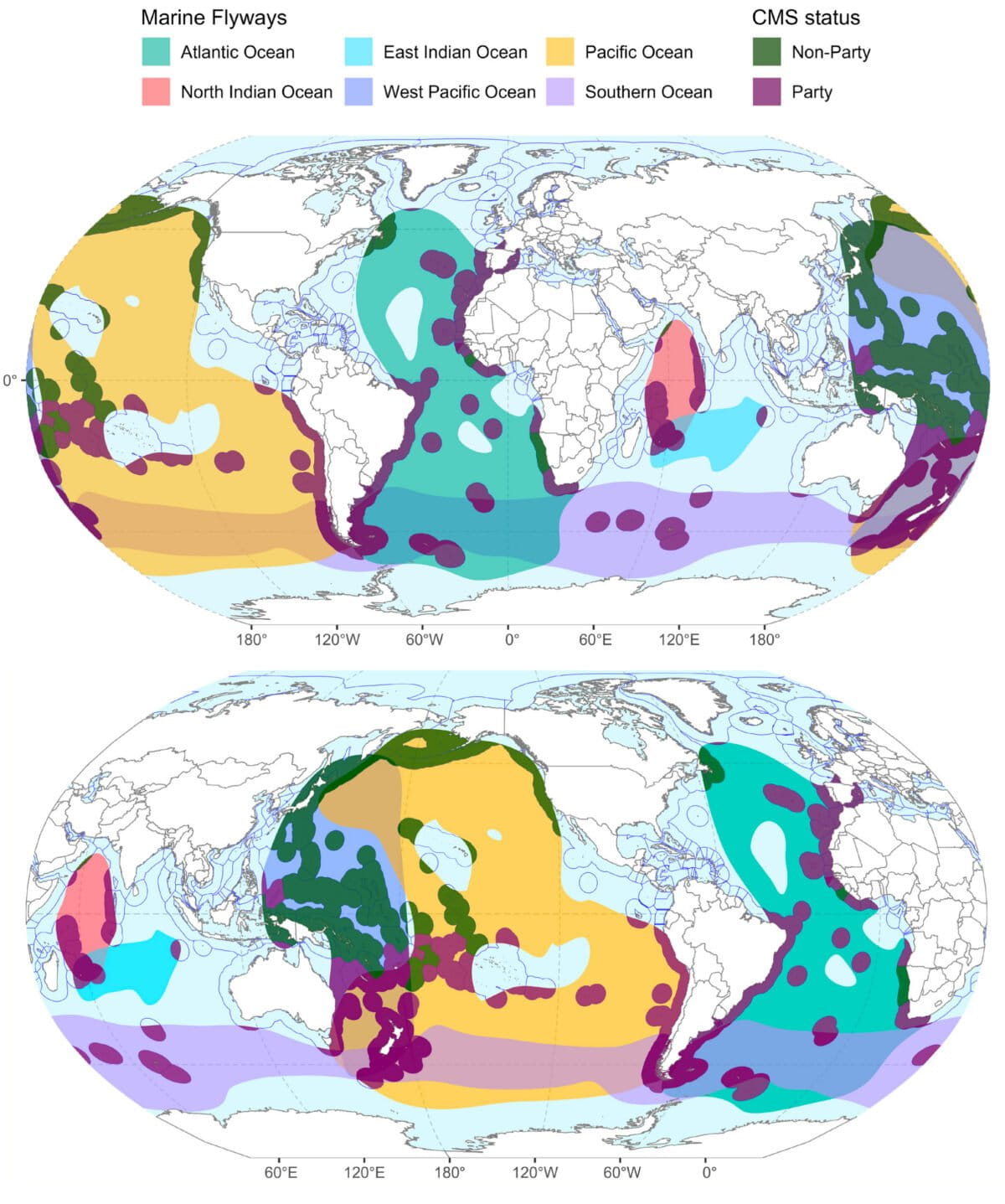
Scientists just mapped six "marine flyways" across the world's oceans, creating a blueprint to protect 151 seabird species that don't recognize borders. The breakthrough could help coordinate conservation efforts across 54 countries to reverse steep declines.
Nearly half of all migratory seabirds are disappearing, but scientists just found a way to help them that's already working on land.
A new study published in the Journal of Applied Ecology maps six "marine flyways" that show exactly where 151 seabird species travel across the world's oceans. Think of them as oceanic highways connecting breeding islands, feeding grounds, and migration routes that span entire ocean basins.
The problem has always been that birds don't stop at borders, but conservation efforts do. Seabirds might breed on a remote island in one country, feed in waters controlled by another, and migrate through a dozen more jurisdictions along the way. Without coordination, protection falls apart.
Researchers from BirdLife International and the Royal Society for the Protection of Birds used advanced tracking technology to map these pathways across the Atlantic, Pacific, Indian, and Southern Ocean basins. The routes touch 54 countries, many already connected through existing wildlife agreements.
The timing matters. Of the 151 species using these flyways, 42% are globally threatened. That's higher than the rate for seabirds overall, and many populations are dropping fast in certain regions.
The approach builds on success stories from land. Flyway frameworks have helped coordinate protection for waterbirds across countries for years, aligning governments, funding, and research around shared migration routes. Now the same concept can work at sea.
Why This Inspires
The study identifies more than 1,300 Key Biodiversity Areas already important to these seabirds, giving conservationists specific places to focus protection. The main threats are known and fixable: invasive species on breeding islands, fishing bycatch, and climate impacts.
Better yet, solutions already exist. Removing invasive mammals from islands has become standard conservation practice. Fishing gear modifications dramatically reduce bycatch when consistently used. The challenge isn't inventing new tools but applying them across entire migration routes.
France touches all six flyways through its overseas territories, showing how connected these systems already are. Many relevant countries participate in the Convention on Migratory Species, which is now considering formal recognition of marine flyways to support coordination.
Global conservation targets increasingly focus not just on protecting areas, but on connecting them into functional networks. Marine flyways offer exactly that framework, linking isolated protected sites into chains that match how seabirds actually live.
The concept creates natural forums for data sharing, joint planning, and sustained funding across borders and industries. It turns a fractured approach into a coordinated one.
These ocean highways have always existed, but now we can finally see them and protect what travels along them.
More Images


Based on reporting by Google: species saved endangered
This story was written by BrightWire based on verified news reports.
Spread the positivity!
Share this good news with someone who needs it