New Solar Screen Tech Could End Daily Phone Charging
Scientists created a device that works as both a record-breaking solar cell and LED screen, bringing self-charging phones and tablets closer to reality. The breakthrough solves a problem that has stumped engineers for years.
Your phone screen might soon charge itself just by sitting in your pocket or on your desk.
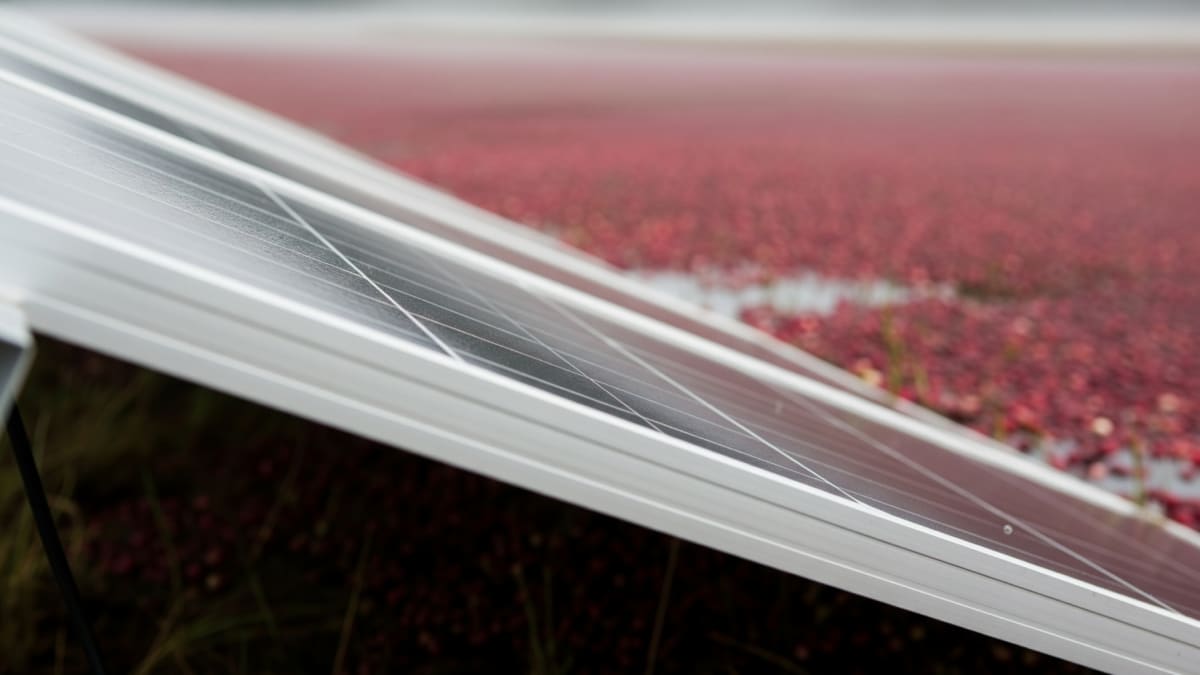
Scientists at the University of Colorado Boulder and the University of Science and Technology of China just cracked a puzzle that has blocked progress on self-powered displays for over a decade. They built a single device that works as both a high-performance solar cell and an LED screen.
The numbers tell the story. When used as a solar panel, the device reached 26.7% efficiency at converting light to electricity. When used as a screen, it hit 31% efficiency at producing light. Both numbers would be impressive on their own, but getting them from the same device changes everything.
The breakthrough centers on a material called perovskite. Scientists have known for years that perovskites could theoretically power themselves, but they kept hitting the same wall. A good LED screen needs to be paper-thin so light can escape. A good solar cell needs to be much thicker to absorb enough light. You had to pick one or the other.
The research team found a clever workaround. They created microscopic sponge-like islands inside the device, each about the width of a human hair. These tiny structures let light bounce around efficiently while keeping the electrical connections strong. Think of them as internal mirrors that guide light where it needs to go instead of letting it get trapped and wasted.
The islands did double duty. Their porous structure helped light escape when the device acted as a screen. At the same time, special molecules on their surface fixed tiny defects in the material that normally waste energy as heat.
The results were dramatic. Energy loss at the device's surface dropped by more than 90% compared to earlier designs. That brought it close to matching the efficiency of silicon solar cells, the gold standard in the industry.
Why This Inspires
This is not just about convenience, though never plugging in your phone would be nice. Self-charging screens could transform how we power everything from tablets to smart home displays. Devices in remote locations could run indefinitely without batteries. Medical monitors could operate reliably without hunting for outlets.
The technology builds on work the same team published in 2023, meaning progress is accelerating. Perovskites are also cheaper to produce than traditional semiconductors, which could make the technology accessible once it reaches stores.
The path from lab to living room still has steps to climb, but the core physics now works. Engineers spent years believing they had to choose between a great screen and great solar power. Now they know they can have both.
One device that both shows you information and powers itself from ambient light is no longer science fiction.
More Images




Based on reporting by Google: solar power breakthrough
This story was written by BrightWire based on verified news reports.
Spread the positivity!
Share this good news with someone who needs it