Water Left in Battery Nearly Doubles Power Output
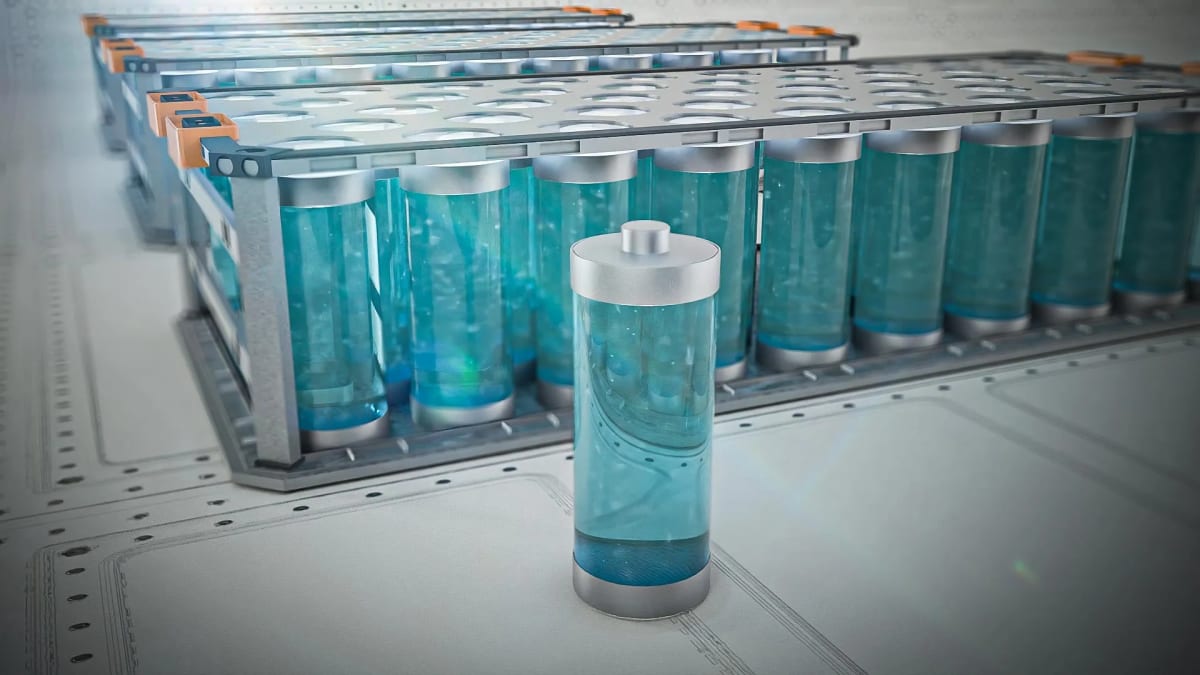
Scientists at the University of Surrey accidentally discovered that leaving water inside a sodium-ion battery material nearly doubled its power and opened a path to turning seawater into drinking water. This simple change challenges decades of battery manufacturing assumptions.
Scientists just made batteries more powerful by doing less work, and the discovery could help solve two global challenges at once.
Researchers at the University of Surrey found that sodium vanadium oxide performs far better when its naturally occurring water stays inside during manufacturing. For years, battery makers have heated this material to remove moisture because water was thought to damage batteries.
The team decided to test what would happen if they skipped that step. The results stunned them.
The water-containing material stored almost twice as much charge as typical sodium-ion materials and charged much faster. It kept performing reliably for more than 400 charge cycles, placing it among the strongest cathode materials ever reported for this battery type.
Dr. Daniel Commandeur, the study's lead author, said the outcome was far better than anyone anticipated. The material showed much stronger performance and stability than expected.
Sodium-ion batteries offer a promising alternative to the lithium-ion batteries that currently power our phones, laptops, and electric vehicles. Lithium can be expensive to obtain and carries significant environmental costs, while sodium is abundant in seawater, salt deposits, and minerals worldwide.
The main obstacle has been performance. Most sodium-ion materials cannot yet match lithium technology in storage capacity, charging speed, or longevity.
Then the researchers tried something even more ambitious. They placed their water-loving material in salt water.
Most battery components fail in this harsh environment because salt water triggers unwanted chemical reactions. But the sodium vanadate hydrate continued working effectively.
The system also began removing dissolved salt from the water. The sodium-based material pulled sodium from the solution while a graphite electrode removed chloride, the two main components of common salt.
The Ripple Effect
This discovery means future devices could store renewable energy and produce fresh water simultaneously. Solar or wind farms could generate electricity while coastal systems desalinate seawater, addressing both energy storage and water scarcity.
Using seawater as the battery's electrolyte would also reduce material costs dramatically. Most commercial batteries require specially formulated liquids or solids to carry charged particles between electrodes.
The technology is still being developed, but the core insight has already changed how scientists think about sodium-ion batteries. Sometimes the best innovation comes from questioning what everyone assumes must be true.
One unexpected decision to leave water inside a battery material has opened two paths forward: cheaper, more powerful energy storage and a new way to make clean drinking water from the sea.
Based on reporting by Science Daily - Technology
This story was written by BrightWire based on verified news reports.
Spread the positivity!
Share this good news with someone who needs it