Sperm Cooperate Like Rowers to Win Fertility Race
Scientists discovered that sperm cells across hundreds of species work together in coordinated teams rather than competing individually, challenging everything we thought about reproduction. This teamwork has evolved and re-evolved across millions of years in insects, spiders, crabs, and other arthropods.
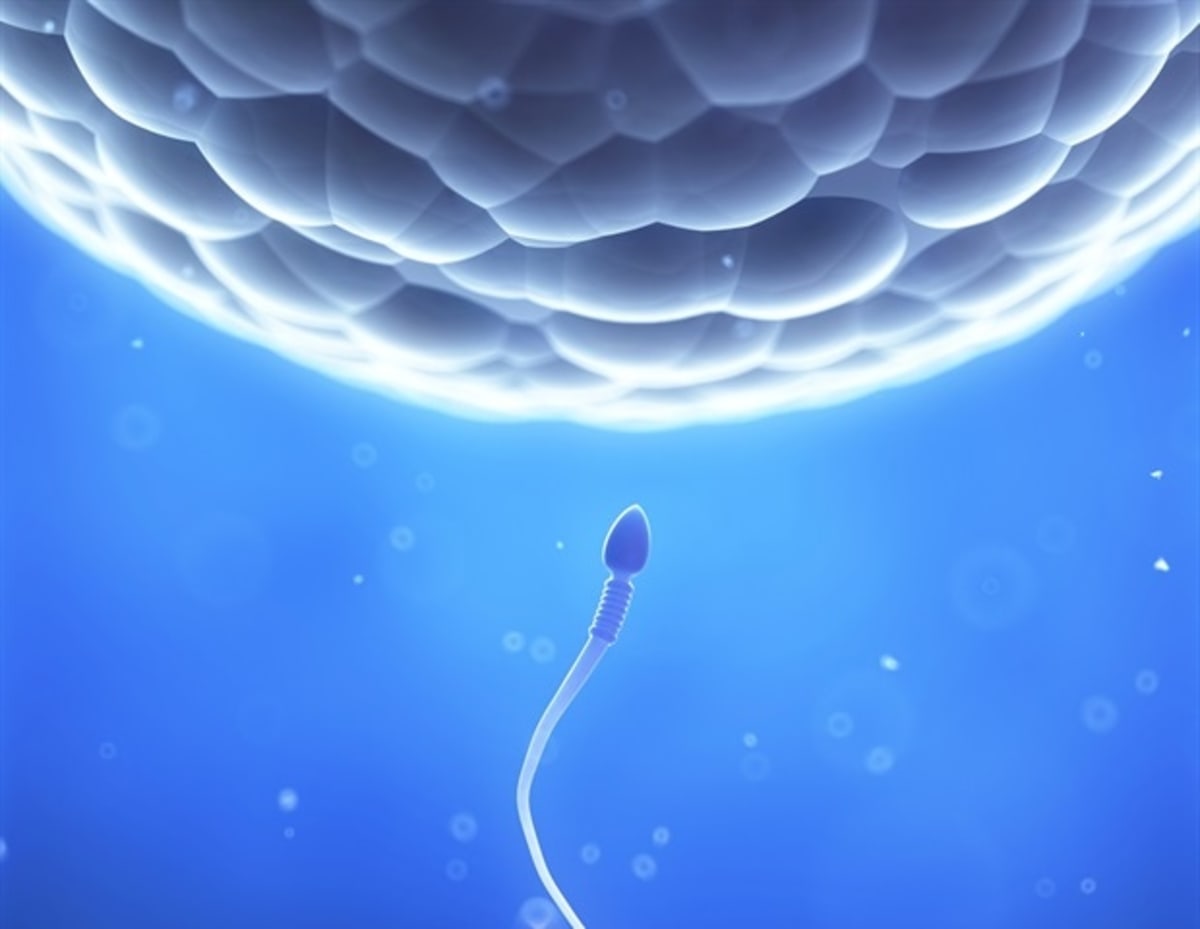
For over a century, scientists assumed fertilization was a ruthless competition where millions of sperm raced solo toward a single egg. New research from Syracuse University reveals the opposite: in many species, sperm actually team up like synchronized rowers to improve their chances of success.
Scientists studied arthropods, the diverse animal group including spiders, insects, crabs, and centipedes. What they found surprised them. These tiny cells form coordinated groups through a process called sperm conjugation, working together rather than against each other.
Think of it like this: alone, a single sperm cell faces a complex obstacle course through the female reproductive tract. Together, grouped sperm gain advantages in movement, coordination, and function that individual cells could never achieve on their own.
The research team discovered that a special substance called sperm-associated material (SAM) helps bind these cellular teams together. Originally evolved to protect or package sperm, SAM now acts like molecular glue, organizing cells into effective working groups.
What makes this discovery even more remarkable is how widespread it is. The team analyzed hundreds of species and found that all insects descended from an ancestor with conjugated sperm. This teamwork strategy first appeared hundreds of millions of years ago and has emerged, disappeared, and re-emerged countless times across different species.
"Evolution has effectively run the same experiment over and over again across different groups of arthropods," says lead researcher Antonio Gomez. That repetition tells scientists this cooperative strategy offers real survival advantages worth rediscovering.
The Ripple Effect
This research reaches far beyond understanding reproduction in bugs and spiders. Scientists are already exploring how these findings could address human fertility challenges by revealing how cooperative cellular behavior influences reproductive success.
The work also opens promising doors for pest control. Researchers are studying the invasive spotted lanternfly, an agricultural threat spreading across eastern states, whose sperm use SAM in unusual ways. If scientists can disrupt this reproductive material, they might develop targeted control strategies without harmful pesticides.
Unlike traditional fertility science that focused only on individual sperm performance, this research shows that teamwork at the cellular level might matter just as much as individual strength. The female reproductive tract isn't a simple racetrack but a complex environment where cooperation often wins over competition.
Future studies will explore exactly why this cooperation evolves and what triggers it to appear or disappear across species. Each answer could reshape approaches to reproductive medicine and sustainable pest management.
Even at the microscopic level, cooperation proves more powerful than competition when facing life's toughest challenges.
More Images



Based on reporting by Google News - Cooperation Success
This story was written by BrightWire based on verified news reports.
Spread the positivity!
Share this good news with someone who needs it