New Solar Tech Stays 100% Efficient After 1,300 Hours
A breakthrough in solar panel technology keeps devices running at full power five times longer than traditional designs. The innovation could finally make flexible solar panels practical for everyday devices.
Scientists just solved one of the biggest problems holding back the next generation of solar power.
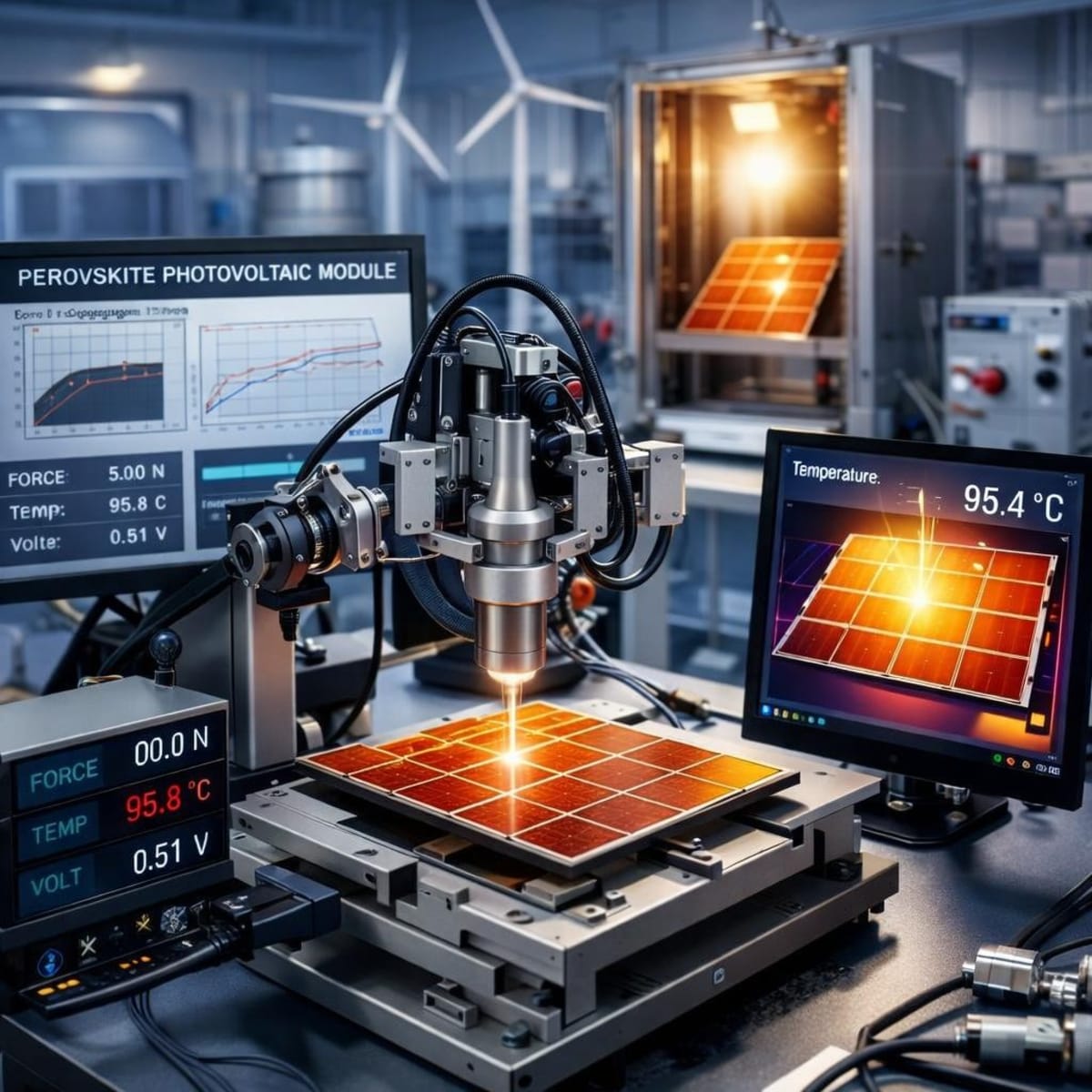
Halocell Energy combined forces with Sofab Inks to create solar panels that maintain nearly perfect efficiency even after 1,300 hours of grueling tests. Old-style panels lost 20% of their power after just 1,000 hours under the same conditions.
The secret lies in a special coating made from metal oxide nanoparticles. This thin layer helps the solar cells handle two of their biggest enemies: extreme heat and humidity. During testing, researchers blasted the panels with temperatures reaching 65°C (149°F) and 85% humidity while keeping them under constant light.
These aren't the bulky rooftop panels you might picture. Halocell's design creates thin, lightweight, and flexible modules that can bend and fold. The manufacturing process rolls them out like printing a newspaper, making production faster and cheaper than traditional methods.
The technology uses perovskite materials, which scientists have studied for years because they capture sunlight incredibly well. The problem has always been durability. Perovskite panels would work beautifully at first, then quickly degrade when exposed to real-world conditions like moisture and temperature changes.
The Ripple Effect
This stability breakthrough opens doors for solar power in places we never thought possible. Imagine wireless sensors that never need battery changes, indoor devices powered by room lighting, or drones that stay airborne longer. The company is even eyeing space applications where replacing failed equipment costs millions.
Halocell has already started shipping these advanced modules to select partners for real-world testing. The next phase focuses on scaling up production to larger formats and getting the technology into commercial products.
The timing couldn't be better. As the world pushes toward renewable energy, flexible solar panels could power the billions of small devices connecting our increasingly wireless world. Every sensor, every monitor, every gadget that currently needs batteries or wall power could potentially run on ambient light instead.
What makes this particularly exciting is that the innovation works with existing manufacturing equipment. Companies won't need to build entirely new factories, which often derails promising technologies before they reach consumers.
The combination of flexibility, efficiency, and now proven durability positions these panels as serious contenders for the next wave of solar applications. While rooftop solar captures headlines, these smaller innovations might ultimately touch more lives by making countless everyday devices truly energy independent.
More Images


Based on reporting by Google News - Tech Breakthrough
This story was written by BrightWire based on verified news reports.
Spread the positivity!
Share this good news with someone who needs it