New Test Detects Alien Life 95% of the Time
Scientists created a simple chemistry test that can identify alien life with 95% accuracy, even if it's unlike anything on Earth. The breakthrough could help future missions to Mars and Saturn's moons find extraterrestrial organisms.
Finding aliens just got a whole lot easier thanks to a chemistry test that doesn't care if ET looks nothing like us.
Researchers at the Georgia Institute of Technology developed a new method that correctly identifies living organisms 95% of the time by measuring how reactive their amino acids are. Unlike previous tests that hunt for specific molecules, this approach works even if alien life uses chemistry we've never seen before.
The challenge scientists face is that many substances made by living things can also form naturally without life. Amino acids, the building blocks of all life on Earth, show up in moon rocks, comets, and meteorites all the time.
Christopher Carr and his team realized the secret isn't whether amino acids are present, but which ones stick around. In lifeless environments, the most reactive molecules disappear quickly because nothing protects them from cosmic rays and harsh chemistry.
Living systems tell a different story. They actually keep the most reactive molecules around because life needs them to function, creating a unique chemical fingerprint.
The team calculated energy levels for 64 different amino acids and tested their method on more than 200 samples from meteorites, moon soil, fungi, and bacteria. The test worked with stunning accuracy.
The Bright Side
What makes this breakthrough so exciting is its simplicity. The test relies on basic physics that should work anywhere in the universe where carbon-based life exists.
"Life inherently needs to control when, how and where molecules interact," explains Carr. Any living system has to regulate electron flow and chemical reactions to survive, which means this test should catch alien life even if it evolved completely independently from Earth organisms.
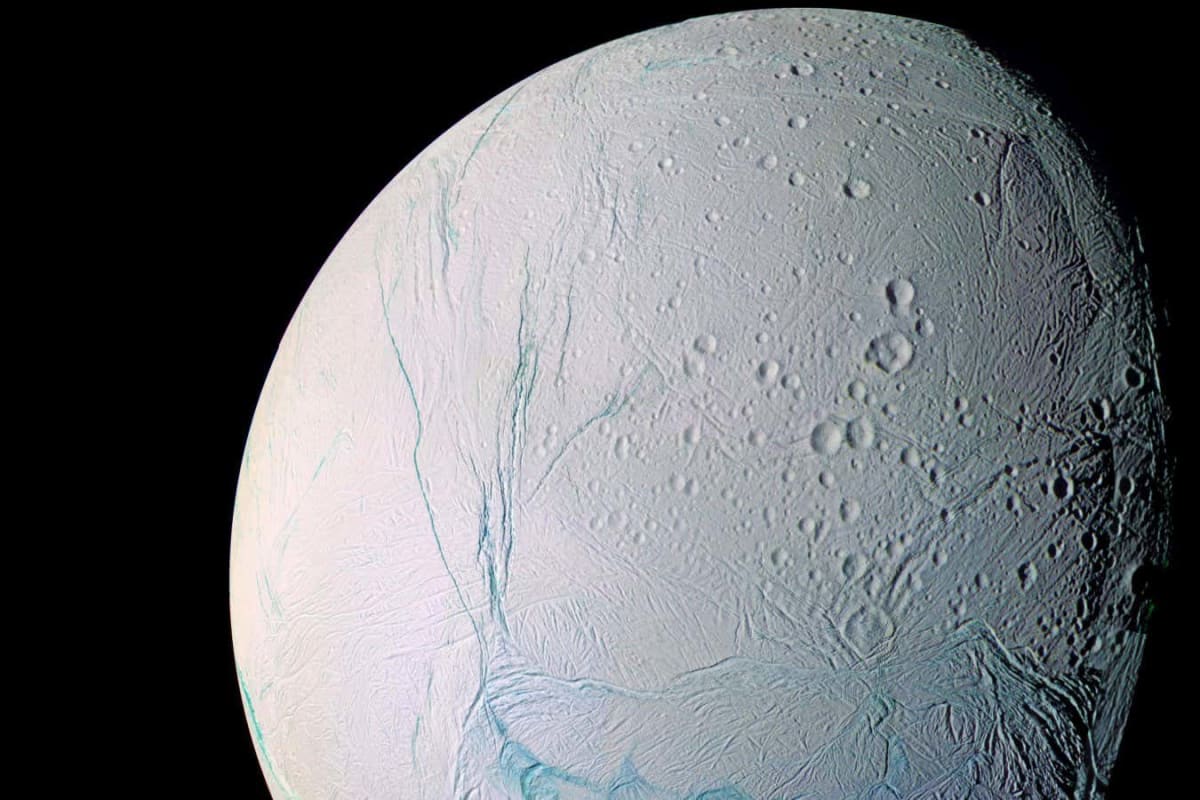
The method could join future space missions to Mars or Saturn's moon Enceladus, both prime candidates for finding extraterrestrial life. While the equipment needs to be precise enough to measure molecules accurately, the underlying science is straightforward and explainable.
Henderson Cleaves at Howard University notes that using molecular reactivity to detect life isn't entirely new, but measuring it through statistical distribution is a fresh approach. The technique adds another powerful tool to humanity's alien-hunting toolkit.
Future space probes heading to distant moons and planets might finally have what they need to answer one of humanity's biggest questions: are we alone in the universe?
More Images


Based on reporting by New Scientist
This story was written by BrightWire based on verified news reports.
Spread the positivity!
Share this good news with someone who needs it