New Vaccine Outsmarts Fentanyl and Designer Drug Variants
Scientists created a vaccine that trains the immune system to recognize entire classes of synthetic opioids, not just single drugs. This breakthrough could finally keep pace with drug manufacturers who constantly tweak fentanyl's structure to evade detection.
A new vaccine might finally outsmart the deadly game of chemical cat-and-mouse that has made fentanyl and its variants so lethal.
Researchers at Scripps Research developed a vaccine that teaches the immune system to recognize not just one specific drug, but an entire family of synthetic opioids. Published in the Journal of Medicinal Chemistry, the study shows how adaptive immunity can target a broad molecular signature rather than hunting for exact chemical matches.
The problem with traditional vaccines has always been timing. By the time scientists design and test a vaccine for one fentanyl variant, illegal manufacturers have already created three more. They tweak molecular structures just enough to dodge law enforcement while keeping the drugs dangerously potent.
"Instead of continuously making a new vaccine for every variant, we created a vaccine that would allow the immune system to in a sense act like AI playing chess," said Kim D. Janda, professor of chemistry and immunology at Scripps Research. Each new drug variant would face a checkmate from the immune system.
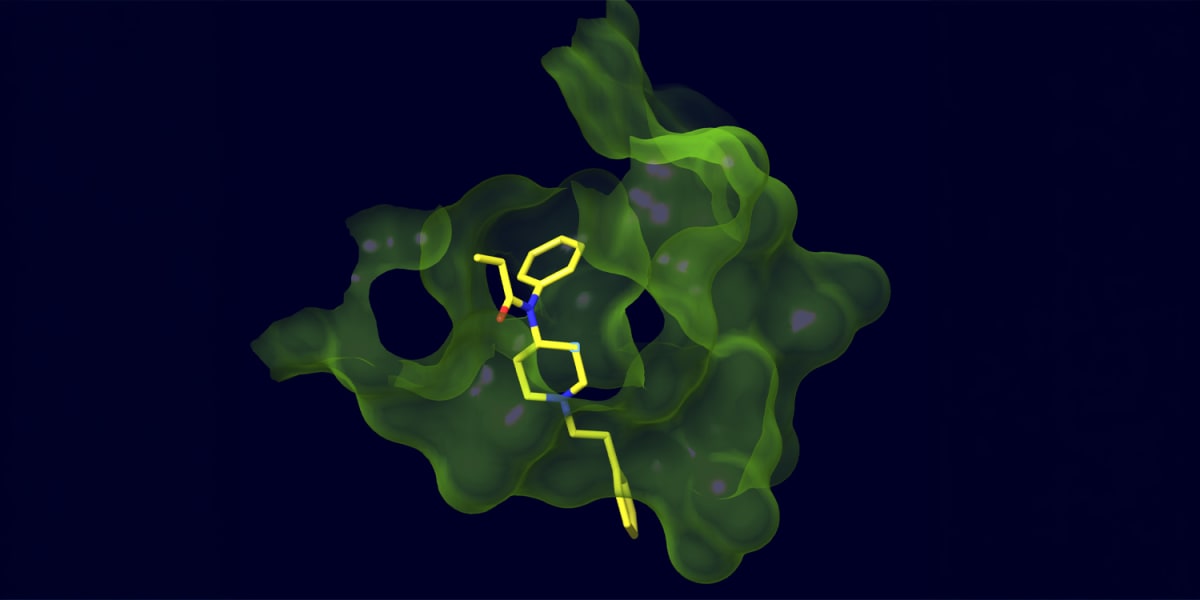
The research team took a bold approach. They started with fentanyl's core structure but replaced a central ring component with a completely different shape. This radical change created a vaccine molecule that looked nothing like standard fentanyl yet retained the underlying spatial and electrical features common to all fentanyl-type drugs.
The scientists tested their vaccine in mice over eight weeks. Blood samples showed the antibodies successfully recognized and bound to fentanyl, carfentanil, acetylfentanyl, and furanylfentanyl. Crucially, these same antibodies ignored legitimate medical opioids like morphine, methadone, and oxycodone.
When researchers exposed vaccinated mice to escalating fentanyl doses, the results were striking. Control mice showed strong drug effects at low doses around 150 micrograms per kilogram. Vaccinated mice required much higher doses to show similar responses, proving the antibodies intercepted the drugs before they reached the brain.
The Ripple Effect
This breakthrough arrives when synthetic opioids drive the majority of overdose deaths globally. Fentanyl and its variants cross into the brain rapidly, disrupting the neural signals that control breathing. The low production costs (about $800 creates $650,000 worth of drugs) mean illegal manufacturers will keep producing variants indefinitely.
A vaccine that recognizes entire drug classes rather than individual molecules changes the equation entirely. Instead of playing catch-up with every new variant, the immune system gains a flexible defense capable of intercepting emerging threats. Medical responders could have a powerful new tool that works alongside existing interventions.
The students working on the project initially doubted the approach would succeed. The conventional wisdom held that antibodies needed exact molecular matches to function effectively. This study proves the immune system can be far more adaptable than previously understood.
A vaccine that learns to recognize the "family resemblance" among deadly drugs offers real hope in a crisis that has outpaced traditional solutions.
Based on reporting by Google News - Health
This story was written by BrightWire based on verified news reports.
Spread the positivity!
Share this good news with someone who needs it