New Zinc Battery Lasts 5,500 Cycles, Stores Solar Power
Scientists in China created a flowing zinc battery that keeps 81% of its power after 5,500 charging cycles, solving one of renewable energy's biggest problems. The breakthrough could finally let us store excess solar and wind energy for months without relying on fossil fuels.
Solar panels and wind turbines create a frustrating problem: they generate the most electricity when we need it least, and go quiet when demand peaks. A team at Fudan University just cracked the code with a battery that can store clean energy longer than ever before.
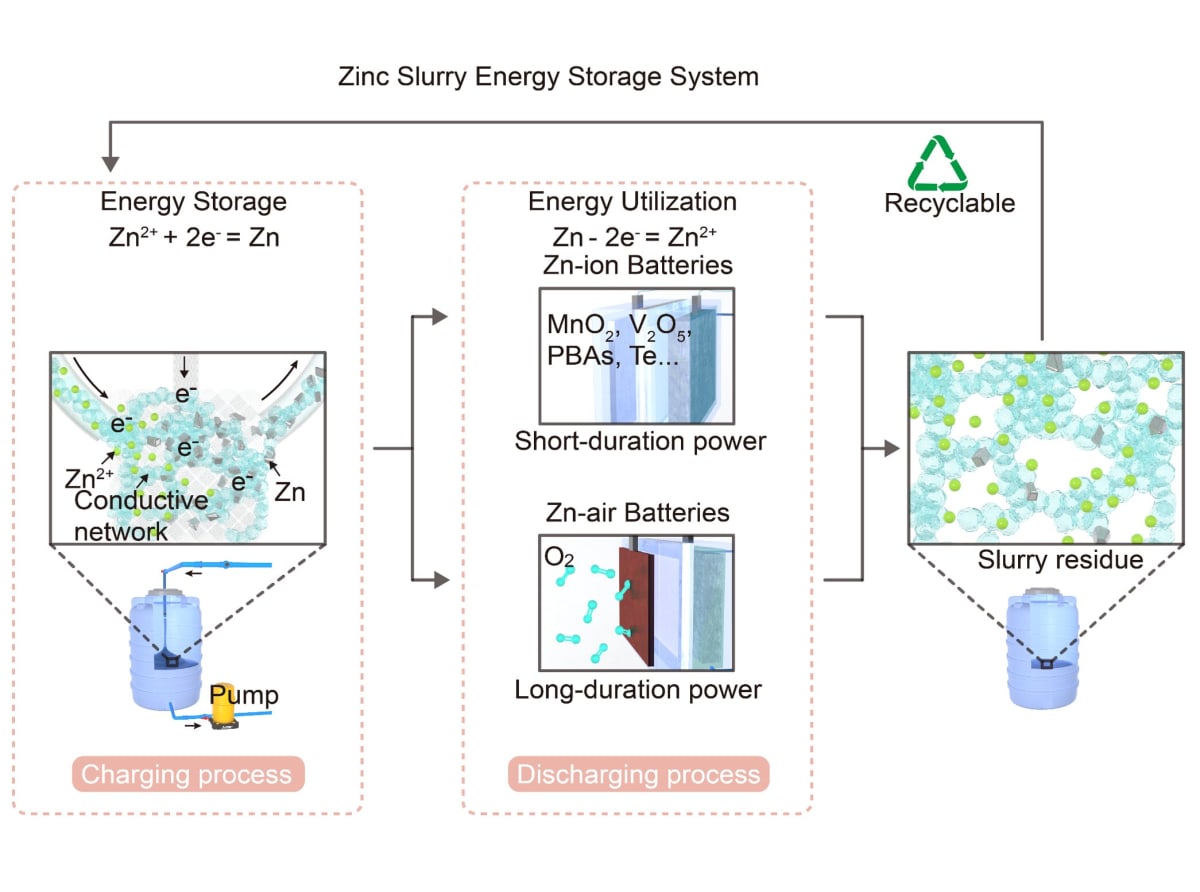
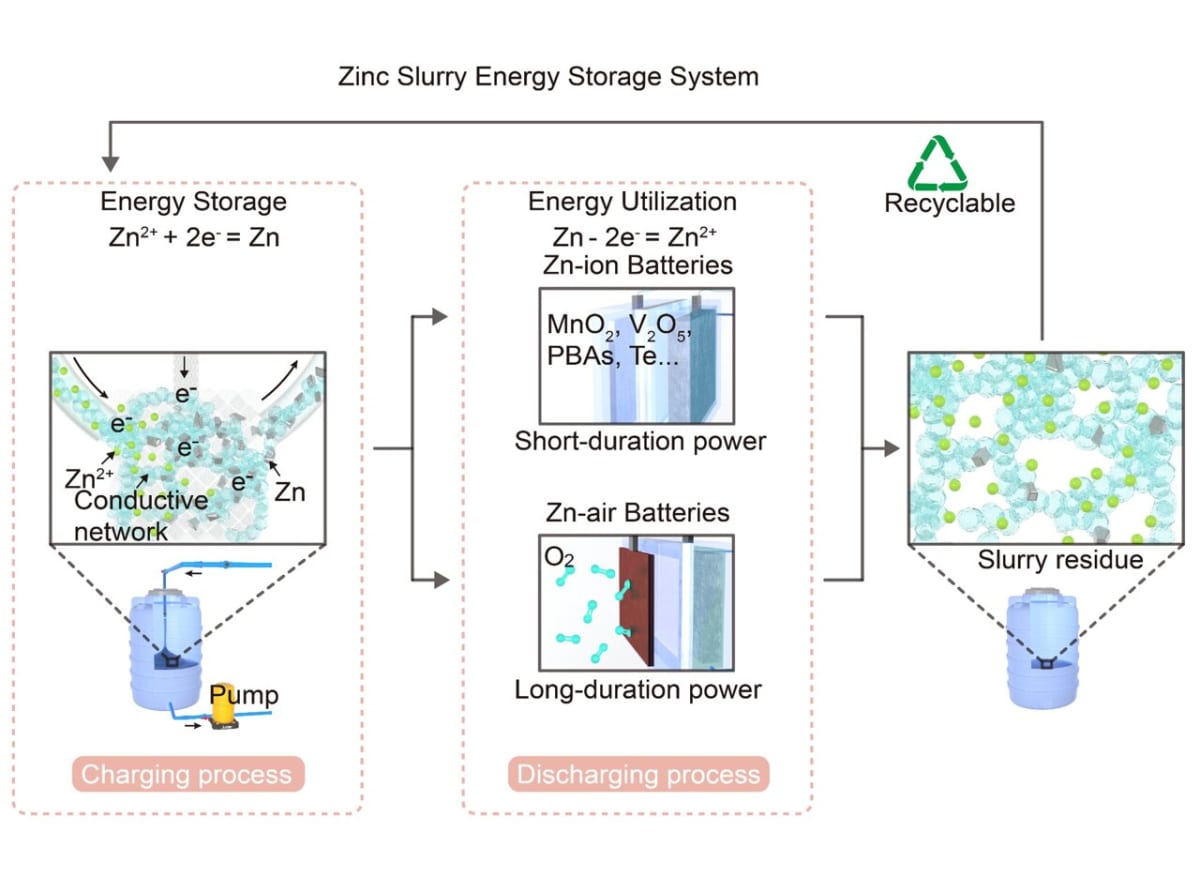
The scientists designed a flowing zinc slurry battery that treats metal particles like a liquid you can pump around. Instead of zinc sitting in one place and slowly breaking down, tiny zinc nanoparticles flow through the system suspended in a special conducting liquid.
Think of it like the difference between a static pond and a flowing river. Traditional batteries have fixed metal electrodes that degrade every time they charge and discharge, like rocks slowly eroding. This new design keeps the zinc moving, preventing the buildup and decay that kills most batteries.
The inspiration came from an unlikely place: an industrial zinc refining plant. Lead researcher Fei Wang watched workers convert zinc ions into pure metal and realized the same process could store renewable energy.
The battery combines three clever elements working together. Nanoscale zinc particles act as tiny energy containers. A hollow carbon network keeps electricity flowing while preventing the particles from clumping. A specially designed liquid environment protects the zinc from chemical reactions that would normally destroy it.
In tests, the results stunned even the research team. The battery ran continuously for 5,128 hours and completed 5,500 charge and discharge cycles while keeping 81% of its original storage capacity. For comparison, your smartphone battery typically drops below 80% capacity after just 500 cycles.
The system achieved 99.94% efficiency, meaning almost no energy gets wasted during charging and discharging. That number matters because grid-scale storage systems need to work millions of times over decades.
The Ripple Effect
This breakthrough addresses renewable energy's biggest infrastructure challenge. Wind farms in Texas generate massive power at night when demand is low. California's solar panels produce excess electricity at noon but go dark during evening peak hours. Storage systems like this zinc battery could capture that surplus energy and release it exactly when needed.
The design uses abundant, cheap materials instead of rare metals like lithium or cobalt. Zinc costs a fraction of other battery materials and can be sourced almost anywhere. That makes scaling up realistic for developing countries building their first clean energy grids.
The flowing design also separates energy storage from power delivery. Traditional batteries must be sized for both how much energy they hold and how fast they release it. This system can store massive amounts of energy in large tanks while using smaller reaction chambers for power output.
The research team is now working with energy companies to build larger prototype systems. Wang believes the technology could support grid-scale storage within five years, helping cities run entirely on renewable energy even when the sun sets and winds calm.
The clean energy revolution just gained the missing piece that makes it practical for everyone, everywhere.
More Images


Based on reporting by Google News - Clean Energy
This story was written by BrightWire based on verified news reports.
Spread the positivity!
Share this good news with someone who needs it