Next-Gen Solar Panels Tested on K2 Mountain at 17,000 Feet
A Japanese company is putting promising new solar technology to the ultimate test by sending it up one of the world's highest mountains. The lightweight panels will power real expedition equipment in extreme conditions where traditional gear struggles.
Imagine charging your satellite phone at 17,000 feet, surrounded by ice and rock, powered by nothing but sunlight and cutting-edge science.
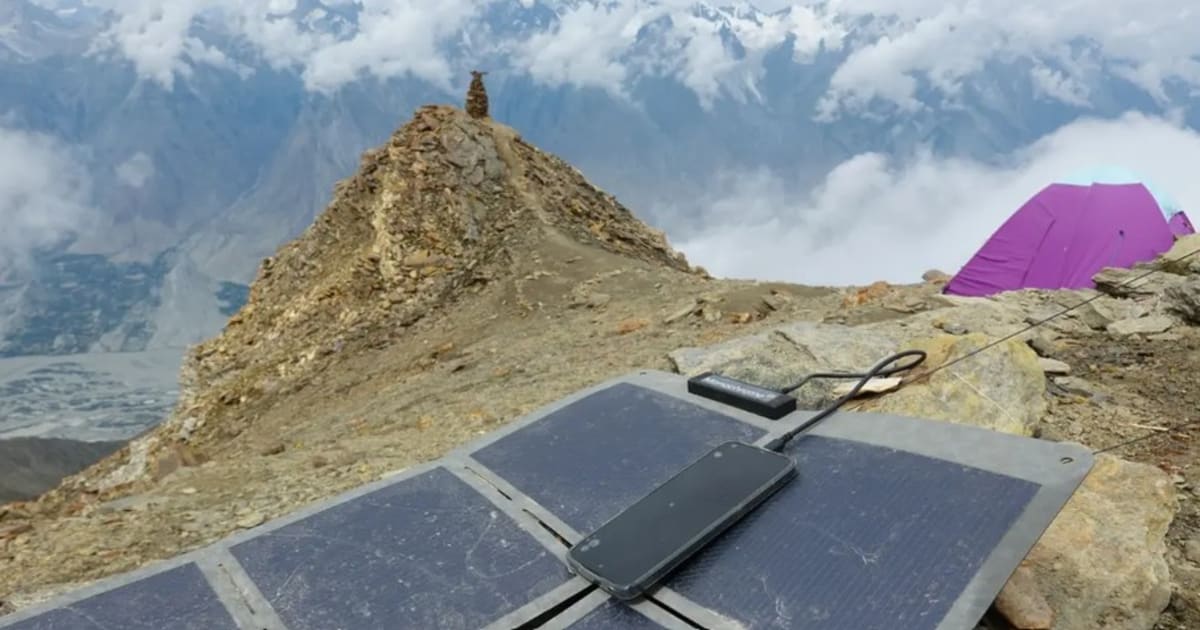
That's exactly what's about to happen on K2, the world's second-highest mountain. Japanese solar manufacturer Monochrome is sending its experimental perovskite solar panels on an expedition to Pakistan's Karakoram range, where they'll face some of the harshest conditions on Earth.
Alpine climber Yudai Suzuki will carry the lightweight prototype to K2 Base Camp and Concordia, perched at roughly 5,150 meters above sea level. But this isn't just a publicity stunt. The panels will actually power critical expedition equipment, including satellite communications and device charging systems that keep climbers connected and safe.
Perovskite solar cells represent one of the most exciting advances in renewable energy. They're lighter and potentially more efficient than traditional silicon panels, making them perfect for situations where every ounce matters. Until now, most testing has happened in comfortable lab settings.
"In the world of mountaineering, gear must be more than just lightweight and user-friendly," Suzuki explained. "It is crucial that it functions reliably without fail, no matter how harsh the conditions."
The extreme altitude test will expose the panels to intense UV radiation, dramatic temperature swings, and punishing weather that would destroy lesser equipment. Monochrome plans to collect detailed performance data throughout the expedition, then recover the prototype to analyze how it held up.
Why This Inspires
This expedition shows how renewable energy innovation happens through bold experimentation. If these solar panels can survive K2's brutal environment, they could revolutionize power access for remote communities, disaster relief operations, and off-grid applications worldwide.
The same durability needed on a mountain matters for buildings facing extreme weather, remote medical clinics, and rescue operations. By pushing technology to its limits, Monochrome is helping solve real-world energy challenges for people who need reliable power most.
Within six months, the company will complete its analysis and share what they learned from this sky-high laboratory. The future of solar energy is heading to places we've barely imagined.
More Images


Based on reporting by PV Magazine
This story was written by BrightWire based on verified news reports.
Spread the positivity!
Share this good news with someone who needs it