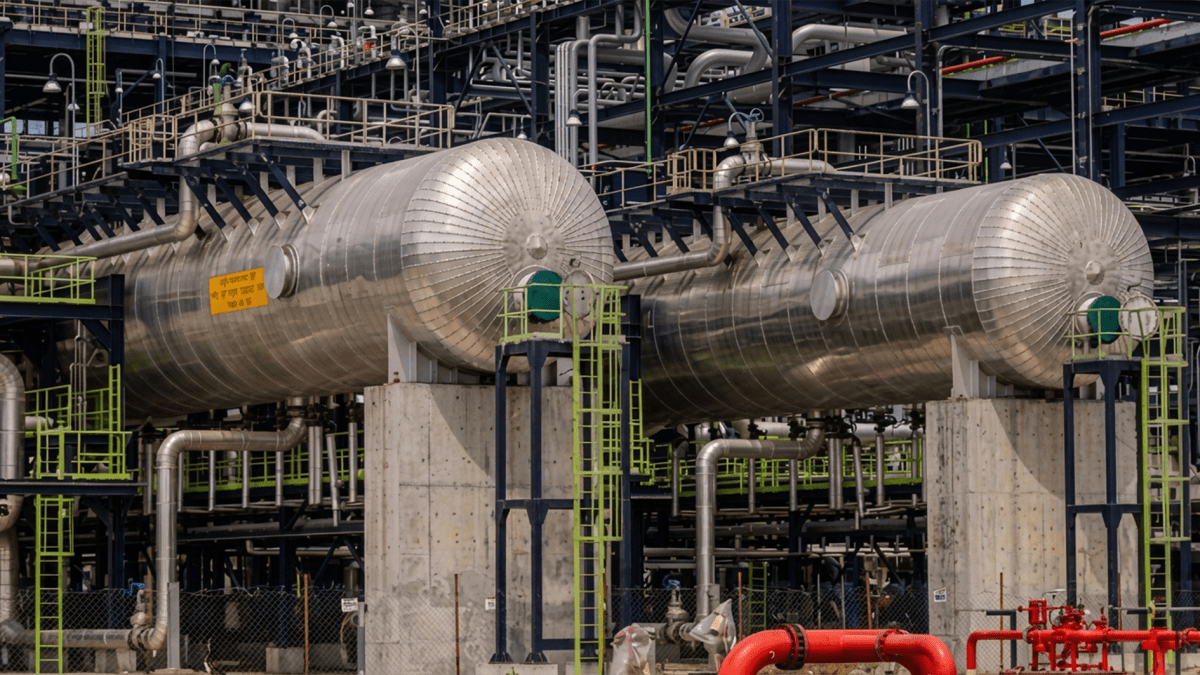
Nigeria's Dangote Refinery Hits 700,000 Barrels Per Day
Africa's largest oil refinery just exceeded its design capacity and is now processing 700,000 barrels daily. The facility is already eyeing an ambitious expansion that could double its output within three years.
Nigeria's Dangote Refinery has broken past its own limits, now processing 700,000 barrels of crude oil per day and surpassing the 650,000 barrel capacity it was designed for. The achievement makes it the world's largest single-train petroleum refinery and marks a turning point for a continent that has long imported fuel despite sitting on massive oil reserves.
The milestone was confirmed during an official performance test by the refinery's process licensors in Lagos. Head of Corporate Communications Anthony Chiejina called the results proof of the facility's strong engineering design and operational efficiency.
But the team isn't stopping there. Vice President of Oil and Gas Devakumar Edwin announced plans to expand processing capacity to 1.4 million barrels per day within 30 months, which would nearly double current output.
The refinery, owned by Nigerian industrialist Aliko Dangote, began producing fuel in 2024. Since then, it has steadily ramped up production of petrol, diesel, aviation fuel, and other petroleum products that Nigeria previously had to import at great expense.
The Ripple Effect
The impact is already being felt across multiple continents. The refinery now supplies petroleum products to several African nations, helping them secure reliable energy sources amid global supply disruptions linked to Middle East tensions.
Its reach extends far beyond Africa. The facility exports gasoline to the United States, jet fuel to Saudi Arabia, and various products to five European countries including the United Kingdom, France, Spain, Italy, and the Netherlands.
In April, S&P Global Commodities named Dangote Petroleum Refinery the world's largest exporter of jet fuel. That distinction reflects how quickly the facility has become a major player in global energy markets.
For Nigeria itself, the benefits are transformative. The country is reducing its dependence on imported fuel, which has historically drained foreign exchange reserves and left citizens vulnerable to price shocks.
The expansion plans support Nigeria's goal to maximize value from its own crude oil resources rather than shipping them abroad for refining. International crude oil suppliers and commodity traders are taking notice, with growing interest in supplying feedstock to the facility.
What started as one nation's ambitious infrastructure project is becoming an energy security solution for an entire region and a competitive force in global markets.
More Images


Based on reporting by Guardian Nigeria
This story was written by BrightWire based on verified news reports.
Spread the positivity!
Share this good news with someone who needs it