Nobel Laureates: Science Needs Freedom and Time to Thrive
Nobel Prize winners gathered in Germany to share a powerful message: breakthrough discoveries need freedom, patience, and trust more than pressure for quick results. Their insights offer hope for the future of science and collaboration.
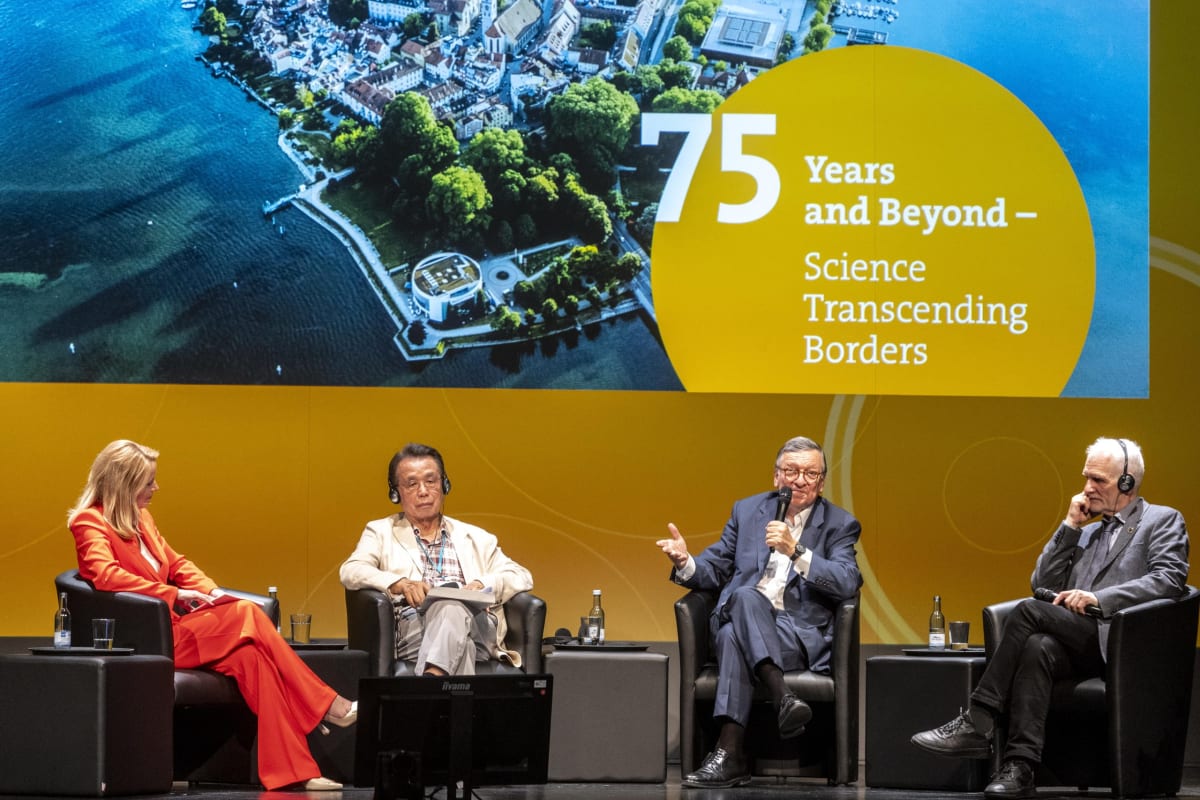
The world's greatest scientific minds delivered an unexpected message at the 75th Lindau Nobel Laureate Meeting in Germany. Breakthrough discoveries don't just need brilliant ideas. They need freedom, time, and trust.
Anne L'Huillier, who won the 2023 Nobel Prize in Physics, spent decades studying attosecond pulses of light so brief they last a billionth of a billionth of a second. Her work now lets scientists watch electrons move inside atoms in real time. But her bosses once told her to quit the project entirely.
"They thought there was nothing more to get out of this," she recalled with a smile. She kept going anyway, supported by international collaborators who believed unanswered questions were worth pursuing.
Her persistence paid off decades later with a Nobel Prize. The timeline itself carries a message: fundamental research takes time, and scientists need space to explore without the constant pressure to produce immediate results.
Katalin Karikó shared a similar journey. The 2023 Nobel Prize winner in Medicine grew up in a Hungarian town so small she'd never met a scientist until a biology teacher told her she could become one. Her discoveries in mRNA technology made COVID-19 vaccines possible and helped change the course of the pandemic.
But the pandemic also revealed a trust problem. One of medicine's greatest breakthroughs unfolded alongside unprecedented public skepticism toward science.
Karikó believes the solution starts with connection, not just data. "People consider scientists as people who do not care about them or are very remote from them," she explained. She emphasized that scientists are ordinary people who shop for groceries and send their kids to public schools, just like everyone else.
She illustrated the gap with a story from a Canadian high school visit. Three hundred students could name a hockey player but not a single Canadian scientist.
The Ripple Effect
Former European Commission President José Manuel Barroso connected scientific freedom to a broader foundation of peace and democracy. "Europe is a space of freedom, peace and shared prosperity," he said, adapting philosopher Spinoza's words that peace means more than just the absence of war.
Belarusian human rights defender and 2022 Nobel Peace Prize laureate Ales Bialiatski agreed, calling for "scientific complicity across borders" grounded in shared responsibility. Diseases and climate change don't recognize political boundaries, and neither should the pursuit of knowledge.
These Nobel laureates understand something essential: today's impossible questions become tomorrow's lifesaving answers, but only if we give science the freedom and time to ask them.
Based on reporting by Google: scientific discovery
This story was written by BrightWire based on verified news reports.
Spread the positivity!
Share this good news with someone who needs it