Open-Source Robotics Tools Slash Costs, Speed Innovation
What once took years and millions of dollars now happens in months thanks to global communities sharing robotics software for free. From warehouse robots to autonomous tractors, open-source collaboration is powering the industry's biggest boom.
For decades, building a robot meant spending years developing custom software and burning through massive budgets. Today, a student in Spain can design and test a warehouse robot entirely in their browser, using tools shared freely by engineers across the globe.
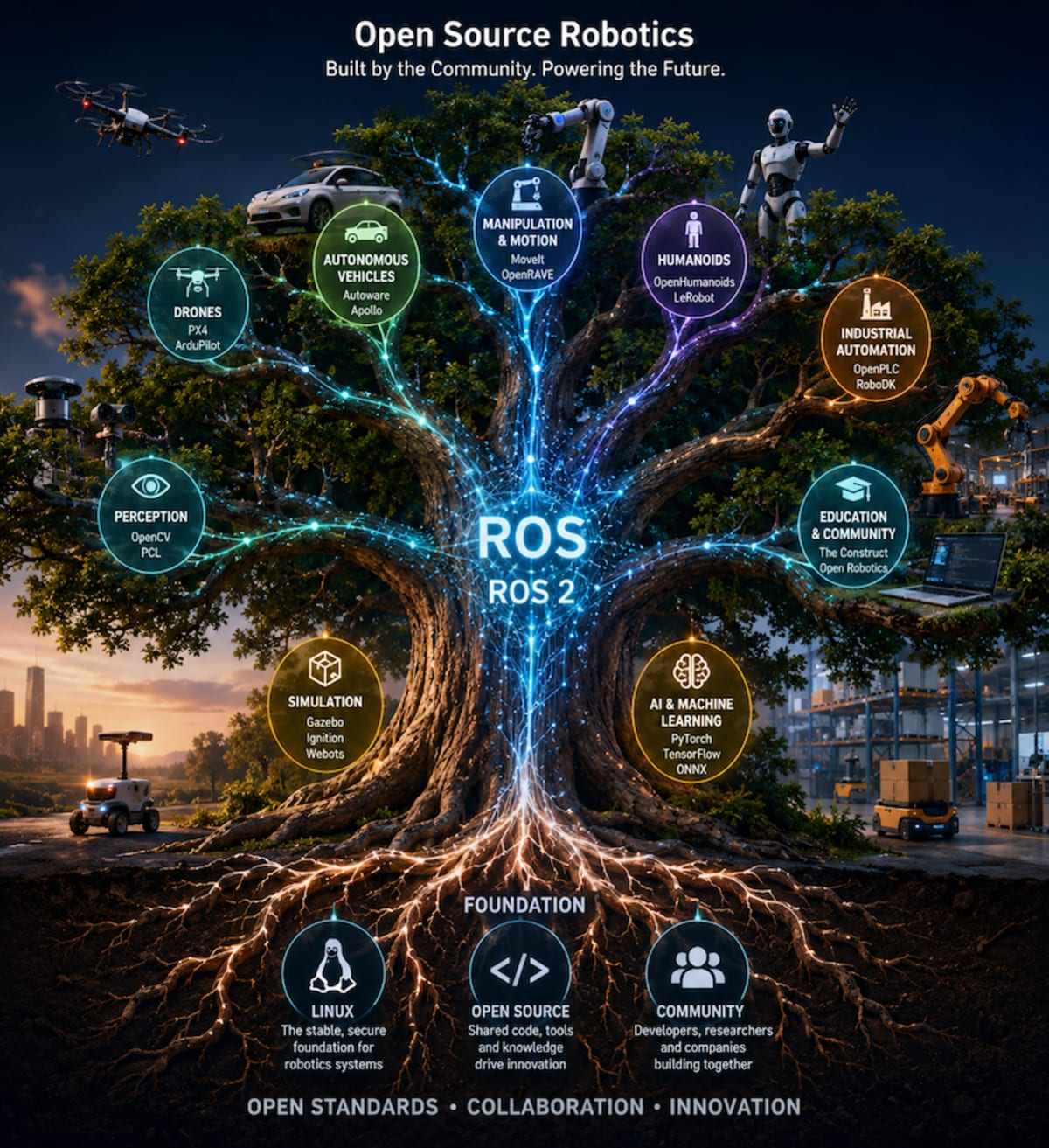
The transformation centers on something called ROS, the Robot Operating System. Before ROS emerged from Stanford's AI lab, every robotics company reinvented the wheel, building their own proprietary systems for navigation, vision, and movement. Sharing code between organizations was nearly impossible.
ROS changed everything by giving robotics developers a common language. Instead of building fundamental capabilities from scratch, engineers could now snap together reusable software packages like LEGO blocks. A startup suddenly had access to navigation systems that previously required massive teams and years of work.
The impact mirrors what Linux did for computing. Today, ROS powers everything from university research projects to commercial warehouse systems deployed by Amazon and other giants. Companies that once guarded software secrets now actively contribute to open robotics communities.
One early believer was The Construct, a Spanish company founded when robotics still seemed unfashionable outside engineering circles. They tackled a frustrating problem: installing robotics software locally meant wrestling with configuration headaches and compatibility issues that blocked newcomers from entering the field.
Their solution arrived years ahead of its time. The Construct built a browser-based environment where anyone could write code, test robots, and run simulations entirely online. This was cloud robotics before the term became trendy, democratizing access to tools once available only to well-funded labs.
Around ROS grew an ecosystem of powerful free tools. Gazebo made virtual testing standard, letting engineers safely iterate on autonomous systems without risking expensive hardware. OpenCV became the foundation for machine vision across countless applications. PX4 autopilot software helped birth today's thriving commercial drone industry.
The Ripple Effect
This collaborative approach is now fueling the largest technology investment wave in modern industrial history. Governments pour billions into automation while AI companies race to build physical intelligence systems. What changed wasn't just the technology but the culture around building it.
Small teams anywhere in the world can now compete with established players. A robotics developer in Brazil has access to the same cutting-edge tools as engineers at major corporations. Students learn on professional-grade simulation environments without leaving their dorm rooms.
The companies that persisted during robotics' quieter years, building open tools when commercial success seemed uncertain, laid the groundwork for today's explosion. Their early bet on collaboration over competition accelerated an entire industry.
What once required isolated genius now happens through shared innovation, proving that sometimes the fastest way forward is helping everyone move together.
More Images


Based on reporting by Google: robotics innovation
This story was written by BrightWire based on verified news reports.
Spread the positivity!
Share this good news with someone who needs it