Orbital Matter 3D-Prints First Beam in Space
Humanity just took an exciting leap toward constructing cities in the stars by building physical structures directly in orbit. German startup Orbital Matter successfully 3D-printed a rigid beam in the vacuum of space, unlocking massive possibilities for future space exploration.
Space exploration just crossed a thrilling new threshold that brings our grandest cosmic dreams into crystal clear focus. High above our atmosphere in the freezing vacuum of orbit, a tiny spacecraft manufactured a solid structural beam from scratch.
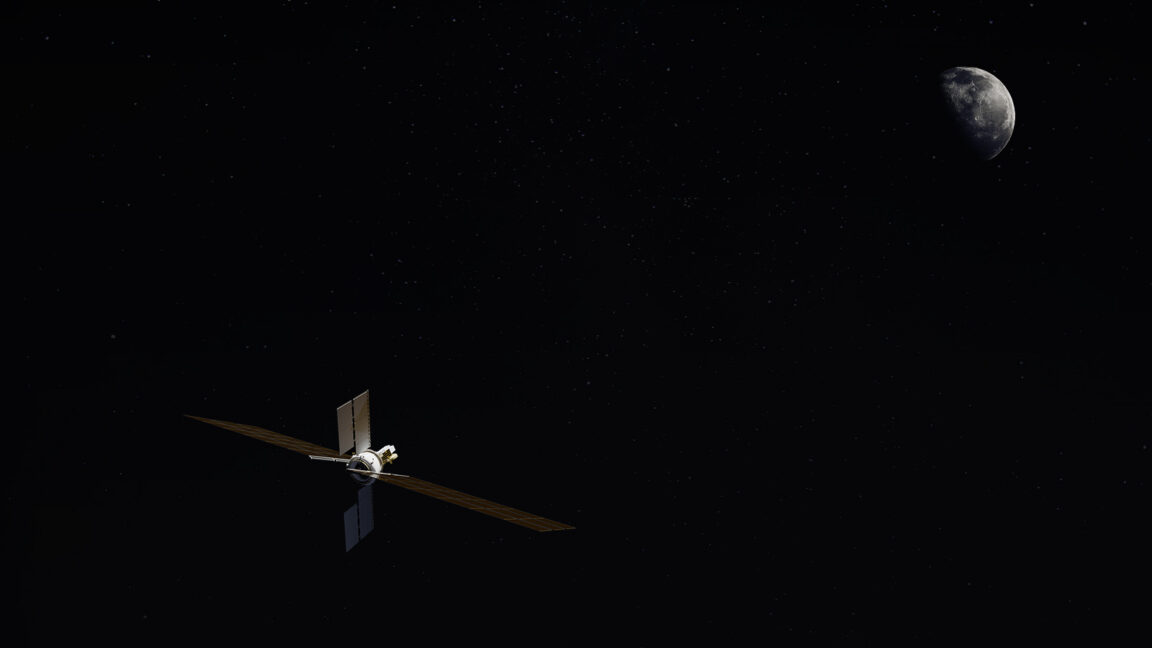
German aerospace startup Orbital Matter pulled off this historic milestone aboard its Replicator 2 satellite, marking a major turning point for off-planet manufacturing. The breakthrough proves that instead of packing fragile, folded machinery into rockets, we can construct colossal systems directly among the stars.
For decades, rocket scientists faced a frustrating engineering puzzle known as the launch fairing dilemma. Every massive telescope mirror, solar panel, and habitat module had to fold up like delicate origami to squeeze into the narrow nose cone of a rocket.
Once deployed into orbit, these complex mechanical hinges and springs carried an ever-present risk of jamming or failing. Orbital Matter solves this headache by sending up compact canisters of raw liquid resin and building giant structures on site.
The company launched its Replicator 2 satellite on a SpaceX rideshare mission, equipped with four custom micro-printers. Floating hundreds of miles above Earth, the device extruded continuous coils of specialized resin into a rigid, half-meter cylindrical beam, instantly curing the material with ultraviolet light.
Co-founders Jakub Stojek and Robert Ihnatisin describe this ingenious chemical process as cosmic concrete, turning liquid into stone-hard polymer in seconds. The resulting beam held its shape beautifully in the harsh environment of space, opening the door to virtually unlimited construction possibilities.
While astronauts have tested 3D printers inside the comfortable, pressurized cabins of the International Space Station before, this achievement is entirely different. It represents the very first time an autonomous, free-flying satellite printed a rigid structural component exposed to the raw vacuum of space.
Even when one secondary printer encountered an anomaly during the flight, the primary system triumphed and successfully deployed an attached solar array. The team embraced the challenge with excitement, noting that learning directly in orbit teaches engineers far more than years of sterile ground tests.
Ihnatisin previously honed his craft at the renowned 3D-printing pioneer Formlabs, bringing deep additive manufacturing expertise to the venture. Alongside Stojek, he secured three million dollars in seed funding to turn what sounded like science fiction into functional orbital hardware.
The practical implications for the future of clean energy and digital infrastructure are breathtaking. Today, the most powerful mass-produced satellites in orbit rely on solar wings measuring around 20 meters across.
With this new orbital printing technique, Orbital Matter envisions manufacturing ultra-lightweight structural booms that stretch over 100 meters long. These colossal frameworks could support high-powered orbital data centers, deep space communication arrays, and massive space-based solar power collectors.
The Munich-based team is already hard at work on its next ambitious demonstration mission, scheduled for launch in 2028. That mission will test a larger printer on a heavier spacecraft, designed to deploy a high-capacity five-kilowatt solar array.
Backed by the European Space Agency and satellite manufacturing giant Thales Alenia, the startup ultimately aims to support massive arrays generating over 100 kilowatts per wing by 2030. Their printer-assisted deployment system could soon become standard equipment on commercial and scientific spacecraft across the globe.
The Ripple Effect
Mastering autonomous manufacturing in microgravity fundamentally rewrites the economics of exploring our solar system. When missions stop hauling heavy, pre-assembled metal frames and instead print structural skeletons on demand, launch weights shrink and mission capabilities soar.
This leap forward could accelerate space-based solar energy beamed directly to Earth, providing clean and limitless electricity to cities worldwide. It also lays the vital structural groundwork for humanity to construct permanent orbital habitats, scientific stations, and deep-space waypoints far beyond our home planet.
Every giant leap in exploration begins with a single foundational piece, and today the pathway to the stars is being built one beam at a time.
Based on reporting by TechCrunch
Building Something New? Try the BrightWire Tech Stack Advisor
Compare modern frameworks, cloud hosting, and AI tools tailored to your project budget and scale.
Spread the positivity!
Share this good news with someone who needs it