Origami-Inspired Turbines Bring Quiet Wind Power to Cities
Researchers used a 1,000-year-old paper-folding art to create bladeless wind turbines that look beautiful, run quietly, and work perfectly in crowded urban spaces. Cities could finally tap into clean wind energy without the noise, cost, or eyesore of traditional turbines.
A team of researchers just solved one of clean energy's biggest headaches by folding paper, and it could transform how cities power themselves.
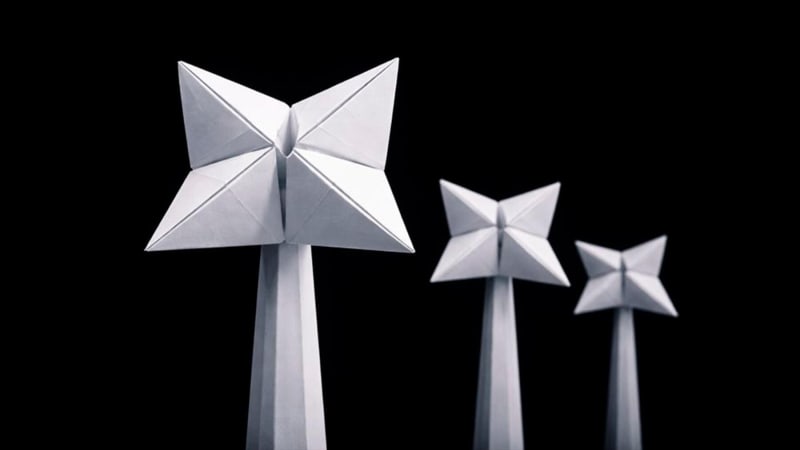
Scientists from Australian University, California State University, and Université Côte d'Azur teamed up to create wind turbines inspired by origami, the ancient Asian art of paper folding. Unlike those massive turbines you see on farms, these bladeless designs fit perfectly in urban environments where space is tight and neighbors are close.
The origami turbines feature seven curved, folded rotors with four tube-shaped nozzles inside. Wind hits these nozzles from any direction and creates a drag force that spins the rotors. The team 3D-printed prototypes and tested them in wind tunnels at different speeds, with impressive results.
The turbines started spinning at just 3.5 meters per second with a generator attached. They reached speeds between 25 and 3,300 rotations per minute and produced up to 27.6 volts of electricity. That's enough power for remote locations and hybrid energy systems without needing hurricane-force winds.
Traditional small wind turbines have struggled in cities for good reasons. They're loud, expensive, potentially dangerous to birds, and frankly, most people think they're ugly. Homeowners and city councils have pushed back against installing them despite wanting cleaner energy options.
These origami designs tackle every single complaint. They're quieter because they don't have traditional blades slicing through air. They cost less to produce and maintain because of their simple structure. They're safer for wildlife, and their artistic appearance actually enhances buildings instead of creating eyesores.
The folded design also integrates easily into existing architecture. Imagine apartment buildings, schools, and offices generating their own power with turbines that look like modern art installations rather than industrial equipment.
The Ripple Effect
This breakthrough could finally unlock wind power for the billions of people living in cities. Urban areas consume most of the world's energy but have had limited options for generating their own clean power on-site.
If scaled-up versions pass field testing successfully, these turbines could appear on buildings worldwide within a few years. Each rooftop, each balcony, each parking structure becomes a potential power station.
The researchers plan to test larger versions next and analyze long-term costs. Early signs suggest these turbines will last longer than traditional models because their simple structure has fewer parts that can break or wear out.
A 1,000-year-old art form just became cutting-edge technology, proving that sometimes the best solutions have been hiding in plain sight all along.
More Images

Based on reporting by Google News - Wind Energy
This story was written by BrightWire based on verified news reports.
Spread the positivity!
Share this good news with someone who needs it