Orion's Red, White & Blue Stars Light Up Winter Nights
The night sky is putting on a natural patriotic display as Orion's stars shine in striking red, white, and blue hues visible to the naked eye. Stargazers can catch this cosmic color show simply by looking south after dark this week.
If you've ever wondered whether stars really come in different colors, Orion is about to prove they absolutely do.
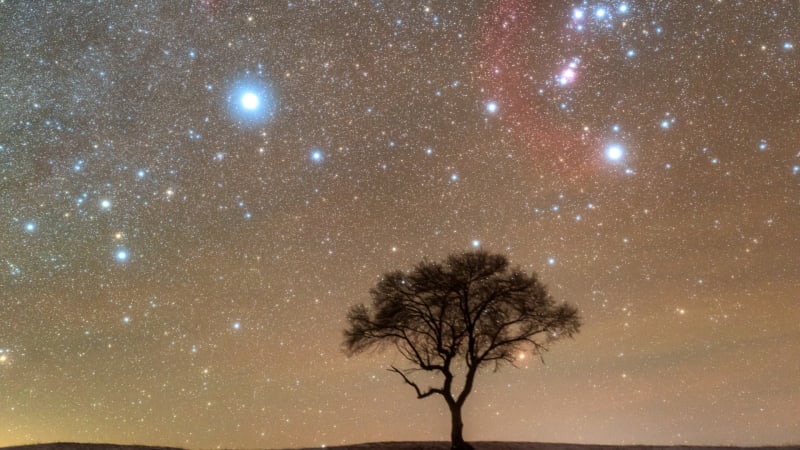
The beloved winter constellation is offering skywatchers an easy lesson in stellar diversity this week, with its brightest stars glowing in distinctly different hues. No telescope needed—just step outside after sunset and look south.
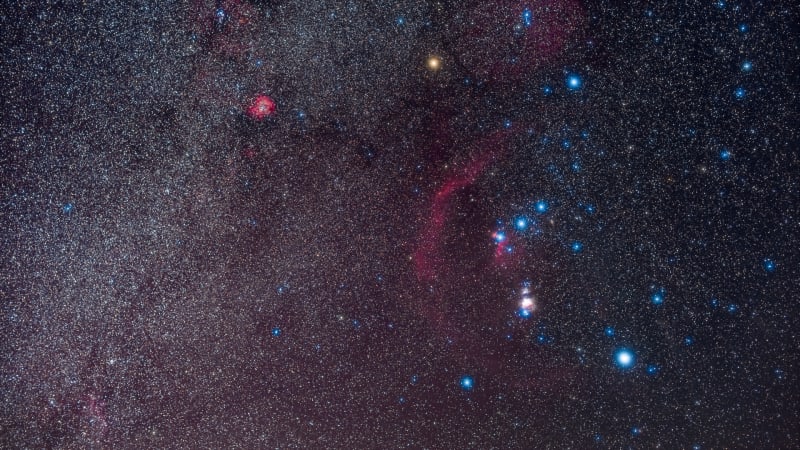
Finding Orion is simple. Look for three bright stars lined up in a row—that's the famous Orion's Belt. Four brighter stars form a square around it, creating the outline of the mythical hunter.
Now here's where it gets colorful. The star at the upper left corner, Betelgeuse, glows with a warm orange-red tint. At the lower right, Rigel shines icy blue-white. The other two corner stars, Bellatrix and Saiph, appear white.
The color difference isn't just pretty—it's science in action. These stars are revealing their surface temperatures through their light. Red stars like Betelgeuse are the coolest (though still thousands of degrees hot), while blue stars like Rigel are the hottest, and white stars fall somewhere in between.
Betelgeuse is a red supergiant so massive that if it replaced our sun, it would swallow Mercury, Venus, Earth, and Mars. Rigel, despite looking smaller in the sky, pumps out about 120,000 times more light than our sun.
Why This Inspires
This celestial color show reminds us that the universe is far more vibrant than we often realize. We tend to think of stars as simple white dots, but the night sky is actually painting with a full palette above us every clear evening.
What makes this particularly special is how accessible it is. You don't need expensive equipment or dark country skies. Even from light-polluted cities, Orion's brightest stars punch through, offering anyone willing to look up a chance to see the universe's true colors.
The constellation will be visible through early spring, giving everyone plenty of chances to catch this natural light show. Bonus this week: a bright waxing moon is hanging out near Orion, making the constellation even easier to locate.
Sometimes the most inspiring discoveries are the ones that have been waiting above us all along.
More Images


Based on reporting by Google News - Science
This story was written by BrightWire based on verified news reports.
Spread the positivity!
Share this good news with someone who needs it
%2Fhttps%3A%2F%2Ftf-cmsv2-smithsonianmag-media.s3.amazonaws.com%2Ffiler_public%2Ff0%2Ffe%2Ff0fe19e4-e68b-474d-b0a4-19c5beb9d19d%2Fspeedy-star.webp)