Pancreatic Cancer Vaccine Shows Promise in Early Trial
Scientists at Johns Hopkins developed a vaccine that may prevent pancreatic cancer before it starts, triggering lasting immune responses in 90% of high-risk patients. None of the 20 participants developed cancer during the study, and some saw their precancerous cysts shrink or disappear.
For the first time, researchers have shown that the immune system can be trained to stop pancreatic cancer before it ever begins.
A team at Johns Hopkins Medicine tested an experimental vaccine in 20 people at high risk for pancreatic cancer due to genetic factors or suspicious cysts detected on scans. After four doses over 13 weeks, 90% developed strong immune responses that lasted up to two years.
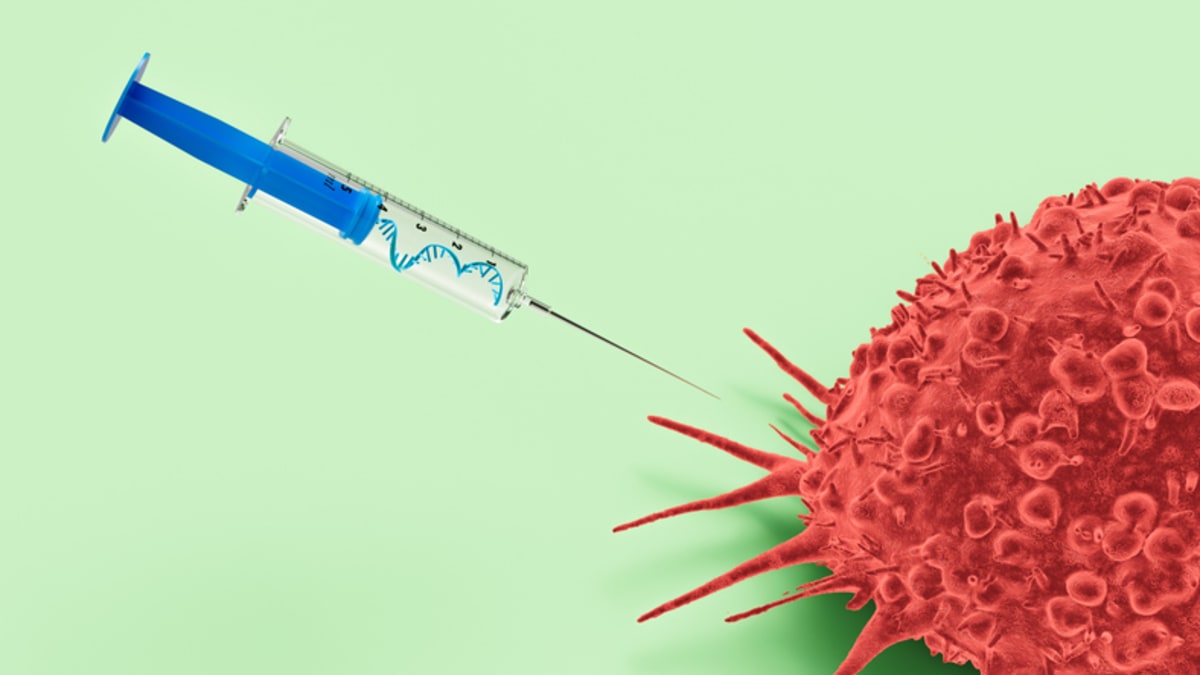
The vaccine targets the six most common mutations in the KRAS gene, which drives more than 90% of pancreatic cancers. These mutations often appear years before cancer develops, creating a window to intervene.
"If there is a high enough concern for transformation to cancer or if early cancer is detected, the current standard of care is surgical resection," said Dr. Neeha Zaidi, associate professor of oncology at Johns Hopkins and study co-author. "However, the chances of recurrence are up to 80%, and many precursor lesions to pancreatic cancer are microscopic and thus undetectable by imaging."
None of the participants developed pancreatic cancer or high-risk lesions during a median follow-up of 16.5 months. Perhaps most surprising, five people saw their pancreatic cysts completely disappear, while three others experienced partial shrinkage.
The vaccine proved safe and well-tolerated, with patients reporting minimal side effects. Memory cells capable of recognizing dangerous KRAS mutations remained detectable in participants' blood for as long as two years after vaccination.
Pancreatic cancer is notoriously deadly, often diagnosed too late for effective treatment. Yet it typically develops slowly over many years from cysts and other precursor lesions, making prevention theoretically possible if the right tools exist.
The same vaccine had previously been tested in pancreatic cancer patients who'd undergone surgery and faced high recurrence risk. All of those participants remained disease-free for at least five years.
Why This Inspires
This research represents a fundamental shift in how we think about one of the deadliest cancers. Instead of waiting for tumors to form and then fighting an uphill battle, doctors may soon be able to prevent pancreatic cancer entirely in people at highest risk.
Another trial is already enrolling patients to study whether the immune response can infiltrate precancerous lesions themselves, not just circulate in the blood. If larger studies confirm these early results, this could become the first true prevention strategy for a cancer that kills most patients within a year of diagnosis.
"Prevention and interception save lives and reduce the morbidity associated with cancer development and progression," said Dr. Elizabeth Jaffee, deputy director of the Johns Hopkins Kimmel Cancer Center. The findings suggest that what was once considered impossible may be within reach.
More Images

Based on reporting by Google News - Health
This story was written by BrightWire based on verified news reports.
Spread the positivity!
Share this good news with someone who needs it