Paper-Thin Catalyst Cuts Hydrogen Costs by 65%
Scientists in South Korea just made hydrogen energy far cheaper by reshaping catalysts from granules into sheets thinner than a human hair. The breakthrough slashes precious metal use by up to 65% while boosting performance.
Hydrogen energy just got dramatically cheaper thanks to a simple but brilliant idea: flatten the catalysts.
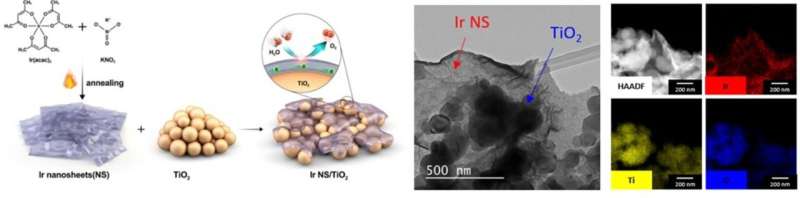
Researchers at KAIST in South Korea transformed the chunky granular catalysts used in hydrogen production into paper-thin sheets. The results are stunning. These ultrathin nanosheets use 65% less expensive iridium metal while producing 38% more hydrogen than conventional catalysts.
Professor EunAe Cho and her team didn't discover a new material. Instead, they reimagined the shape. By spreading catalyst particles into sheets tens of thousands of times thinner than a human hair, they exposed far more surface area for chemical reactions.
The innovation solves hydrogen energy's biggest problem: cost. Iridium and platinum, the metals needed for hydrogen production and fuel cells, are scarce and expensive. Traditional granular catalysts waste most of these precious metals because only their outer surfaces participate in reactions.
The nanosheet design changes everything. For hydrogen production, the team created iridium sheets just 2 nanometers thick that spread across 1 to 3 micrometers. These sheets naturally form interconnected pathways on titanium oxide, a previously unsuitable support material, dramatically improving durability.
The catalyst ran stably for over 1,000 hours under intense industrial conditions. Even better, it matched commercial catalyst performance while using about one-third the iridium.
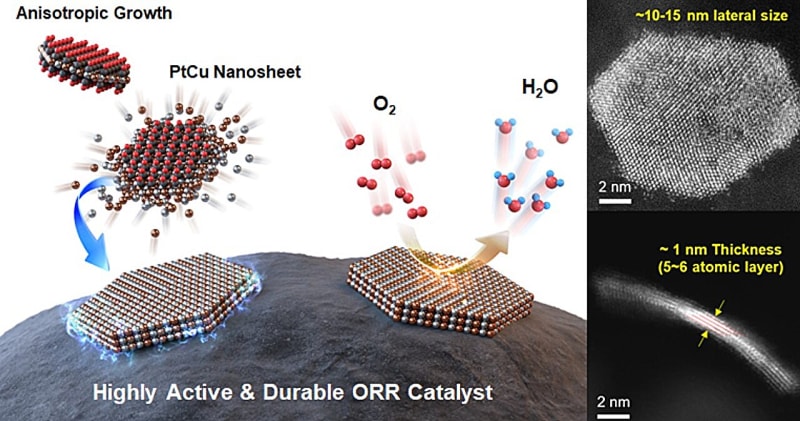
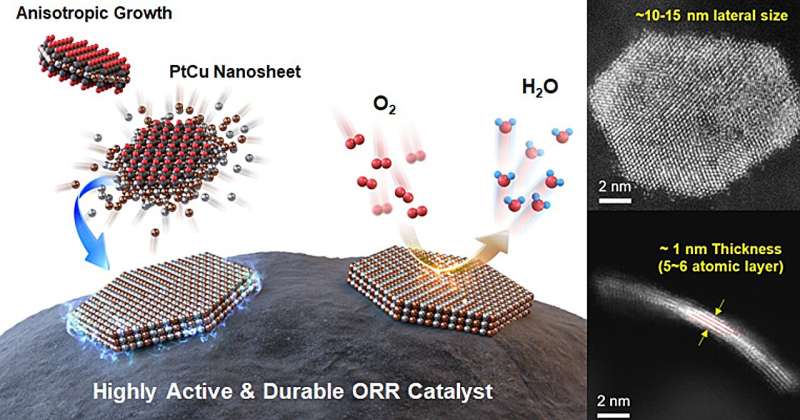
The team applied the same approach to fuel cells, creating platinum-copper nanosheets. These delivered 13 times better activity per unit of platinum and performed 2.3 times better in full fuel cell tests. After 50,000 durability cycles, they retained 65% of their initial performance while using 60% less platinum.
Why This Inspires
This breakthrough represents exactly what clean energy needs: innovation that makes green technology cheaper and better simultaneously. For years, hydrogen energy has promised a pollution-free future but remained too expensive for widespread adoption.
The beauty of this discovery lies in its simplicity. No exotic new materials. No complex manufacturing. Just a structural redesign that maximizes what we already have. The same concept works for both hydrogen production and fuel cells, suggesting it could transform the entire hydrogen economy.
The research, published in ACS Nano and Nano Letters, could accelerate hydrogen's path from laboratory promise to everyday reality. Professor Cho calls it "a critical turning point for lowering the cost of hydrogen energy and accelerating its commercialization."
Clean energy just became more accessible, bringing carbon-free transportation and power closer to reality for everyone.
More Images
Based on reporting by Phys.org
This story was written by BrightWire based on verified news reports.
Spread the positivity!
Share this good news with someone who needs it