Penn State Creates Shape-Shifting Skin Like an Octopus
Scientists developed a smart synthetic skin that can hide images, change textures, and morph shapes on command, all from a single soft material. Inspired by octopus skin, this breakthrough could revolutionize camouflage, security, and robotics.
Imagine a material that could hide a secret message until you heat it up, or shift from flat to textured without layering different substances. Penn State researchers just made that happen.
Led by Professor Hongtao Sun, the team created a "smart skin" from hydrogel that acts like octopus skin. The soft, water-rich material can change its appearance, texture, and shape when exposed to heat, liquids, or physical stretching.
The secret lies in how they print it. Using a technique called halftone-encoded printing, the researchers embed digital instructions directly into the material, similar to how newspapers use tiny dots to create images. These hidden patterns tell different parts of the skin exactly how to react to outside triggers.
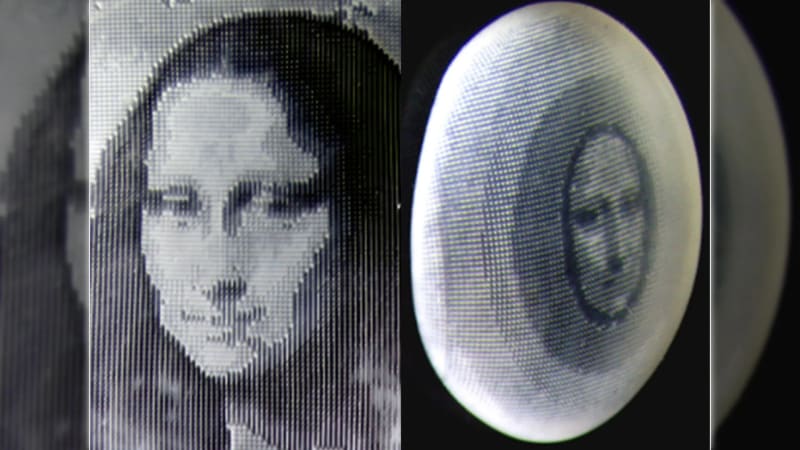
In one demonstration, the team printed the Mona Lisa into a clear hydrogel film. The image stayed completely invisible until they placed the material in ice water or heated it up. The picture could also be revealed by gently stretching the film, adding an extra layer of security for hidden information.
What makes this smart skin special is that it doesn't need multiple layers or different materials stacked together. A single sheet can transform from flat to three-dimensional with complex surface textures, all controlled by those tiny printed patterns inside.
Sun drew inspiration from cephalopods like octopuses, which change their skin appearance and texture in seconds to blend into surroundings or communicate. His team captured that natural ability in synthetic form using what he calls 4D printing, because the printed objects actively respond and change over time.
Haoqing Yang, the doctoral student who led the hands-on work, emphasized that the Mona Lisa was just one example. Any image or pattern can be encoded into the hydrogel, opening doors for adaptive camouflage, information encryption, and soft robotics.
The study was published in Nature Communications and selected for the journal's Editors' Highlights, recognizing its significance in materials science.
The Ripple Effect
This breakthrough could transform multiple industries at once. Military applications might include uniforms that adapt camouflage patterns based on surroundings. Security services could use it for documents that reveal authentication codes only under specific conditions.
Medical devices could benefit too. Soft robots made from this material might navigate inside the human body more safely than rigid instruments. The material's ability to respond to temperature and moisture makes it naturally compatible with biological environments.
Unlike conventional synthetic materials designed for narrow tasks, this smart skin opens a world where one material performs many jobs.
The technology proves that sometimes the best innovations come from watching nature closely and asking how we might replicate millions of years of evolution in the lab.
Based on reporting by Science Daily
This story was written by BrightWire based on verified news reports.
Spread the positivity!
Share this good news with someone who needs it