Philippines Leads Asia's Record Wind Energy Boom
The global wind industry just hit a historic milestone with 150 gigawatts of new capacity in 2025, and the Philippines has emerged from the sidelines to become one of Asia's most promising clean energy markets. After years of untapped potential, new policies are turning the island nation into an investment hotspot.
📺 Watch the full story above
The world just installed more wind power in a single year than ever before, and the energy map is being redrawn with Asia leading the charge.
The Global Wind Energy Council reports that 150 gigawatts of new wind capacity came online in 2025, shattering previous records. While China continues to dominate in sheer volume, Southeast Asia is rapidly evolving from planning to actual construction, with the Philippines stepping into an unexpected starring role.
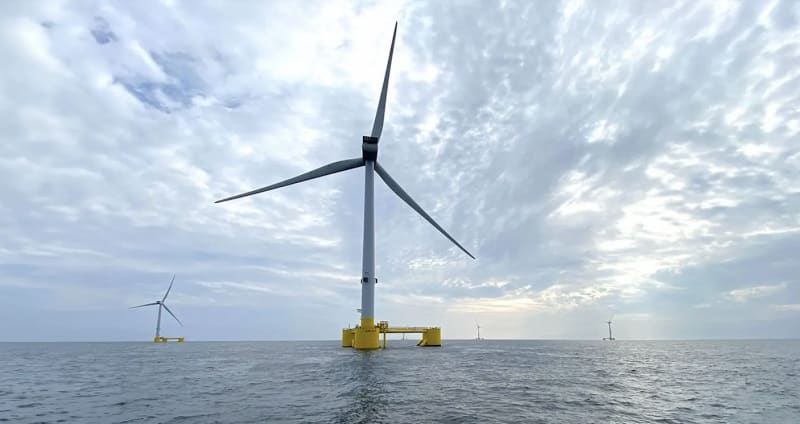
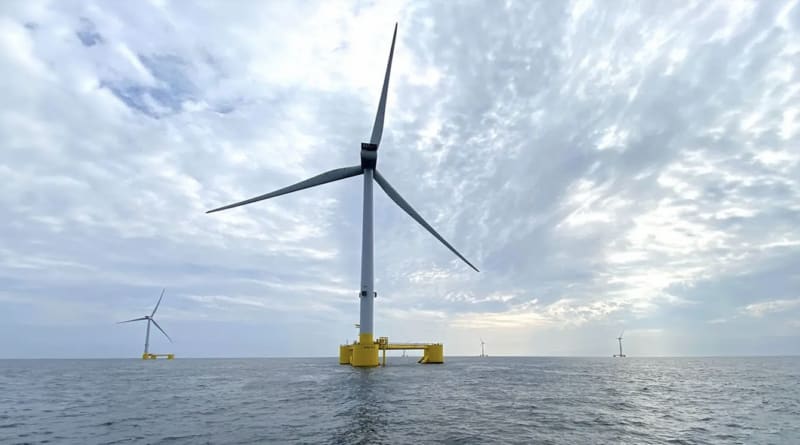
For years, the Philippines appeared in wind energy conversations mostly as a "what if" story. Experts praised its strong offshore winds and deep-water sites perfect for both fixed and floating turbines, but permitting delays, grid limitations, and investment barriers kept projects stalled on paper.
That's changing fast. The country recently opened renewable energy to full foreign ownership and awarded multiple offshore wind service contracts, shifting investor perception from theoretical potential to real opportunity.
Global renewable capital flows toward certainty, not just strong breezes. Investors need regulatory clarity, transmission planning, viable ports, and a predictable path to breaking ground. The Philippines is checking those boxes while its power demand continues climbing, making it one of Southeast Asia's most watched emerging markets.
The timing couldn't be better. The region needs about one million wind technicians between 2025 and 2030, and the Philippines has a young workforce ready to fill that gap. This creates a double win: supporting domestic projects while supplying skilled workers to neighboring countries, turning human capital into economic advantage.
The Ripple Effect
This shift extends far beyond electricity generation. As global wind capacity races toward two terawatts by decade's end, wind power is becoming embedded in industrial strategy and energy security planning across fast-growing Asian economies.
The Philippines sits near established North Asian supply chains, offering strategic value beyond its own energy transition. Its location, deep-water sites, and expanding electricity market position it as a crucial link in the region's clean energy build-out.
The Global Wind Energy Council is expanding its Asia-Pacific Wind Energy Summit in Hanoi this year, focusing less on traditional conference talks and more on aligning governments, developers, manufacturers, and financiers around actual project pipelines. The emphasis on supply chains, installation vessels, component manufacturing, and port infrastructure will determine how quickly national targets become operating wind farms.
Other countries are taking notes too. Several Asia-Pacific governments are studying the United Kingdom's latest offshore wind auction, which unlocked tens of billions in private investment through clear pricing frameworks, recognizing that ambitious capacity targets need bankable revenue structures.
The challenge now is converting policy alignment and investor interest into projects that reach construction, but the momentum is unmistakable: the Philippines has moved from the sidelines to center stage in Asia's renewable energy revolution.
More Images

Based on reporting by CleanTechnica
This story was written by BrightWire based on verified news reports.
Spread the positivity!
Share this good news with someone who needs it