Physicist Turned Satellites Into Scientific Measurement Tools
Alexander Goetz didn't see Landsat satellites as cameras in space. He saw them as precision instruments that could unlock secrets about our planet, and his vision changed remote sensing forever.
When Landsat 1 launched in 1972, most people saw it as a fancy camera snapping pictures from orbit. Alexander Goetz saw something entirely different: a scientific measuring tool that could reveal the hidden composition of Earth itself.
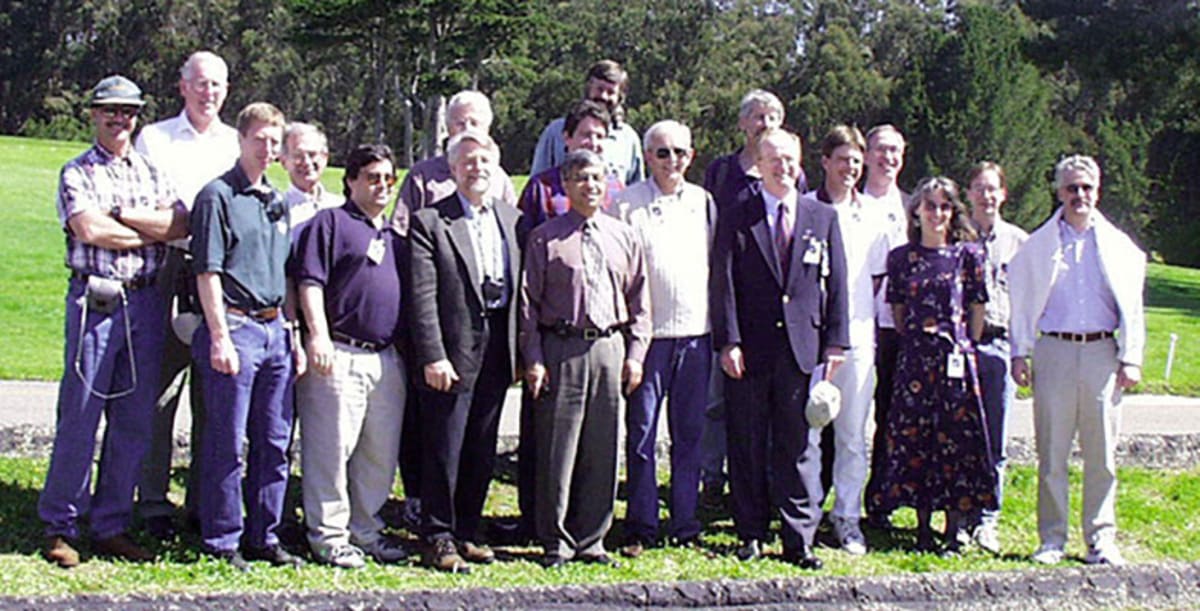
The physicist and planetary scientist, who passed away in 2025 at age 86, spent five decades pushing the boundaries of what satellites could do. From the very first Landsat missions through his work on the Landsat 7 Science Team in 1999, Goetz pioneered the field of imaging spectrometry from space.
His breakthrough thinking came early. Just two years after Landsat 1 reached orbit, Goetz built a portable field spectrometer to measure how Earth's surface reflected light. This ground truth data helped calibrate the satellite's readings, proving the spacecraft could do more than create pretty images.
In 1981, Goetz and his team flew the Shuttle Multispectral Infrared Radiometer aboard the Space Shuttle. For the first time ever, scientists mapped mineral composition from space across ten different wavelengths of light. That success directly led to adding a crucial seventh band to Landsat 4's sensors, giving geologists new power to identify rock types from orbit.
Why This Inspires
Goetz's legacy lives on every time scientists use Landsat data to track climate change, monitor crops, or map natural resources. As part of the Landsat 7 Science Team, he helped create the long-term acquisition plan that ensures consistent global coverage, seasonal after seasonal, year after year.
He studied climate-sensitive regions like the High Plains, developing automated approaches to track land use changes. NASA recognized his pioneering work with both the William T. Pecora Award and the Medal for Exceptional Scientific Achievement.
Twenty-seven years after Landsat 7 launched, we're still benefiting from Goetz's vision. He saw potential in technology that others overlooked, transforming orbiting cameras into precision instruments that measure our changing planet with scientific accuracy.
One scientist's refusal to settle for "good enough" gave us tools to better understand and protect our world.
More Images



Based on reporting by NASA
This story was written by BrightWire based on verified news reports.
Spread the positivity!
Share this good news with someone who needs it