Pine Trees Thrive 4x Faster When Planted Far From Home
Scientists discovered that pine trees planted in the Southern Hemisphere grow up to four times faster than their Northern cousins and handle droughts better too. This surprising find could reshape how we fight climate change through forest planting.
Pine trees planted thousands of miles from their native homes are breaking all the rules and thriving like never before.
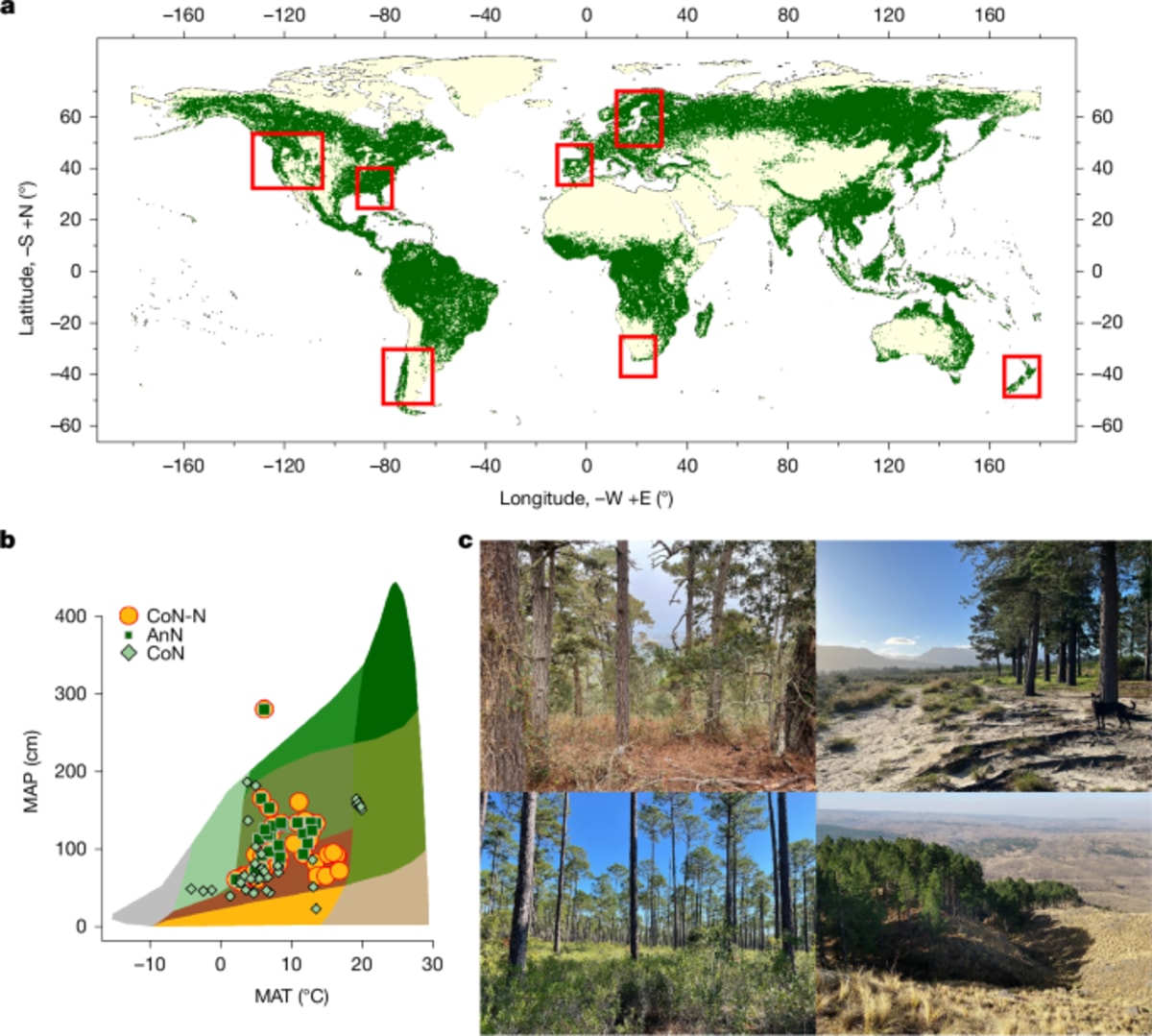
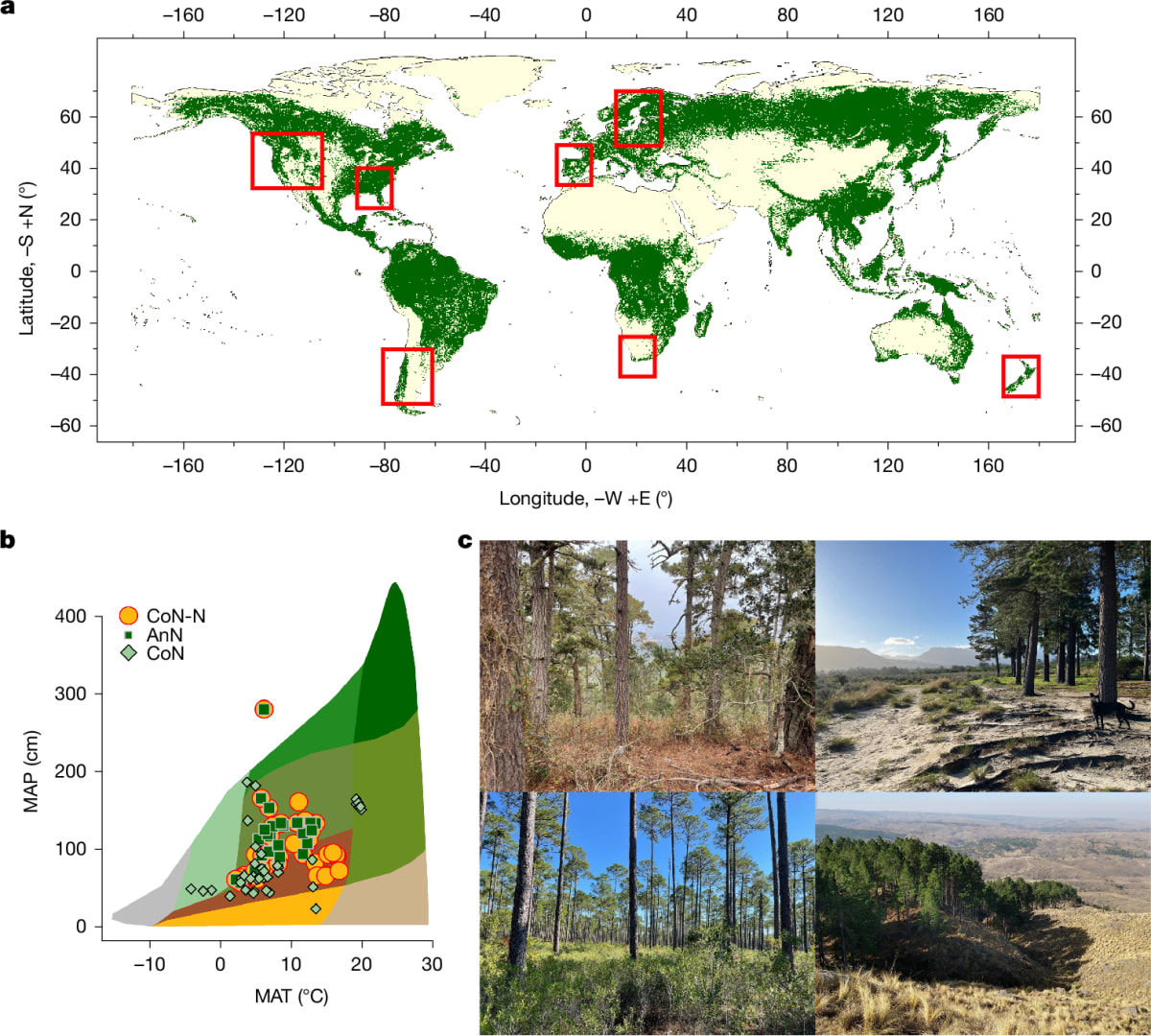
In a massive study across 192 sites on four continents, researchers found that Northern Hemisphere conifers transplanted to the Southern Hemisphere grow up to four times faster than their relatives back home. Even more surprising, these relocated trees handle droughts better than trees in their native ranges.
The discovery flips conventional ecological thinking on its head. Scientists expected these trees might struggle in unfamiliar territory, but the opposite happened.
The transplanted pines store more carbohydrates, which helps them survive dry spells. Their physiology shows they're absorbing carbon more efficiently, combining rapid growth with impressive resilience to water stress.
This paradox puzzled researchers at first. In nature, fast-growing plants typically sacrifice toughness for speed, like sprinters who can't run marathons.
But these relocated conifers are doing both. They're growing faster while simultaneously becoming better at weathering droughts than their cousins in native forests.
The secret appears to lie in their evolutionary journey. Free from the pests, diseases, and competitors they evolved alongside for millions of years, these trees can redirect energy into pure growth and resilience.
The Bright Side
This research arrives at a crucial moment for climate action. Countries worldwide are planting billions of trees to absorb carbon dioxide and slow global warming, but drought-induced tree deaths have threatened these efforts.
The study suggests strategically planted forests in the Southern Hemisphere could be more effective carbon sinks than previously thought. These trees not only grow faster, capturing more carbon, but they're also more likely to survive the droughts that climate change brings.
Scientists studied the trees' growth rings like reading a diary of their lives. The rings revealed consistent patterns of faster growth and better drought recovery across different species and locations.
The findings don't mean planting non-native trees everywhere is a good idea. Invasive species can harm local ecosystems, and careful planning remains essential.
But understanding why these trees succeed could help scientists breed or select trees with similar advantages. Future reforestation efforts might harness these natural resilience traits while protecting native ecosystems.
For researchers working on climate solutions, this opens exciting new possibilities for making tree planting programs more effective and durable in a warming world.
More Images
Based on reporting by Nature News
This story was written by BrightWire based on verified news reports.
Spread the positivity!
Share this good news with someone who needs it