Pink Heart-Shaped Salt Lake Spotted from Space Station
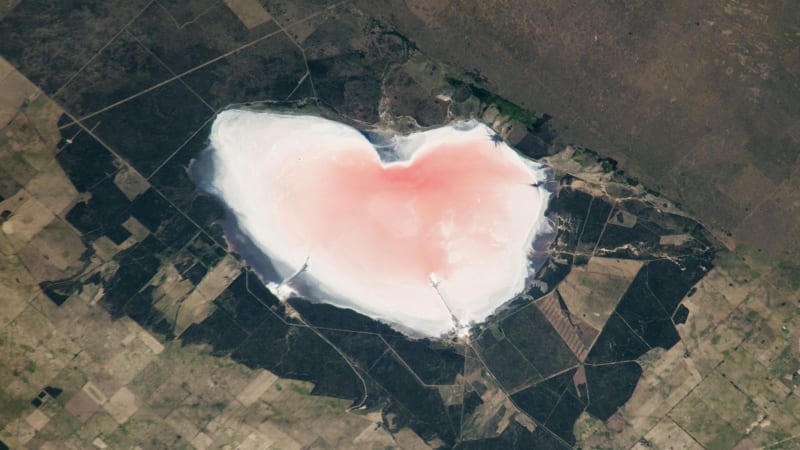
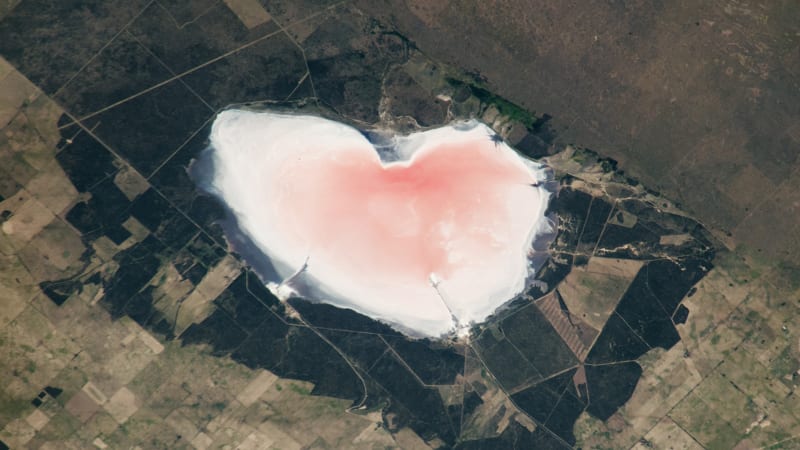
An astronaut aboard the International Space Station captured a stunning pink, heart-shaped salt lake in Argentina that looks like nature's Valentine. The shallow lake turns vibrant pink when special algae and microorganisms thrive in its salty waters.
An astronaut floating 250 miles above Earth spotted something extraordinary: a perfectly heart-shaped pink lake shimmering in the Argentine plains.
Salinas Las Barrancas sits about 33 miles west of Bahía Blanca in Argentina's Buenos Aires province. The shallow salt lake stretches 6 miles across at its widest point and regularly fills with water after heavy rains before evaporating under intense sunlight.
But the lake's magical pink color tells a fascinating story about tiny organisms battling for survival. When water levels are high and salt concentrations drop, red algae called Dunaliella salina dominates, turning the water brownish-red. During dry seasons when salt levels spike, the algae dies off and pink-loving bacteria and archaea take over, painting the lake bubble-gum pink.
"During the dry season, it gets really salty," microbiologist Lilliam Casillas Martinez explained about similar salt ponds. "The Dunaliella dies and the archaea and bacteria take over. Then it becomes pink, pink, pink."
The lake isn't just beautiful. Local workers harvest up to 330,000 tons of salt twice yearly using traditional hand tools, scraping crystals from the brilliant white flats. These mining operations have sustained families for generations, and experts predict the salt will keep replenishing for another 5,000 years.
Despite harsh conditions, life finds a way around the lake's edges. Salt-resistant plants grow along the shoreline, while vibrant yellow cardinals and bright-pink Chilean flamingos call the area home. Those flamingos owe their signature pink color to eating organisms that feed on the same algae that colors the lake.
Why This Inspires
This photo reminds us that Earth still holds countless wonders waiting to be discovered from new perspectives. What looks like an inhospitable salt flat from ground level reveals itself as a natural work of art when seen from space. The lake supports both traditional livelihoods and unique wildlife, proving that even extreme environments can sustain communities when we work with nature rather than against it.
The image, snapped in January 2024 and released on Valentine's Day 2025, shows our planet still has the power to surprise and delight us.
More Images



Based on reporting by Live Science
This story was written by BrightWire based on verified news reports.
Spread the positivity!
Share this good news with someone who needs it