Pittsburgh's Griffin Lander Heads to Moon in Late 2026
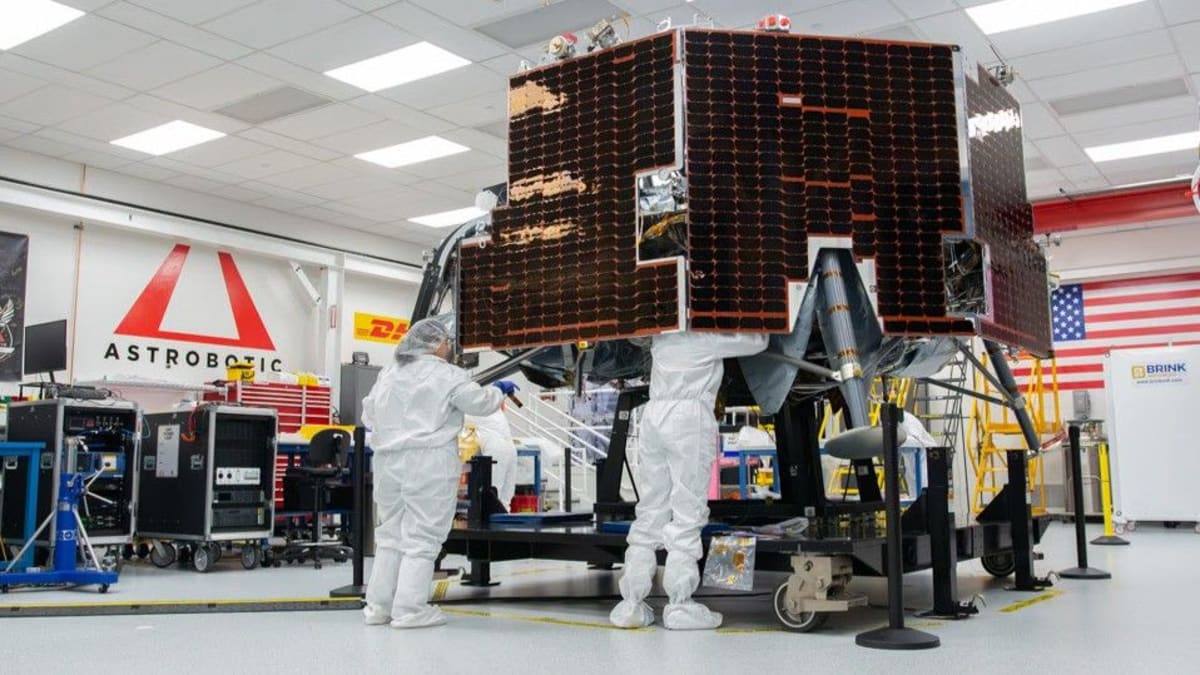
A Pittsburgh company just unveiled the largest commercial lunar lander ever built, carrying science experiments from six countries to help establish humanity's first moon base. After one setback, Astrobotic is ready to make history again.
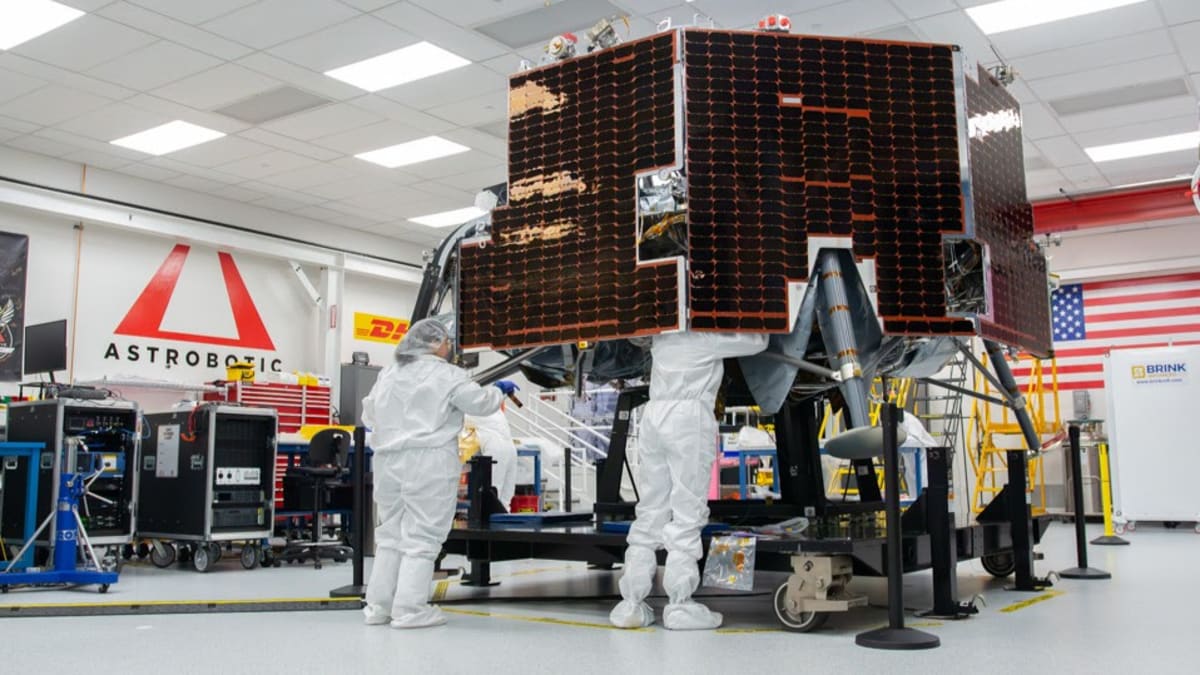
The massive spacecraft that could help build humanity's first permanent moon base rolled out of a Pittsburgh factory this week, packed with rovers and experiments from around the world.
Astrobotic revealed its Griffin lunar lander on June 15, standing six feet tall and nearly 15 feet wide. The company plans to launch Griffin Mission One in late 2026 aboard a SpaceX Falcon Heavy rocket, delivering over 1,300 pounds of cargo to the lunar surface as part of NASA's effort to establish a lasting human presence on the moon.
"This is the first infrastructure-class lander going to the surface of the moon," said Astrobotic CEO John Thornton. The Griffin lander dwarfs the company's first attempt, Peregrine, which launched in January 2024 but never reached its destination due to a propellant leak shortly after deployment.
Griffin carries ten payloads from six nations, including the FLIP rover from California's Astrolab, which will explore the lunar surface with four additional NASA experiments onboard. The European Space Agency contributed LandCam-X technology to improve landing precision for future missions.
Some cargo tugs at the heartstrings. Japanese children sent messages to the moon through the Nippon Travel Agency. The Galactic Library to Preserve Humanity includes miniaturized literature and art. People worldwide submitted personal items on micro SD cards to travel inside a MoonBox capsule.
Why This Inspires
Griffin represents more than national achievement. Six countries collaborated on this mission, showing how space exploration brings humanity together around shared dreams. When children in Japan wrote letters destined for the moon, they joined a global community reaching beyond our world.
The mission serves NASA's Commercial Lunar Payload Services program, which partners with private companies to support the Artemis program. Instead of government-only space programs, companies like Pittsburgh-based Astrobotic now build the infrastructure for humanity's next giant leap.
Integration wraps up this week before Griffin travels to NASA's Jet Propulsion Laboratory in California for environmental testing. By fall, the lander heads to Florida where crews will load the FLIP rover before the historic 2026 launch.
Thornton promised "some of the best imagery we have seen yet coming back from the surface" along with groundbreaking science data. Despite the Peregrine setback, Astrobotic learned, adapted, and built something bigger.
The moon base begins with one determined Pittsburgh team and a spacecraft carrying humanity's hopes skyward.
More Images

Based on reporting by Google News - Science
This story was written by BrightWire based on verified news reports.
Spread the positivity!
Share this good news with someone who needs it