Plastic Heat Exchanger Outperforms Metal at Fraction of Cost
Engineers at Rice University just created a plastic heat exchanger that works as well as metal versions but costs far less and can fold flat like furniture. The breakthrough could revolutionize everything from space missions to laptops.
Imagine packing an entire cooling system into your suitcase, then watching it expand 60 times its size when you need it.
That's exactly what engineers at Rice University have accomplished with a new plastic heat exchanger that's turning a century of industrial design on its head. Led by assistant professor Daniel Preston, the team published their breakthrough in Advanced Science this month.
Heat exchangers are the unsung heroes of modern life. They move heat between fluids to keep our computers from overheating, our cars running smoothly, and our refrigerators cold. But traditional metal versions come with serious drawbacks: they're heavy, expensive, rust easily, and take up precious space.
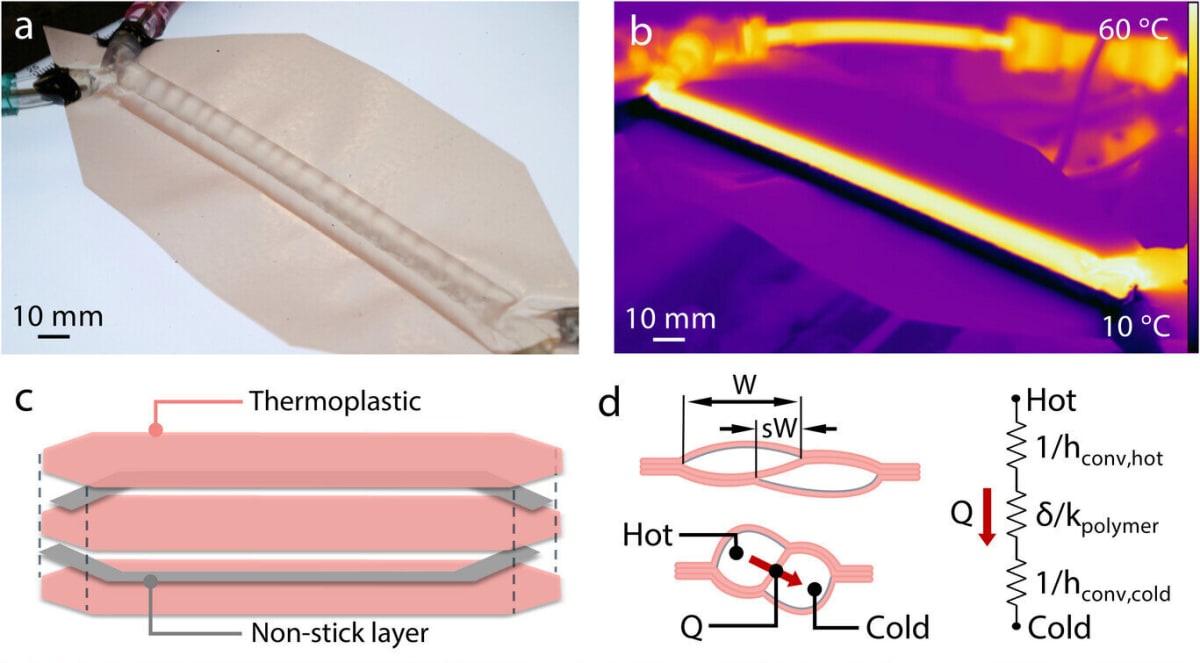
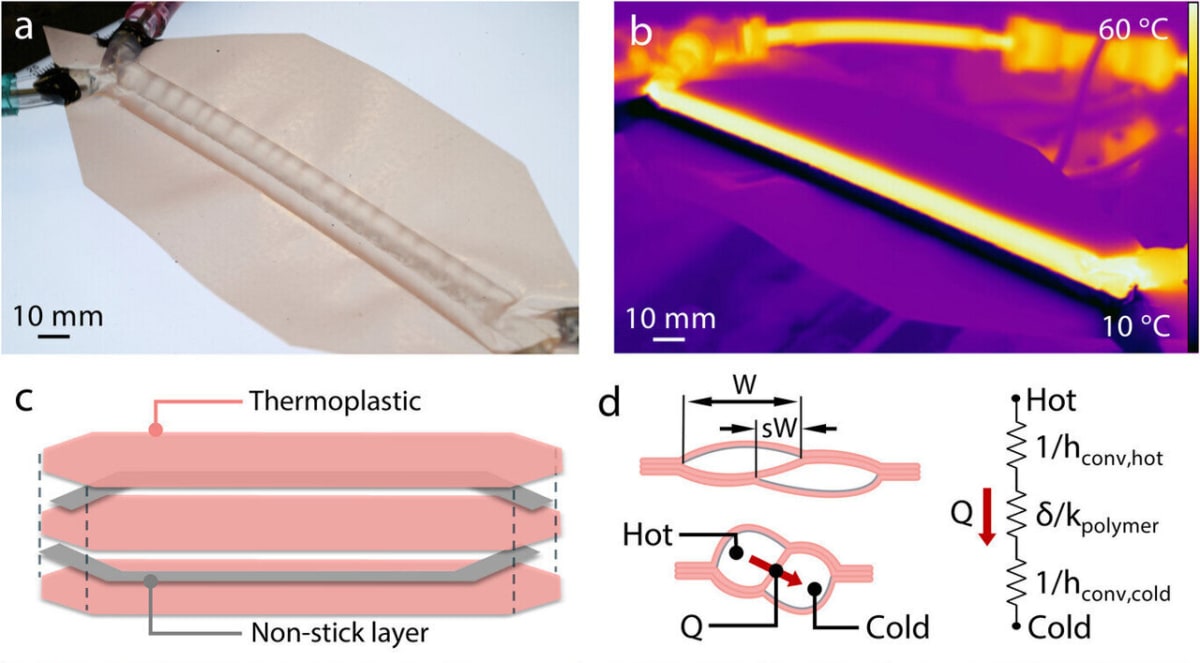
The Rice team's solution sounds almost too simple. They used ultrathin sheets of plastic, sealed together through a technique called sheet lamination. The result delivers two to four times more cooling power per dollar than metal alternatives.
"Typically, plastics are terrible at conducting heat," explained Richard Fontenot, the study's lead author and doctoral candidate. "Think of how we can comfortably hold a plastic foam cup of hot coffee but not a metal one." The secret lies in making the plastic incredibly thin, minimizing the barrier heat needs to cross.
But the real magic happens when you add fluid. The flat sheets expand up to 60 times their original size, creating a full functioning heat exchanger. Remove the fluid, and it collapses back down.
The Ripple Effect
This foldable design opens doors that were previously sealed shut. Space missions operate under brutal weight and volume restrictions, making every cubic inch precious. A heat exchanger that stores flat could be a game changer.
The technology shines in other challenging environments too. Desalination plants constantly battle corrosion from salt water. Traditional metal exchangers rust and fail, but these plastic versions resist corrosion completely. Because they're transparent, engineers can spot and clear blockages in seconds instead of dismantling entire systems.
Drone manufacturers face similar constraints, needing powerful cooling in impossibly tight spaces. Compact electronics keep pushing performance boundaries but generate more heat. This deployable design could help all of them.
Preston's team didn't just create a cheaper alternative. They proved that polymer heat exchangers belong in serious industrial conversations. "Until now, polymeric heat exchangers had been considered an interesting engineering novelty but not a practical alternative," Preston said.
The design is also remarkably simple to manufacture and scale up. No exotic materials or complex assembly processes stand between the lab prototype and factory production.
From data centers managing massive server farms to rockets launching into orbit, heat management remains one of engineering's persistent challenges. This lightweight, affordable solution arrives exactly when the world needs it most.
More Images


Based on reporting by Phys.org - Technology
This story was written by BrightWire based on verified news reports.
Spread the positivity!
Share this good news with someone who needs it